The Museum of the Book in The Hague, The Netherlands, located in the attractive former residence of the Baron Van Westreenen van Tiellandt and devoted to the hand-written and printed book of the past and present, in collaboration with KB, the national library of the Netherlands presents the exhibition ‘Flora Batava. Wild plants in books then and now‘, until the 3rd of September 2023.

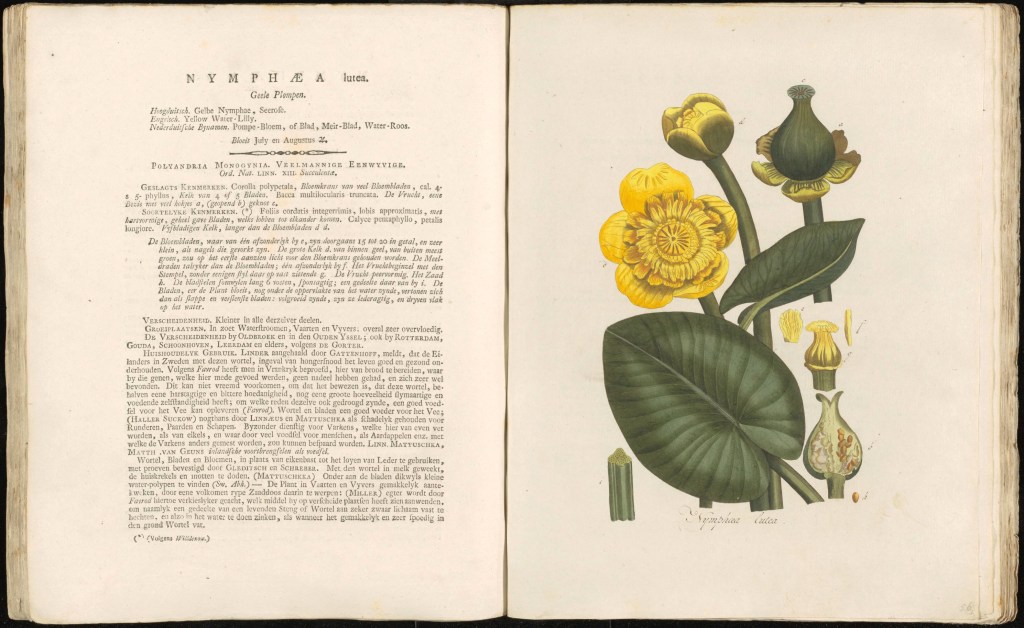
The publication of Flora Batava is the first illustrated overview of the wild plants, mosses, algae and mushrooms in book form in the Netherlands. Between 1800 and 1934, no fewer than 28 volumes appear, comprising 2,360 species, 2,240 coloured plates and 5,000 pages of text. The names of dozens of scientists, artists, publishers and other plant lovers are connected to this work.
The exhibition will get to know this extraordinary publication, the plants themselves, the beautiful plates, the makers’ ideas and the extensive knowledge they had of the wild flora. Much of that knowledge has since been forgotten and some species and landscapes have disappeared. Therefore, Flora Batava is also a window to a changing Netherlands.
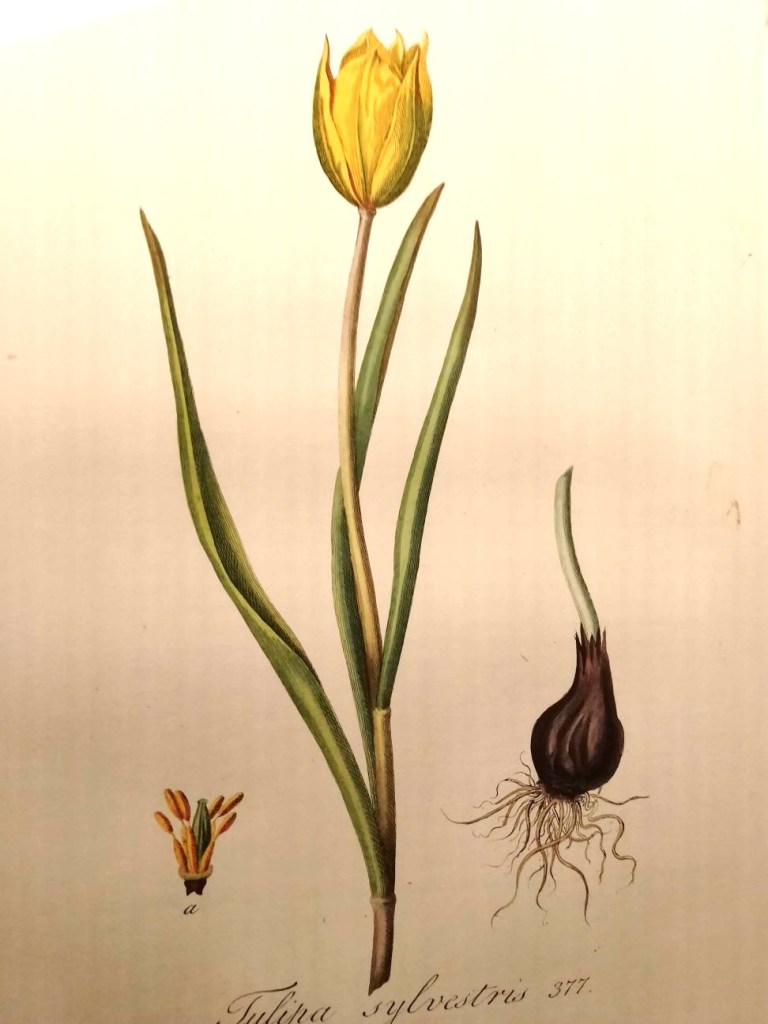

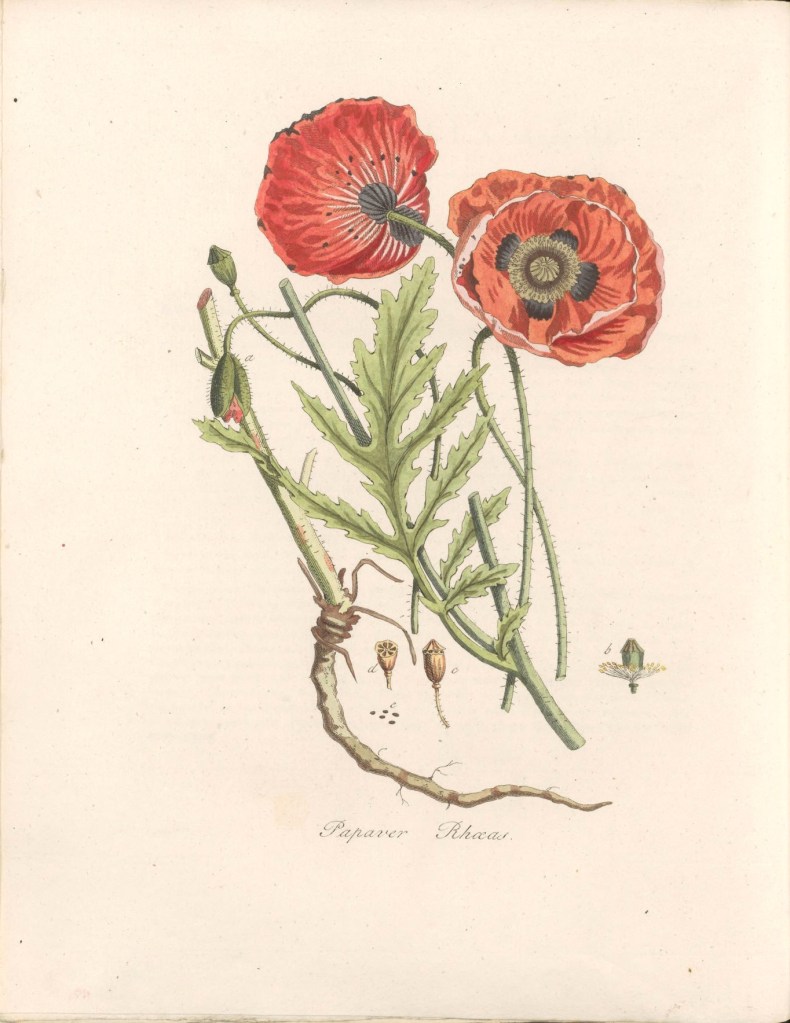
Central to the exhibition is the 134-year running book series itself with beautiful, hand-colored engravings and lithographs. It was the very first inventory of wild plants in the Netherlands. Attention is also paid to the original makers and the creative process, in the form of original herbarium material and the original watercolors from the collections of Naturalis Biodiversity Center and Wageningen University.
Just before 1800, the publisher Jan Christiaan Sepp initiates Flora Batava. Just like in Sepp’s other publications, each species is depicted in full size images. In the first ten volumes, they are hand-coloured engravings. In later volumes, lithography is used and even later chromolithography. The texts are based on observations in the field, complemented by literature studies. Over the course of time, typography and paper change. Almost all original drawings for Flora Batava have been preserved. They provide a fascinating glimpse into the cooperation between the editor, artist and engraver.
The first editor, Jan Kops, was especially interested in the classification and use of plants. The first ten volumes are full of species that can be applied in medicine, agriculture and all sorts of trades. This focus disappears in the second half of the nineteenth century. Editors such as Frederik Willem van Eeden focus more and more on plant geography and ecology.


The second half of the exhibition shows how for centuries native plants have been depicted and studied in botanical books and how present-day scientists, artists and conservationists are inspired once again by Flora Batava and other books from medieval manuscripts, 16th-century herb books and beautifully illustrated botanical plates to Art Nouveau bindings, Verkade albums and modern, plant-inspired artist books.
Soon after Gutenberg’s invention printed herbals appeared. They are reference works containing descriptions and images of plants. The images were added in woodcut and often coloured by hand. By the standards of later centuries, the images are clumsy and inaccurate, but often the characteristic elements can still be recognized. From the early Middle Ages onwards, illustrated plant books were written. Usually, they contained descriptions of medicinal plants. People also took an interest in biblical plants and their symbolic meanings.
In late medieval books of prayers and books of hours (books of prayers that were to be recited at fixed points in the day), purely decorative plants are found, without any relation with the text. In the course of time, the way in which plants are depicted changes: woodcuts are replaced by engravings that show more detail, especially when they are coloured. The images themselves change as well: plants are shown more lifelike, with depth and shade, and sometimes with their surroundings. Also, more and more details of seeds and flowers are shown.
 The Flora Journal