People have enjoyed flowers for centuries. The appeal of flowers is their fleeting nature: they are only there for a short time. We freeze the beauty of the flower in time. Zooming in on the senses is a suitable way to do this. Look, smell, feel, hear and taste and let time stand still for a moment. This also reflects on flower cultivation today from different perspectives.
Until September 1, 2024, at Paleis Het Loo, in Apeldoorn, The Netherlands, the exhibition ‘Bloom’ is focused on 17th-century still lifes and Princess Mary’s influence on the use of flowers, floral patterns in interior design and her hobbies of flower arranging, embroidery and making her own potpourris or scented ointments. This reflects on the fact that in the 17th-century flowers came to the Dutch Republic from all over the world and the green craftsmanship required to keep all these plants alive.
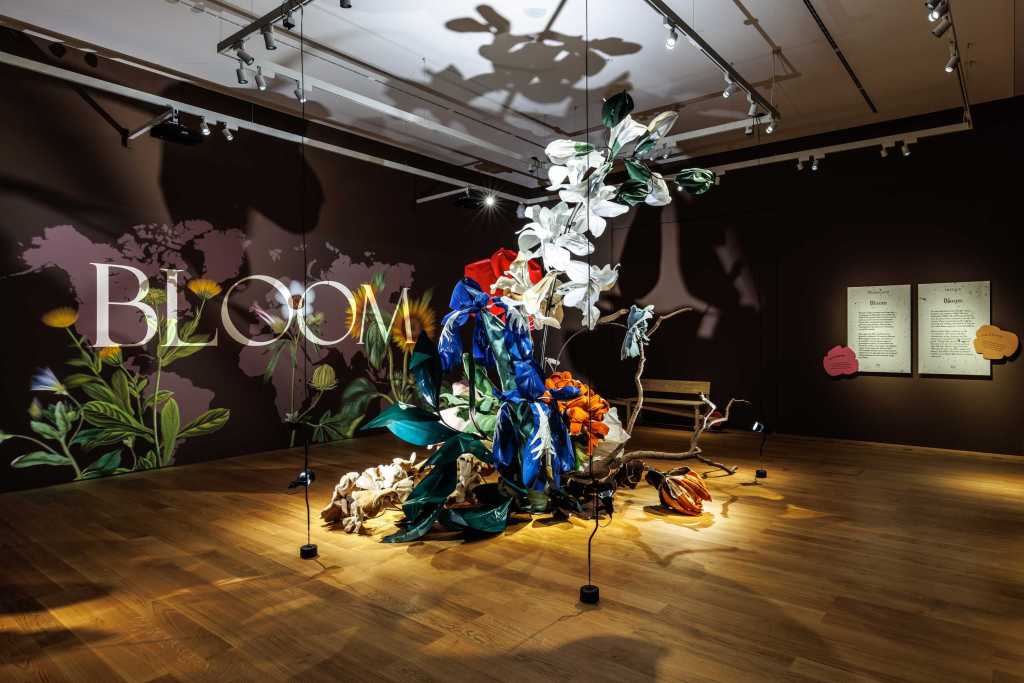
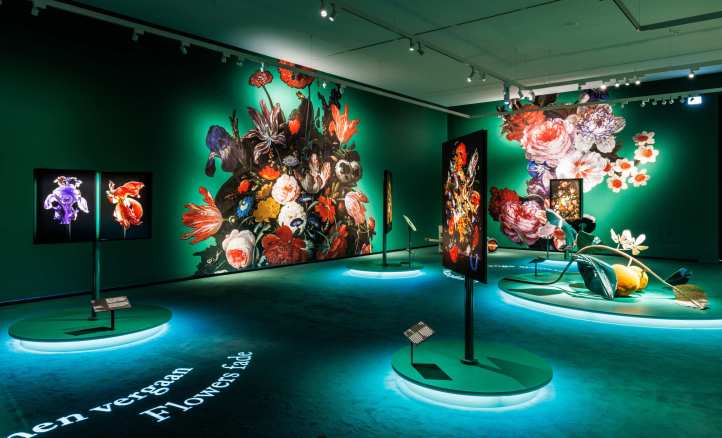
After a concept by Hanna Klarenbeek, curator of paintings and prints, Marit Berends, historian and program maker, and Renske Ek, garden curator, contemporary artists, designers and the palace garden service bring history to life. They admire the historical works, but also ask critical questions. How did those flowers get here? Who paid the price for the beauty and wealth? And what is the future of the flower? There is a story behind every flower and every work of art.
In the 17th century, striped tulips were particularly popular. Mary also loved these tulips and used them in the gardens and rooms of Paleis Het Loo. What started as a love for tulips grew into an obsession. Dutch traders paid a fortune for one tulip bulb.
A special loan in the exhibition is Pieter Cos‘ tulip book from 1637 from the Special Collections of Wageningen University. This tulip book was one of the sources for artist Jos Agasi’s audiovisual installation Tulpenkoorts. The images in Tulpenkoorts are enhanced by the music composed especially for this purpose by Martin Fondse and Margriet Sjoerdsma. The audiovisual installation Tulpenkoorts depicts the rise and fall of the tulip mania in the seventeenth century.
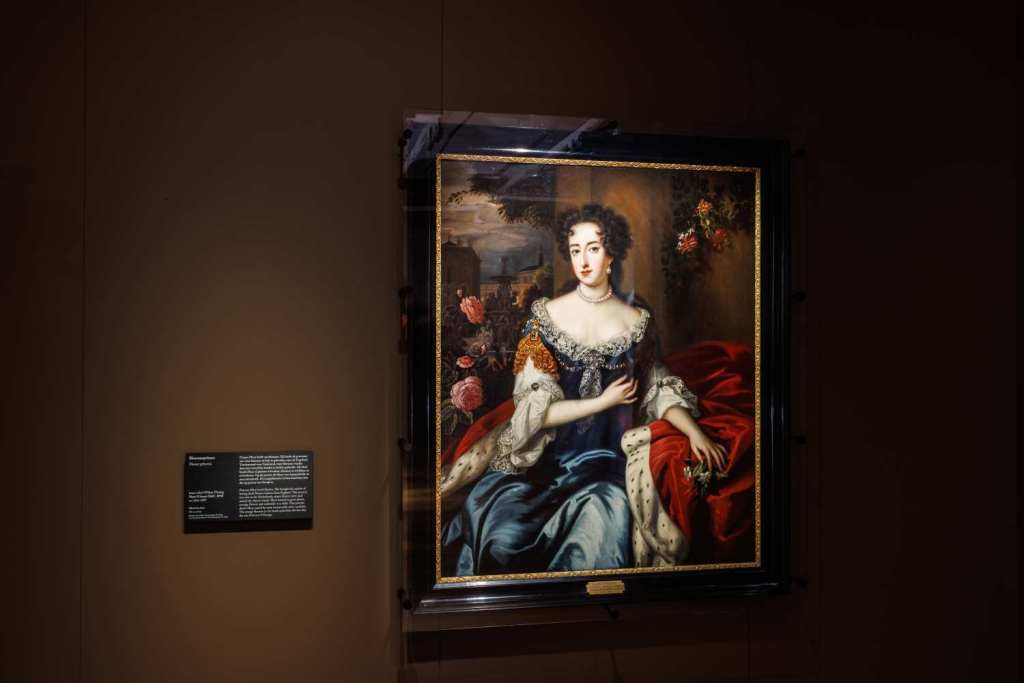
A unique object in the exhibition is a flower book with watercolors by Stephanus Cosijns , 1685-1688 from the collection of Biblioteca Nazionale Centrale de Firenze, Italy. It shows part of the world-famous plant collection that politician Gaspar Fagel once owned. Fagel was a good friend of Willem and Mary. They took over the plants and the 97 watercolors when Fagel died. Thanks to these images, we still know today which plants grew in the gardens of Paleis Het Loo.
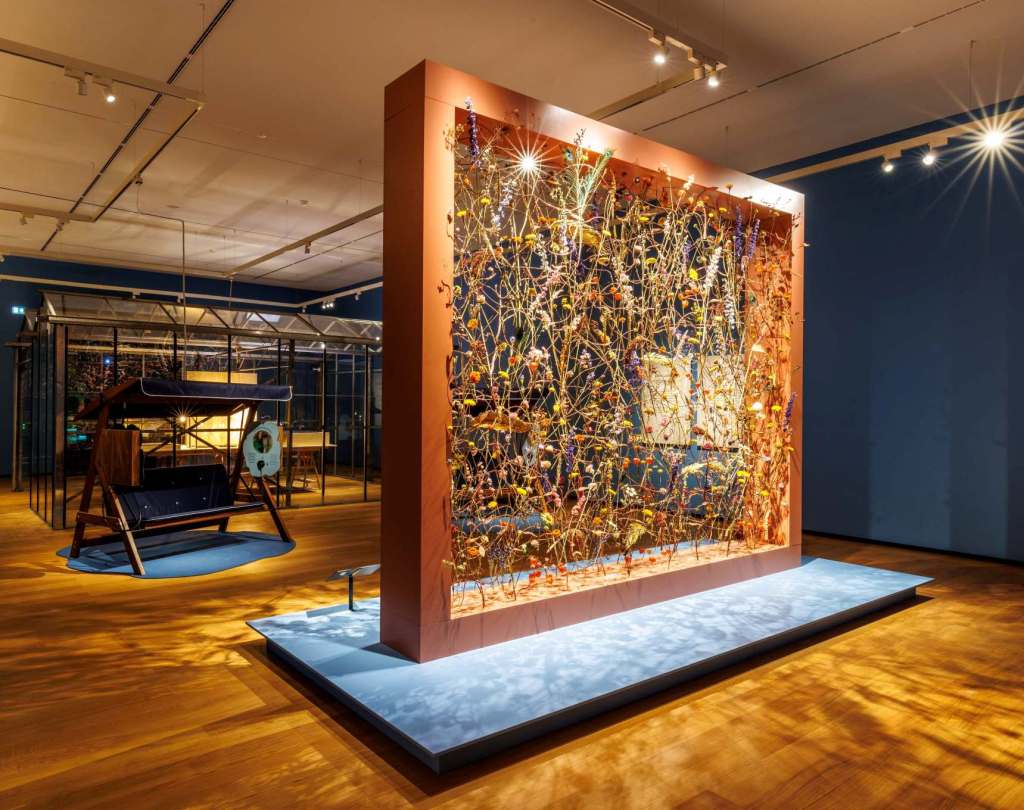
Bloom focuses on 17th-century flower still lifes, contemporary reflections on them, craftsmanship, the origin of flowers and Mary’s leisure activities. Floral designer Hanneke Frankema has created a floral artwork from dried flowers from the gardens and flower room of Paleis Het Loo. These flowers have been drying in the attics of the palace since September 2023.
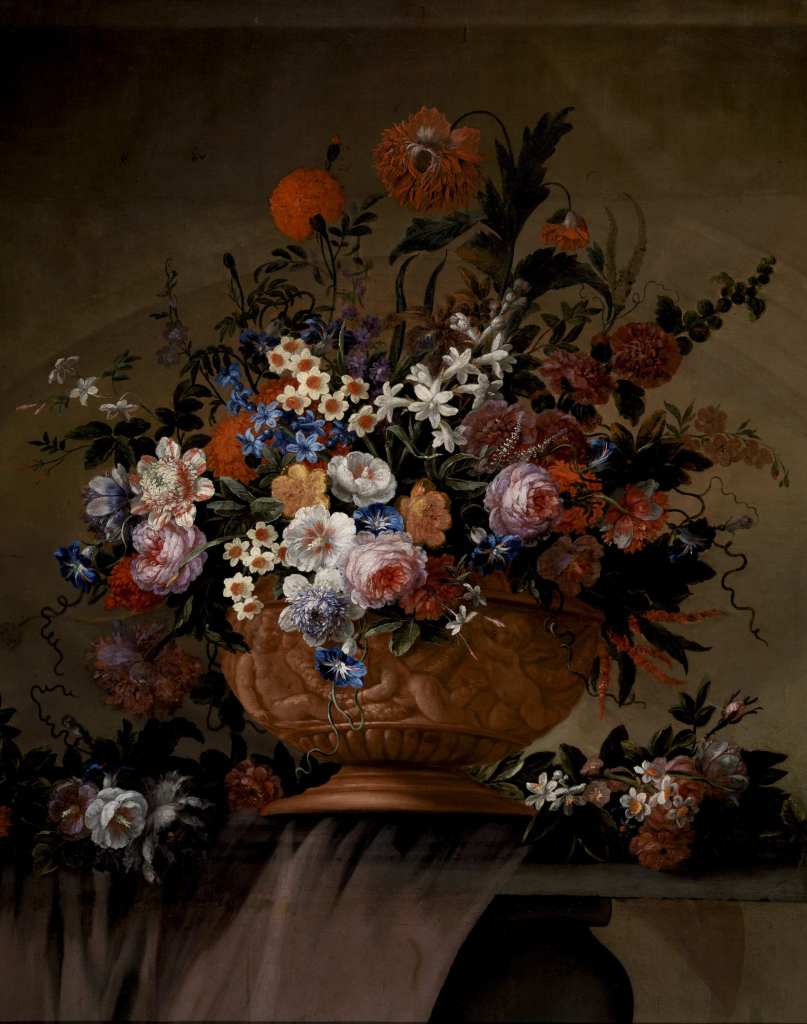
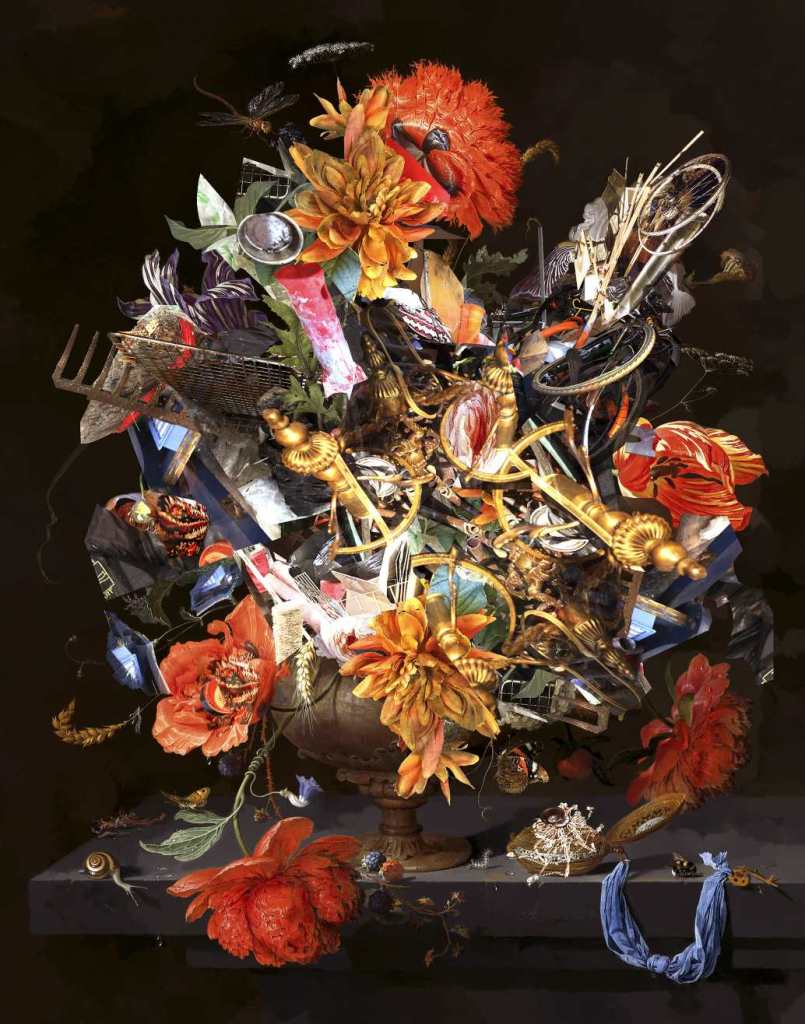
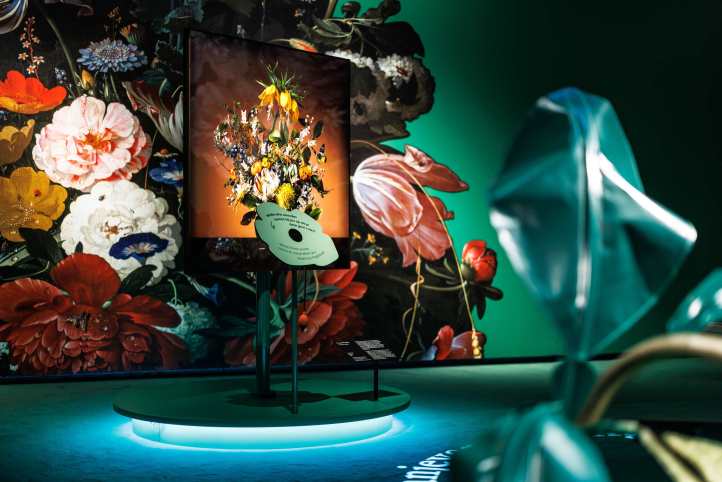
Mirjam Verschoor “Tribecalledtrash” makes flower still lifes with a reference to sustainability. She photographs street waste and digitally mixes it with 17th-century still lifes. In her still lifes she replaces flowers with waste. Waste has almost become an integral part of the streetscape and shows how disturbed our relationship with nature is in this throw-away society.
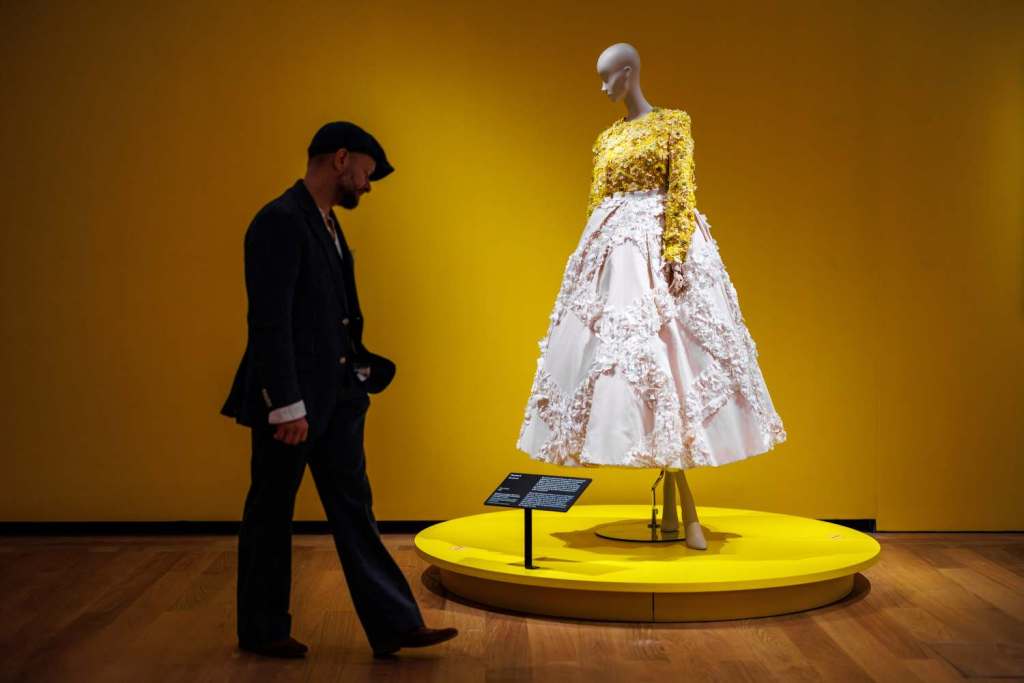
The exhibition shows some couture pieces by fashion designers Claes Iversen. This renowned couturier is known for his creations in the fashion world and his commissions for the royal family. Iversen is fascinated by old techniques, such as embroidery, to which he puts his own twist in his creations. These pieces tie in with the last part of the exhibition, which focuses on various contemporary forms of leisure activities with flowers, such as recognizing scents, flower arranging and embroidery. Visitors can also embroider themselves on the Crossover Collective social machine.
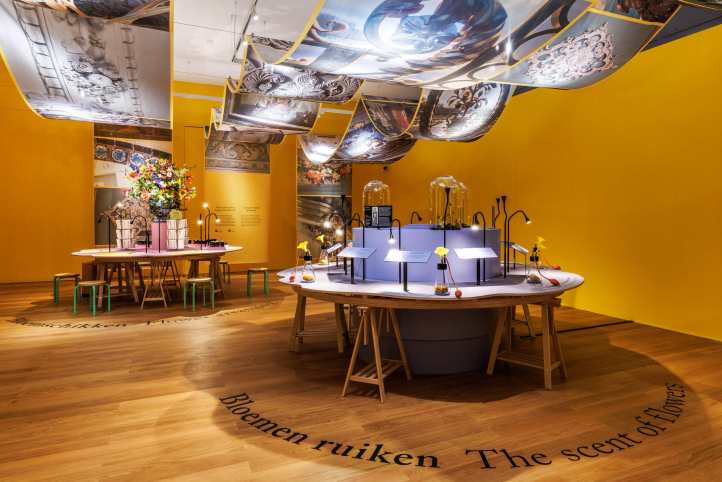
bloom credit Paleis Het Loo
Paleis Het Loo collaborated with Noëlle van Dijk, multidisciplinary artist and experimental designer, for the campaign image. Just like in 17th-century works of art, Noëlle brings together images and edits that are not possible in reality.
The rooms of the palace are still provided weekly with fresh bouquets that are put together by our own professionals, partly with flowers from the nursery of Paleis Het Loo. Paleis Het Loo is the only museum in the Netherlands with a professional flower room. Just like the museum, the flower room is celebrating its fortieth anniversary this year.
This exhibition features work by Bas Meeuws, Mirjam Verschoor, Hanneke Frankema, Jos Agasi, Richard Hutten, Linda Nieuwstadt, Natasja Sadi, Eelco Brand, Carla van de Puttelaar, Stine Berg Evensen, Floor Nijdeken, Paulien Schipper, Esmee Winkel and Claes Iversen.
 The Flora Journal