Rachel Ruysch (1664–1750) was a celebrated Dutch artist renowned for her extraordinary floral still lifes. During her lifetime, she earned accolades unmatched by many of her contemporaries, earning titles like “Holland’s art prodigy” and “our ingenious artistic heroine.” Her ability to blend art and nature with scientific precision made her a unique figure in 17th- and 18th-century Europe. Now, centuries later, her work continues to captivate audiences.
The retrospective exhibition titled “Rachel Ruysch – Nature into Art”, opening on November 26, 2024, at the Alte Pinakothek in Munich, Germany until 16 March 2025, curated by Bernd Ebert (Alte Pinakothek Munich), Robert Schindler (Toledo Museum of Art, Ohio), Anna C. Knaap (Museum of Fine Arts, Boston) provides an unparalleled exploration of her life, work, and the cultural context of which she thrived. With over 50 works spanning her illustrious 70-year career, this exhibition offers a rare opportunity to delve deeply into Ruysch’s contributions to art and science.

A Blossoming Career Rooted in Science
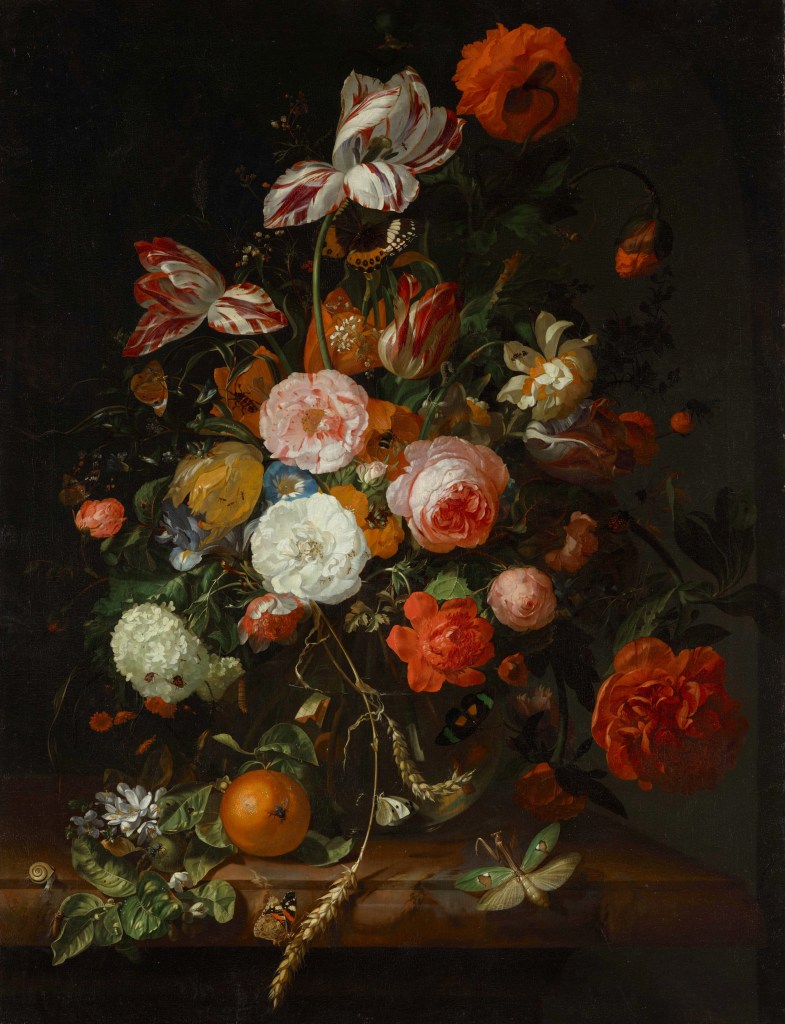
Ruysch’s background was instrumental in shaping her artistic sensibilities. Born to Frederik Ruysch, a renowned professor of anatomy and botany, she had access to an exceptional collection of scientific specimens and Amsterdam’s famed botanical gardens. These resources inspired the intricate, lifelike floral compositions for which she became famous. By combining native and exotic plant species with depictions of insects, Ruysch’s paintings mirrored the era’s scientific curiosity and fascination with the natural world.
Her detailed still lifes showcased flowers and fauna in exquisite, almost deceptive realism. This ability to infuse vibrancy into her works elevated her status among collectors and art enthusiasts. The demand for her paintings was so great that she could afford to produce only a few masterpieces each year.
Achievements and Artistic Influence
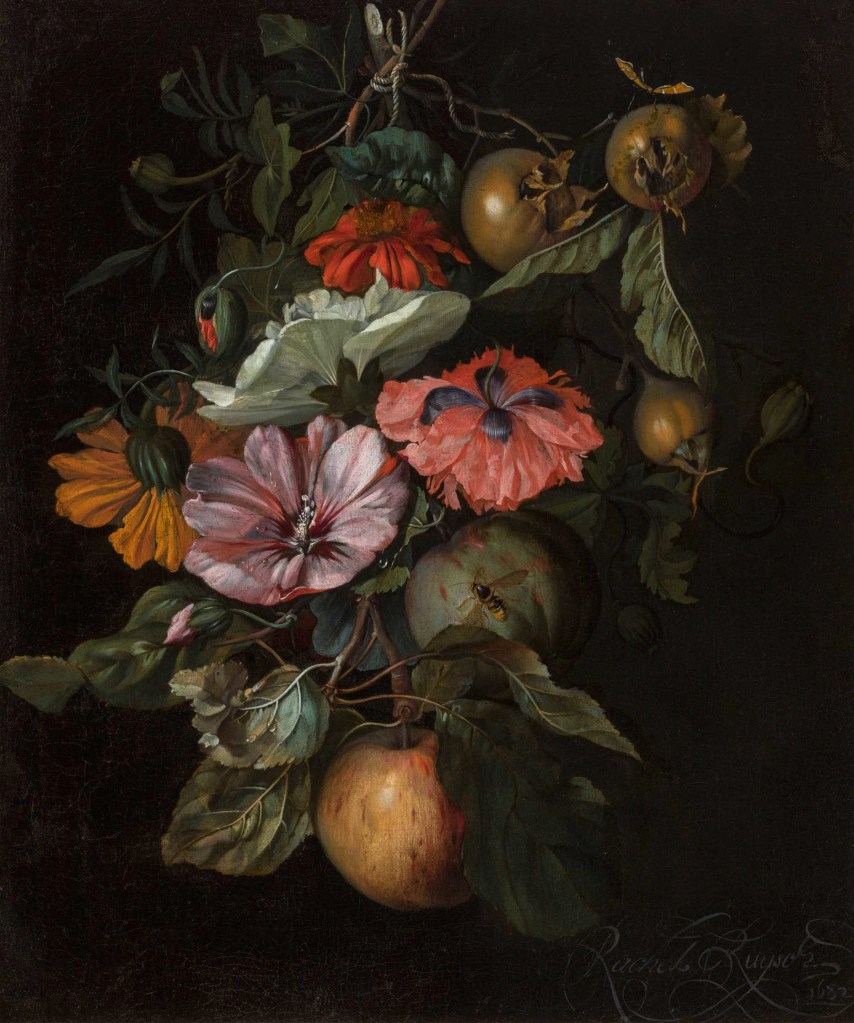
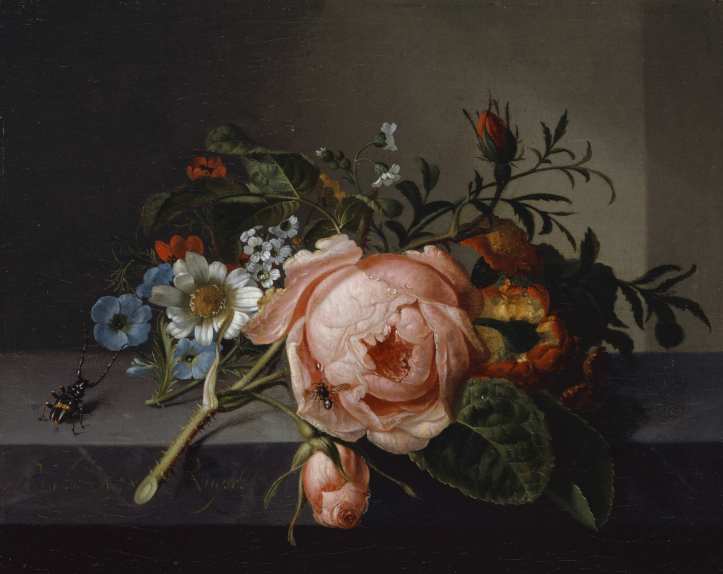
Rachel Ruysch’s career was marked by notable milestones. In 1701, she became the first female member of the prestigious Confrerie Pictura in The Hague, a remarkable achievement for a woman in the male-dominated art world. Later, in 1708, she was appointed court painter to Johann Wilhelm, Elector Palatine, in Düsseldorf. This prestigious role cemented her reputation as one of the leading artists of her time.
Her work reflected her mastery of floral still lifes, evolving over the years from vibrant, densely packed bouquets to lighter, airier compositions reminiscent of Rococo styles. Ruysch’s meticulous attention to detail and innovative approaches influenced contemporaries like Jan Davidsz. de Heem and Willem van Aelst, as well as future generations of artists.

Exploring Her Legacy Through the Exhibition
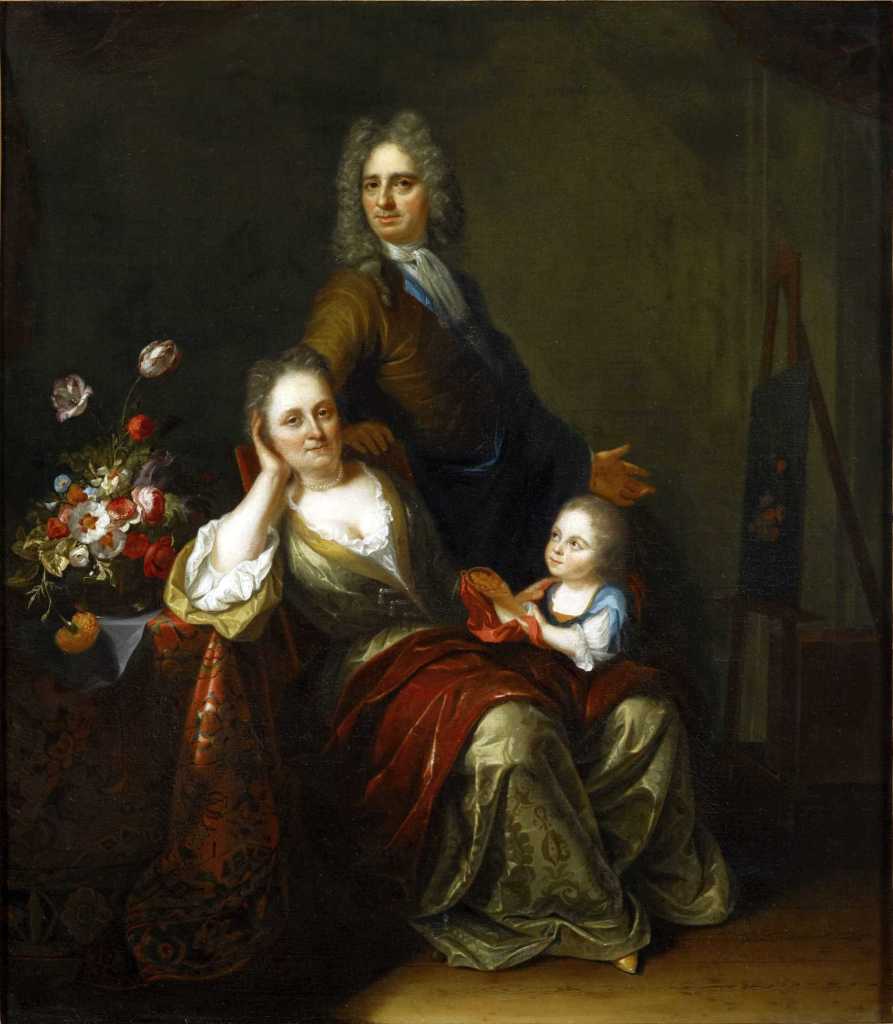
The Alte Pinakothek exhibition is divided into five sections, each shedding light on different facets of Ruysch’s life and artistry.
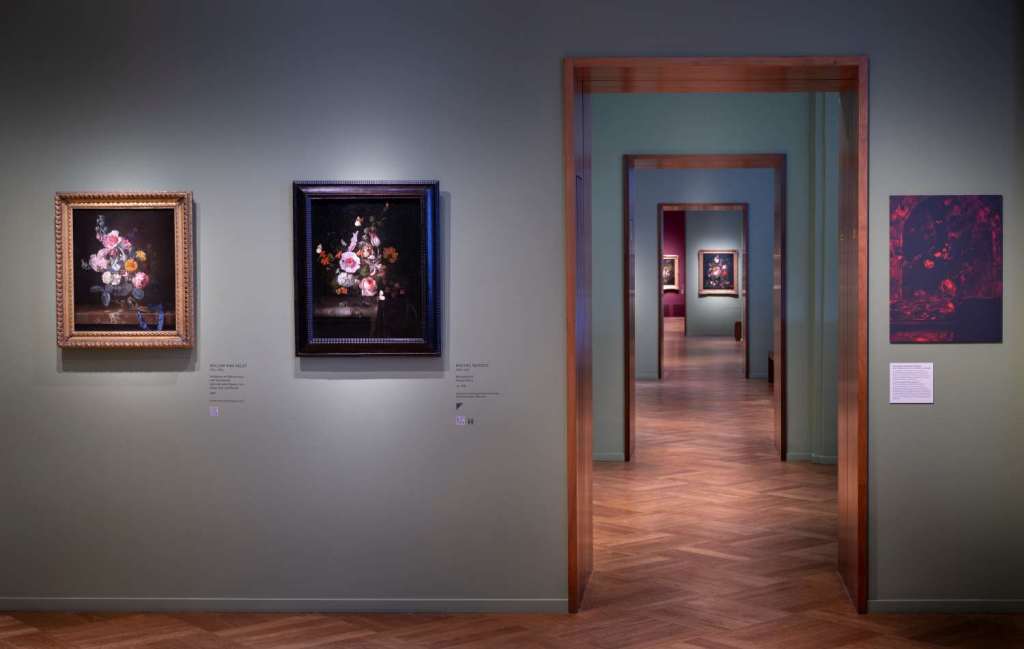
- An Auspicious Beginning: This section highlights her early career, juxtaposing her work with contemporaries like Willem van Aelst and Maria van Oosterwijck, who previously dominated the floral still-life genre.
- The Two Sisters: Rachel’s lesser-known sister, Anna Ruysch, also a floral painter, is explored here. Their works are presented together for the first time, revealing similarities and differences in their artistic paths.
- Art, Nature, and Science: This section delves into the intersection of Ruysch’s art and scientific discovery, focusing on her father’s influence and the era’s burgeoning interest in botany and zoology.
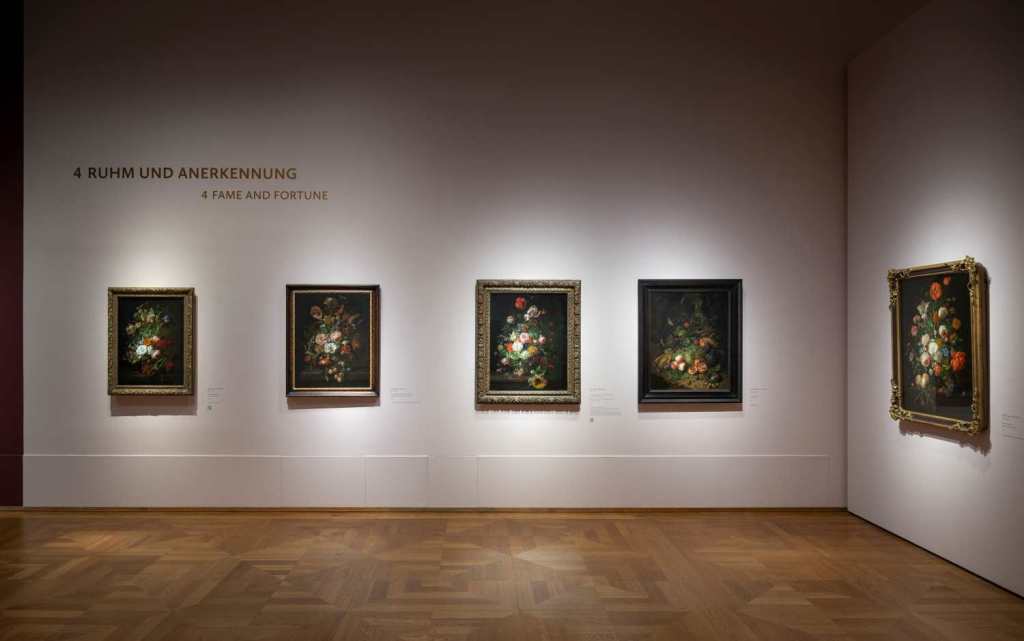
- Fame and Fortune: Highlighting her most productive years, this segment showcases her lush bouquets teeming with flowers, fruits, and insects that earned her international acclaim.
- Changing Perspectives: A modern reinterpretation of Ruysch’s methods and themes, featuring creative projects from students and contemporary artists, invites viewers to engage with her work in innovative ways.
With contributions from international collections, such as the Toledo Museum of Art and the Museum of Fine Arts in Boston, around 80 paintings from national and international collections from 14 countries, including 57 paintings by Rachel Ruysch herself, some 41 works on paper, almost 600 zoological and botanical specimens and historical optical instruments will be on view in the Alte Pinakothek and the exhibition promises to be a comprehensive celebration of her legacy.
A Lasting Impact
Rachel Ruysch’s ability to merge artistic innovation with scientific observation secured her place among the most influential painters of her time. Her life and work not only underscore the role of women in advancing both art and science but also highlight the enduring relevance of floral still-lifes in understanding the natural world.
The retrospective at the Alte Pinakothek offers a much-deserved recognition of Ruysch’s genius, ensuring her legacy continues to inspire for generations to come. In addition to a comprehensive range of guided tours, the exhibition will be accompanied by workshops, a film screening and concerts as well.
 The Flora Journal