Rome’s Chiostro del Bramante in Italy is an extraordinary garden of art, history, and technology with its current exhibition, Flowers. Art from the Renaissance to Artificial Intelligence. Running until September 14, 2025, this ambitious show explores the timeless beauty and symbolic power of flowers across five centuries, blending classic masterpieces with avant-garde digital installations.
Curated by Franziska Stöhr and Roger Diederen, in collaboration with Suzanne Landau and produced in collaboration with the Kunsthalle München the exhibition traces a vibrant floral thread through time, featuring over 90 works from 10 countries. Highlights include pieces on loan from globally renowned institutions like the Louvre, Musée d’Orsay, and the Royal Botanic Gardens, Kew.
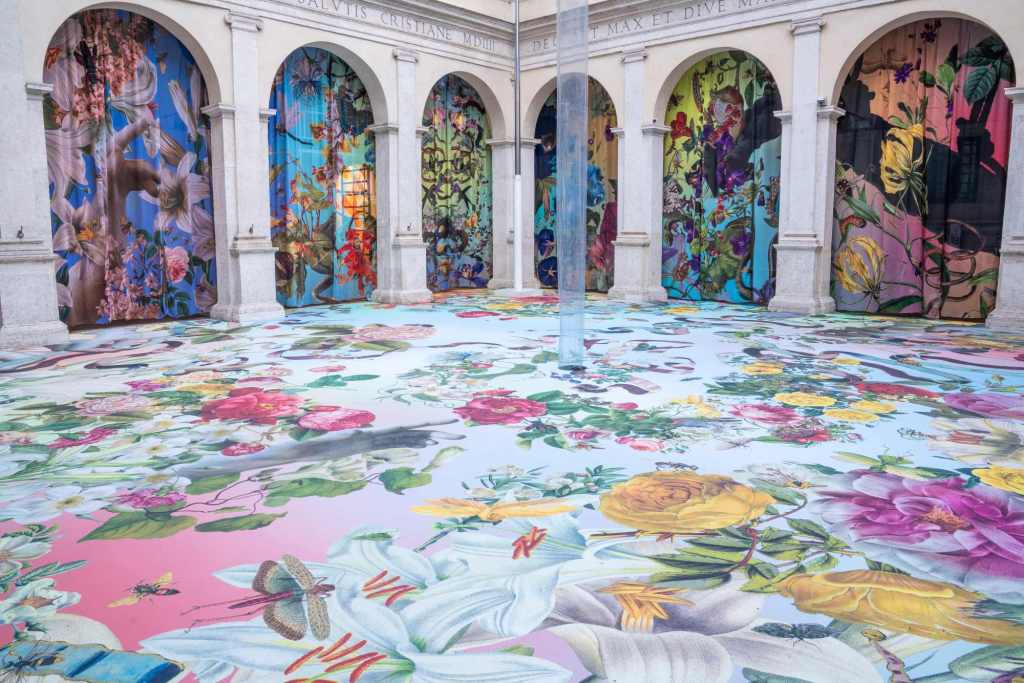
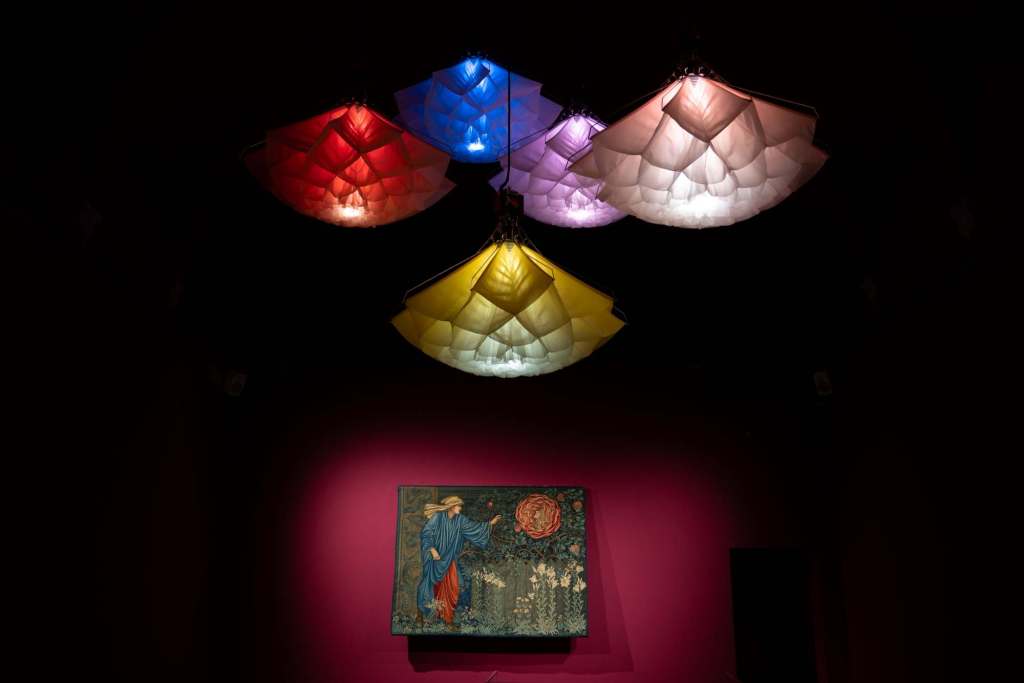
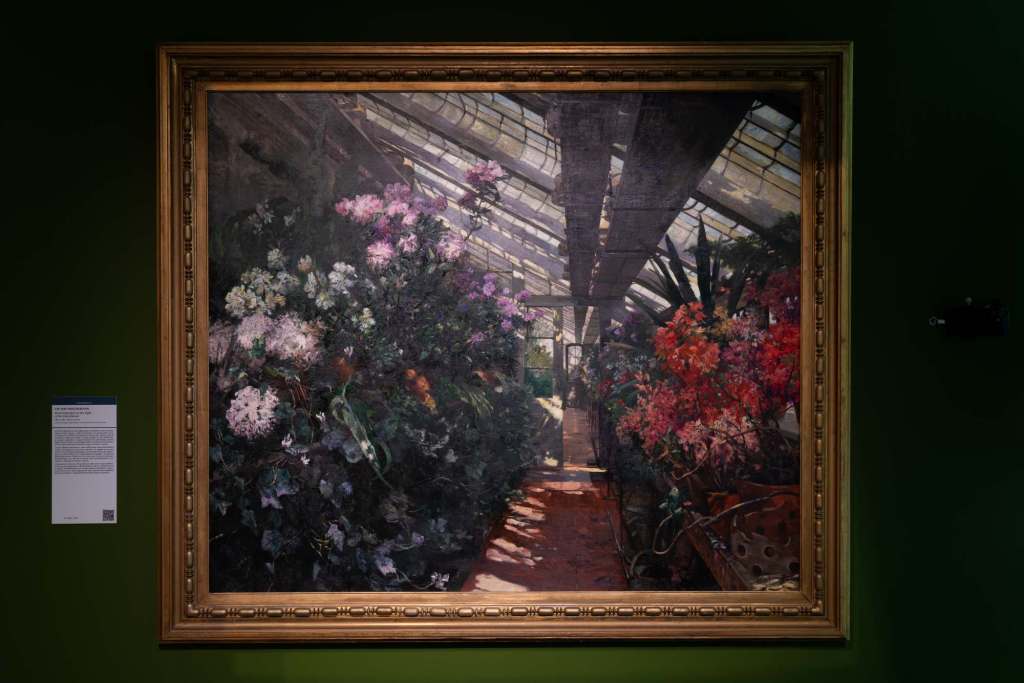
Visitors will encounter a rich mix of media—paintings, sculptures, manuscripts, tapestries, photographs, and immersive installations. Historic artists such as Jan Brueghel the Elder, Edward Burne-Jones, and Girolamo Pini present flora as a symbol of love, resilience, and even rebellion. Their works are juxtaposed with contemporary creators like Ai Weiwei and Kapwani Kiwanga, who explore flowers as metaphors for social change and resistance.
“Flowers are much more than decorative elements,” says Natalia de Marco, Artistic Director of the Chiostro del Bramante. “They are universal symbols reflecting every facet of human life—spirituality, conflict, ecology, and love.”

credit Giovanni De Angelis
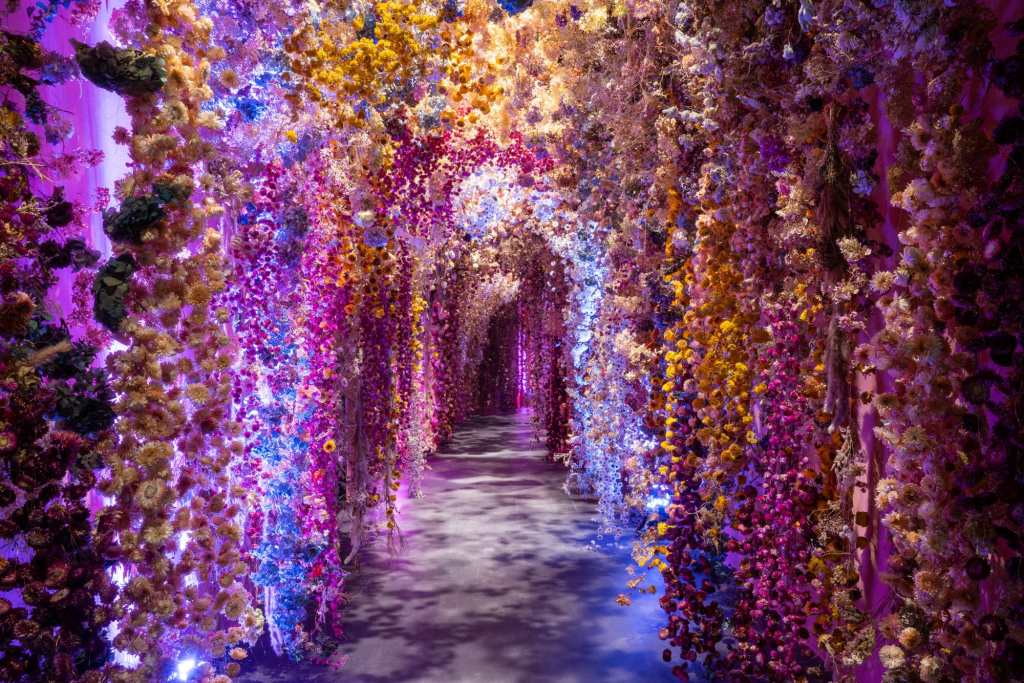
The exhibition’s layout merges visual spectacle with multisensory engagement. Rebecca Louise Law’s floral tunnel envelops guests in cascading blooms, while Austin Young’s outdoor installation transforms the Chiostro into an Edenic wonder. A special section investigates the roles of flowers in science and politics, emphasising issues such as pollination, civil rights, and environmentalism.
Technological contributions add another dimension. Studio Drift presents mechanical blooms mimicking nature’s grace, while Miguel Chevalier uses augmented reality to question the boundaries between natural and artificial. The podcast-style audio guide deepens the visitor experience with storytelling and emotional interpretation, bridging visual and verbal understanding.
Two dedicated sensorial experiences enhance the journey: an immersive green space curated by Coldiretti that highlights biodiversity, and an olfactory path by Campomarzio70. The latter features four signature floral scents—orange blossom, jasmine, rose, and tuberose—diffused through accessible stations to create a uniquely intimate experience.

Courtesy Zadok Ben-David credit Giovanni De Angelis
Beyond its artistic significance, Flowers serves as a call for environmental awareness. Interactive pieces like Tamiko Thiel’s Forest Flux/Waldwandel and Tomáš Libertíny’s Honeycomb Head of the Emperor Hadrian invite reflection on climate change, biodiversity, and sustainability. The exhibition’s educational programs engage students and the broader public alike, encouraging future generations to cultivate a more conscious relationship with nature.
Set within the Chiostro’s historic 16th-century architecture, the exhibition offers a rare convergence of tradition and innovation. As de Marco notes, “The beauty of flowers is universal, but their interpretation evolves through time.” In Flowers, that evolution is not just seen—it is felt, smelled, heard, and experienced.

credit Silvana Editoriale Publisher
 The Flora Journal