Franco Panzini’s Villa Caprile a Pesaro. Da dimora signorile a scuola agraria (Villa Caprile in Pesaro: From Aristocratic Residence to Agricultural School) offers a meticulously researched and elegantly presented study of one of the most emblematic villas in the Marche region, Italy. Published by Leo S. Olschki as the third instalment in the series I pomi delle Esperidi, the volume combines historical scholarship with a keen appreciation for the artistry of landscape design.

credit Leo S. Olschki
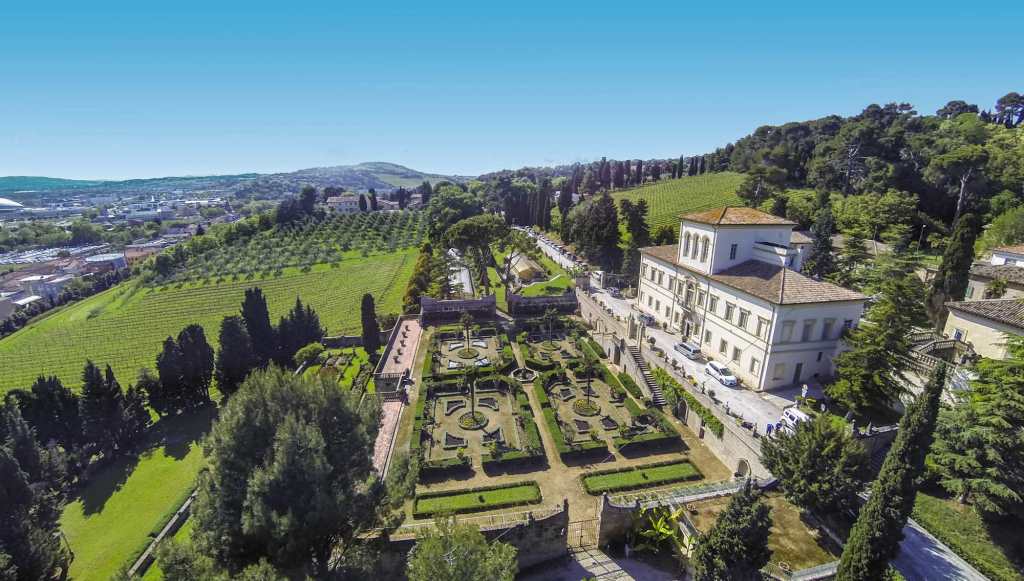
Originally commissioned by the Mosca family in 1640, Villa Caprile occupies a commanding position on the hills overlooking Pesaro. Panzini and his collaborators trace the villa’s evolution across nearly four centuries, revealing how its identity shifted from a symbol of aristocratic leisure to a hub of agricultural education in the late 19th century. This transformation is framed within broader cultural and socio-economic currents, demonstrating how architecture and landscape intersect with historical change.
One of the book’s strengths lies in its attention to decorative details and the dialogue between architecture and nature. Archival sources, iconography, and plans are analysed alongside on-site observations, producing a nuanced narrative that balances scholarly rigour with visual richness. The numerous illustrations and photographs—many previously unpublished—enhance the reader’s understanding of both the villa’s physical fabric and its symbolic resonances.

credit Leo S. Olschki

credit Leo S. Olschki
Particularly compelling is the section devoted to the gardens, which remain among the most celebrated in central Italy. Developed on five terraced levels, the gardens exemplify the Italian formal style, articulated through geometric parterres, boxwood hedges, and axial perspectives. Their most distinctive feature, however, is the intricate system of waterworks: fountains, water jets, and playful hydraulic devices that once delighted guests in a choreography of movement and sound. Panzini situates these elements within the European tradition of garden hydraulics while emphasising their local specificity and enduring appeal.

credit Leo S. Olschki

credit Leo S. Olschki

The volume concludes with an account of the villa’s modern role as an agricultural school and a public heritage site, underscoring the challenges and opportunities of preserving historical gardens in contemporary contexts. Far from being a mere historical monograph, this book invites reflection on the layered meanings of landscape, continuity, and adaptation.
Richly documented and thoughtfully written, Villa Caprile a Pesaro is an indispensable resource for historians of architecture and landscape, as well as for anyone interested in the cultural history of the Italian villa. It confirms Villa Caprile’s status not only as a monument of Baroque taste but also as a living testimony to the evolving relationship between land, society, and design.

 The Flora Journal