On view at Lisbon’s National Museum of Natural History and Science (MUHNAC) until August 4, Traces of Memories by Polish visual artist, researcher, and art historian Weronika Anna Rosa, in collaboration with perfumer Michael Ælfric Nordstrand, exemplifies the increasing tendency of contemporary art to mediate between aesthetic experience and environmental discourse. Curated by Sofia Marçal, the exhibition situates itself at the intersection of sensory immersion and scientific inquiry, offering a nuanced meditation on biodiversity loss. This crisis remains alarmingly abstract in the public imagination.
credit Olga Shatokha
credit Olga Shatokha
credit Olga Shatokha
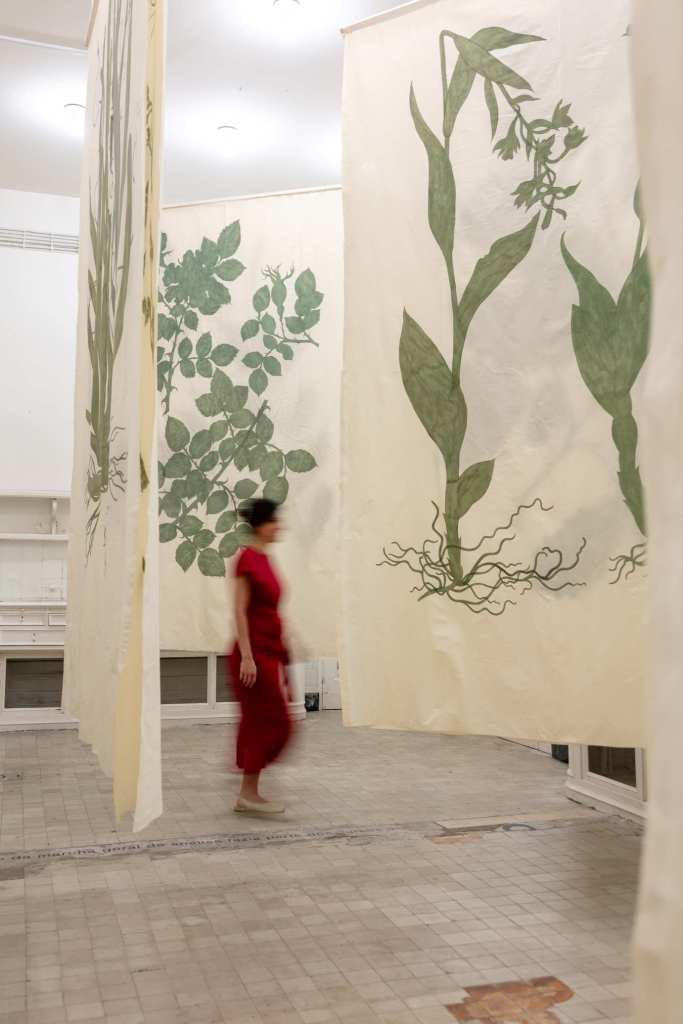
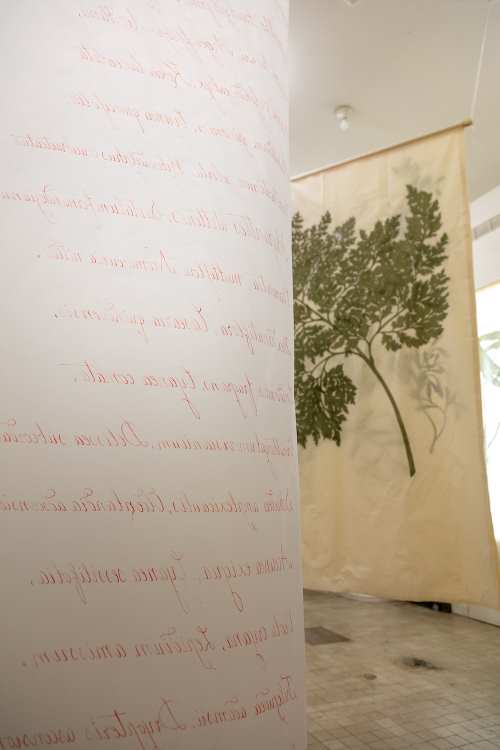
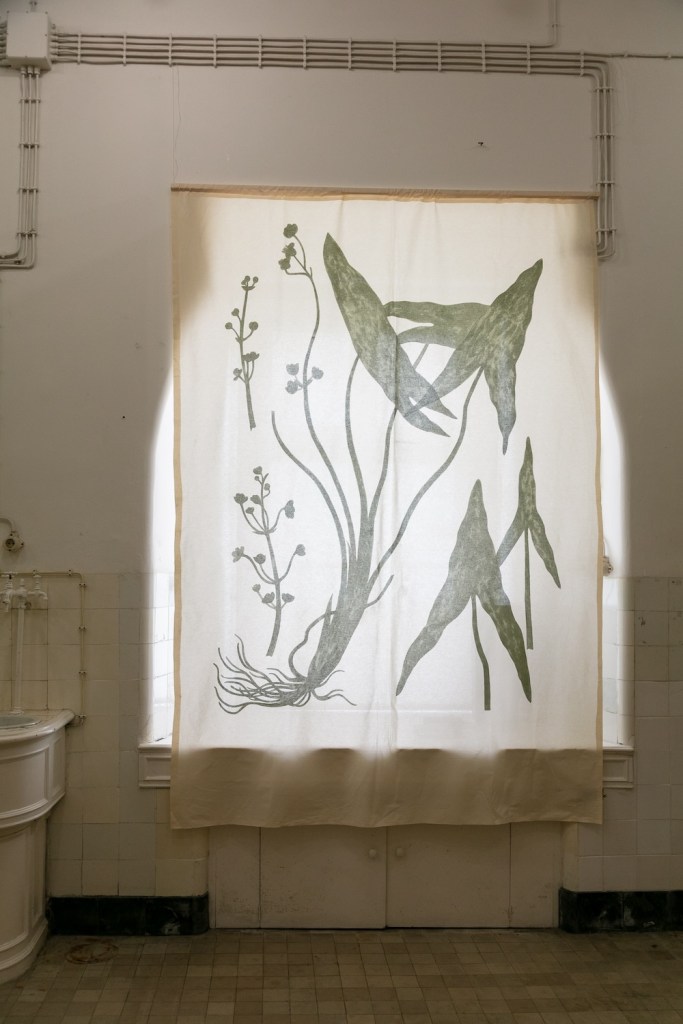
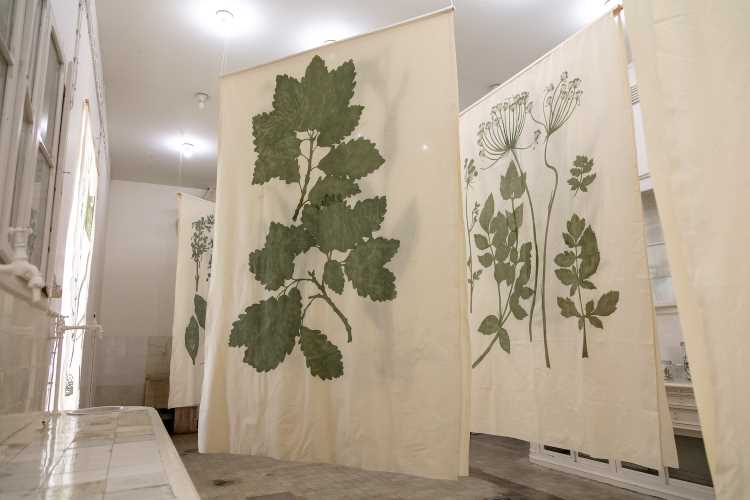
At the core of Rosa’s project lies an exploration of memory as both a biological and cultural archive. Her large-scale paintings on organic textiles, depicting plant silhouettes magnified beyond human proportions, evoke the format of traditional herbaria while subverting their original function. Historically conceived as instruments of taxonomy and preservation, herbarium sheets once guaranteed a species’ permanence within human knowledge even as its presence in the wild diminished. Rosa radicalises this logic: her monumental renderings transform documentary function into existential lament, foregrounding the tension between representation and disappearance.
The multisensory structure of the installation intensifies this dialectic. Sound—specifically, the rhythmic and irregular tonalities of water in motion—serves as an auditory metaphor for continuity and vulnerability. Recent scientific studies indicating plants’ capacity to perceive sound waves add a further layer of conceptual rigour, underscoring the artist’s interest in the porous boundary between empirical fact and poetic speculation.
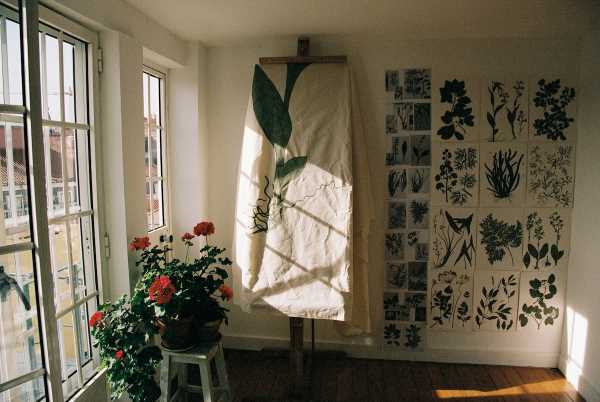
Nordstrand’s olfactory intervention operates on yet another register. The bespoke fragrance, suggestive of damp earth and untamed vegetation, enlists the mnemonic potency of scent to activate what might be termed an “affective ecology.” This move aligns with broader currents in contemporary art that privilege sensory experience as a means of reconfiguring ethical attitudes toward the nonhuman.
While immersive exhibitions often risk aestheticising crisis, Traces of Memories resists such reduction through its insistence on fragility rather than spectacle. It does not monumentalize nature as a sublime other; instead, it invites contemplation of its precarity in the Anthropocene. By translating the language of extinction into a phenomenological encounter, Rosa offers a critical model for how art can intervene—neither didactically nor passively—in the discourse of environmental stewardship.
 The Flora Journal