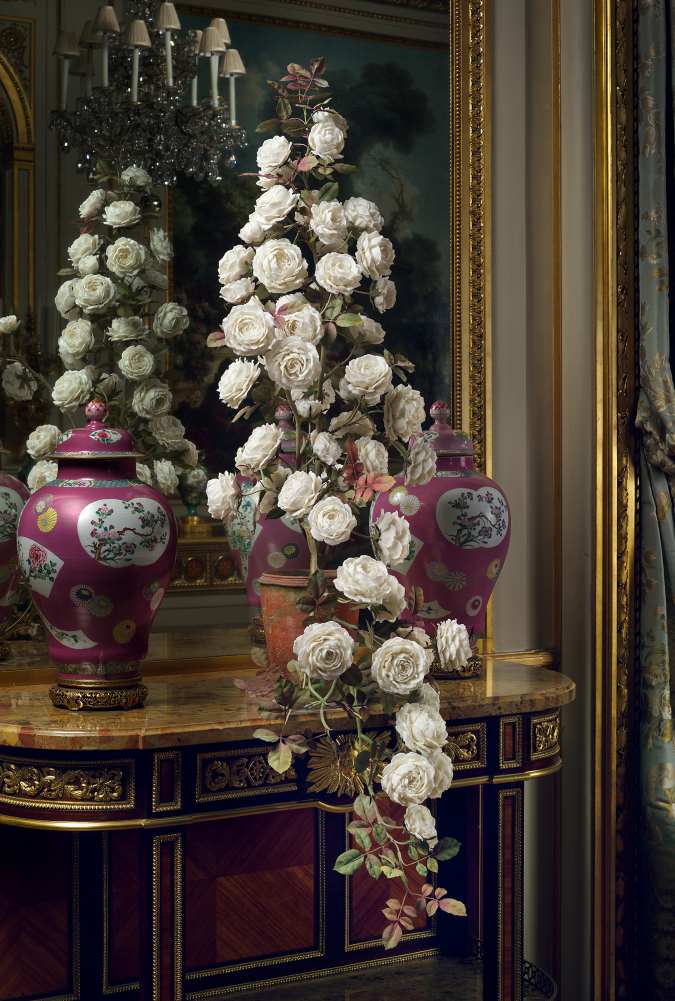
When The Frick Collection reopened its historic Fifth Avenue home, in New York, USA, on April 17, 2025, after a five-year renovation, visitors were greeted not only by restored galleries and newly unveiled spaces but also by a garden that will never fade. Ukrainian-born artist Vladimir Kanevsky was commissioned to create nineteen porcelain floral sculptures, installed throughout the mansion in an exhibition titled Porcelain Garden. Originally scheduled to close in October, the display has now been extended through November 17, 2025, allowing more visitors to experience its unique celebration of art and history.
credit The Frick Collection photo Joseph Coscia Jr.
credit The Frick Collection photo Joseph Coscia Jr.
credit The Frick Collection photo Joseph Coscia Jr.
The installation honours the museum’s origins. When The Frick first opened in December 1935, Helen Clay Frick, daughter of founder Henry Clay Frick, enhanced the galleries with carefully chosen floral arrangements. Nearly ninety years later, Kanevsky reimagines that gesture, offering porcelain blossoms that echo the past while engaging with the present.
Curated by Xavier F. Salomon, Deputy Director and Peter Jay Sharp Chief Curator, the project bridges eras and traditions. “As we reopen the Frick after a five-year closure, it felt only fitting to celebrate the occasion similarly to the 1935 opening,” Salomon explains. “Vladimir Kanevsky’s exquisite porcelain creations allow us to honour this tradition—along with the museum’s important collections of historic porcelain and ceramics.”
credit The Frick Collection photo Joseph Coscia Jr.
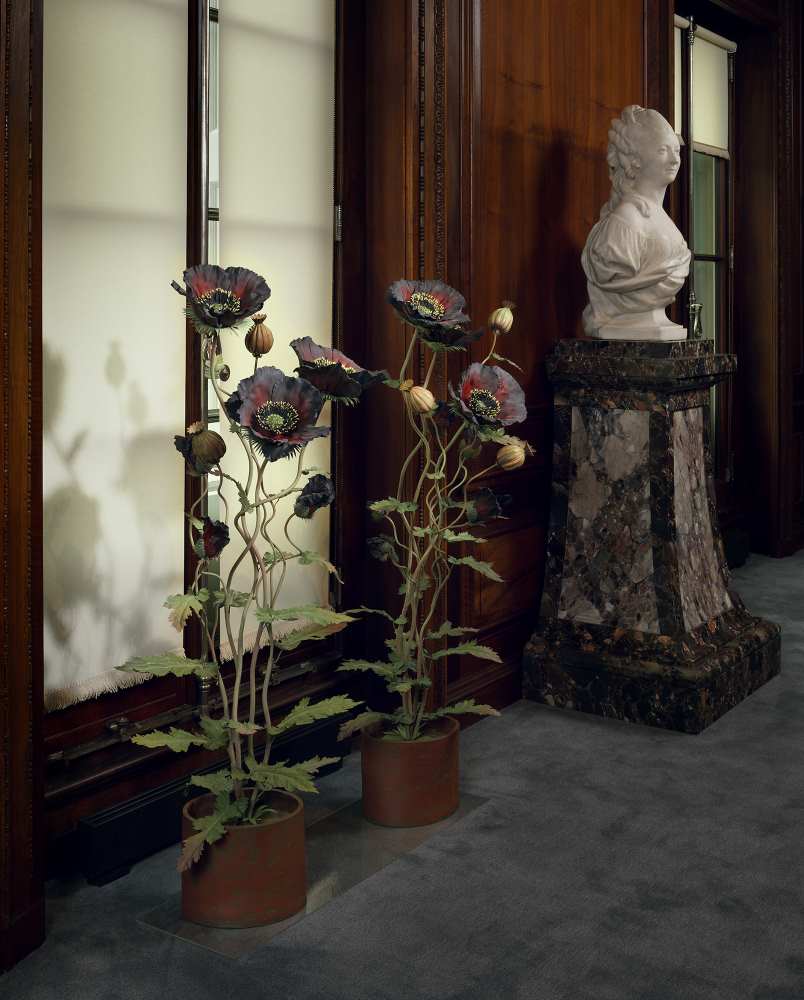
credit The Frick Collection photo Joseph Coscia Jr.
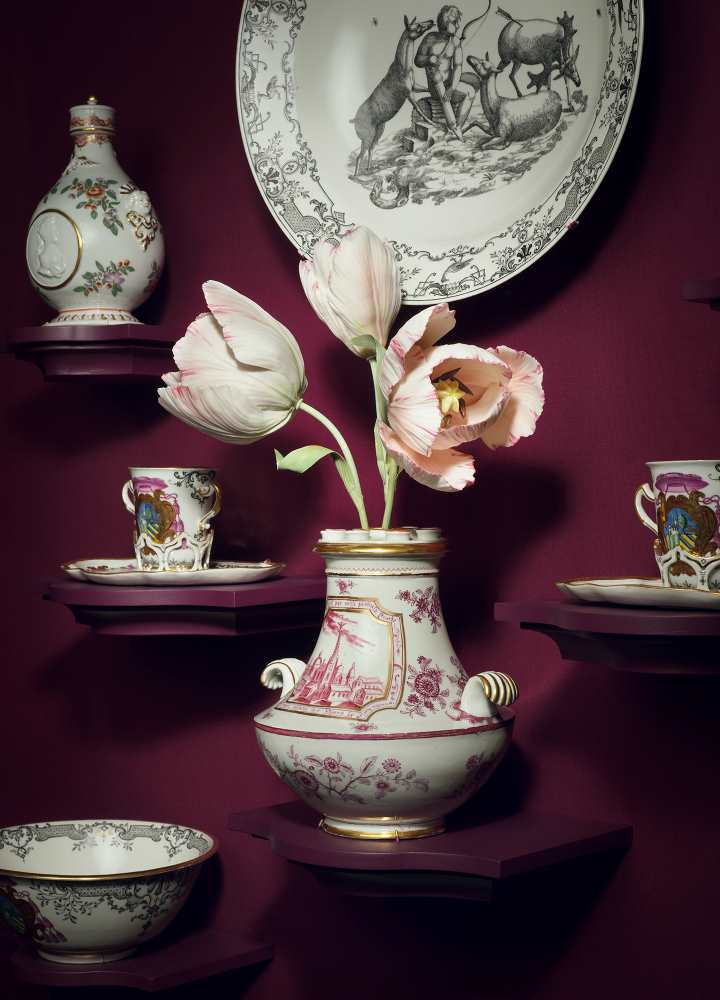
credit The Frick Collection photo Joseph Coscia Jr.
Kanevsky, who studied architecture in Kharkiv before emigrating to the United States, has been creating porcelain flora for more than three decades. His works balance botanical precision with sculptural imagination, evoking both still-life painting and the long tradition of European porcelain artistry. His creations have appeared in distinguished venues, including the State Hermitage Museum in St. Petersburg and the Hillwood Estate in Washington, D.C.
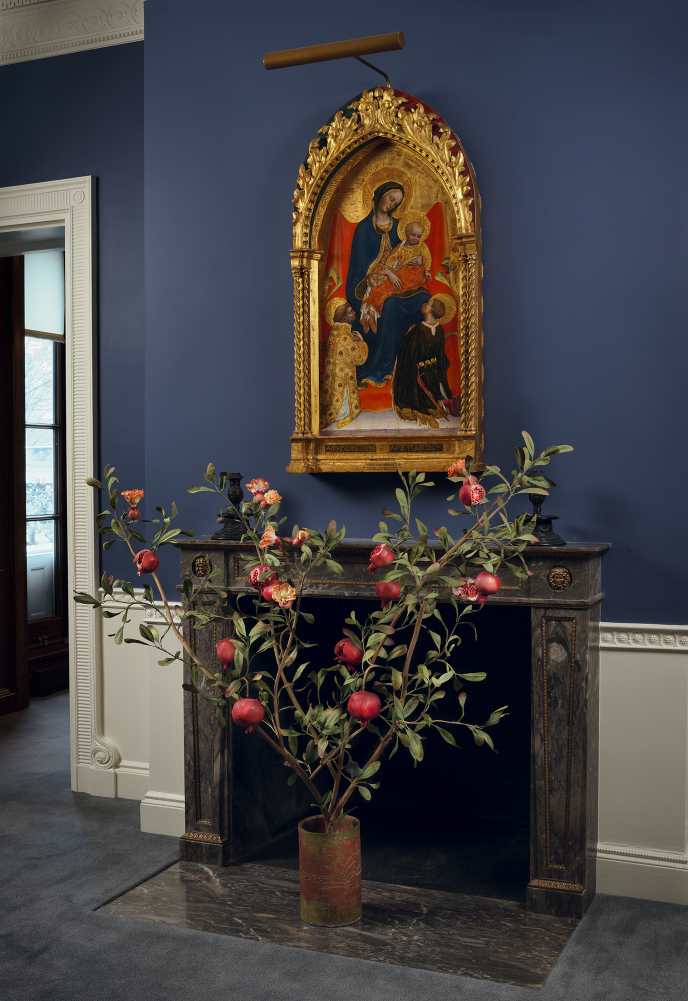
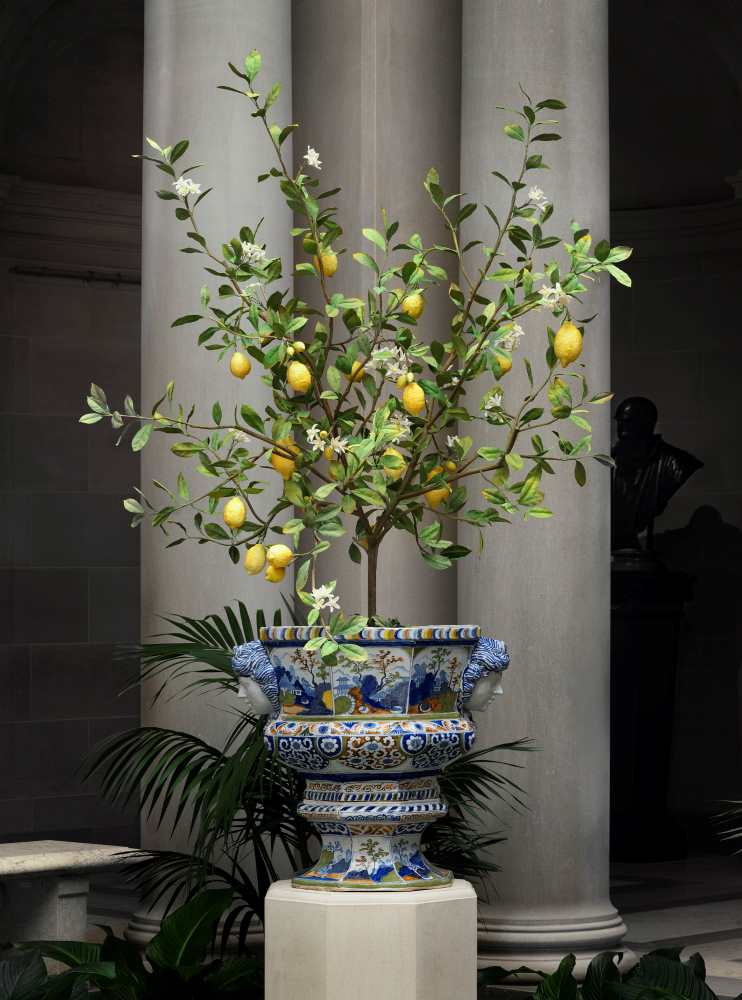
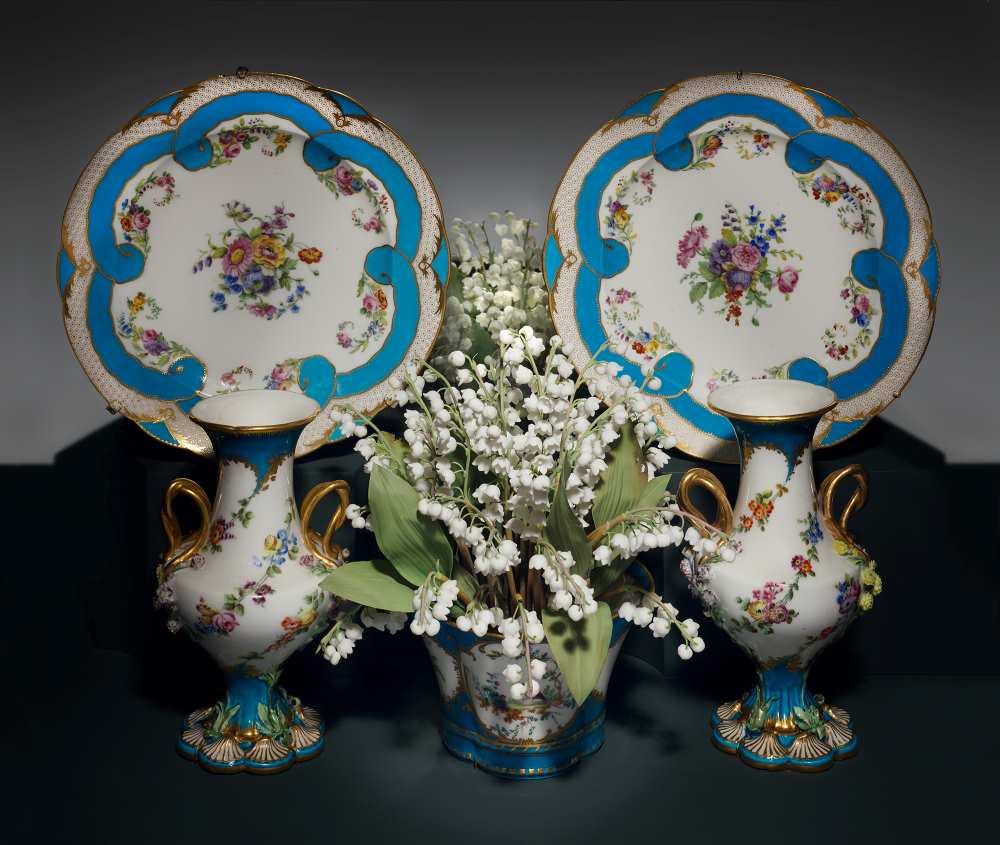
At The Frick, the artist both recalls and reinvents Helen Clay Frick’s original arrangements. In two cases, the camellias in the Library and lilies of the valley in the Boucher Room, he directly reprises her selections. Elsewhere, he builds fresh dialogues between flora and art. A porcelain pomegranate tree in the Gold-Grounds Room references the fruit’s symbolic role in Italian Renaissance painting, while a wild artichoke under Bellini’s St. Francis in the Desert evokes the rugged landscape of the saint’s retreat. In the Garden Court, Kanevsky’s lemon tree grows from an eighteenth-century French faience planter once designed to display living citrus.
The museum’s newly accessible second floor adds further depth to the installation. In the Walnut Room, Henry Clay Frick’s former bedroom, porcelain black poppies mark both a tribute and a meditation on mortality, commemorating the collector’s legacy in the very room where he died in 1919. Nearby, porcelain tulips appear in a rare tulip-shaped Du Paquier vase from 1725, reinforcing the dialogue between Kanevsky’s modern creations and The Frick’s historical treasures.
Porcelain Garden continues the museum’s tradition of inviting contemporary artists into its spaces, following presentations by Arlene Shechet, Edmund de Waal, Olafur Eliasson, and Nicolas Party. By weaving together nature, history, and art, Kanevsky’s porcelain flora reminds visitors that beauty can be both timeless and ever renewed.
 The Flora Journal