At the 19th International Architecture Exhibition – La Biennale di Venezia, in Venice, Italy, the Belgian Pavilion is set to transform into a living experiment, exploring how plant intelligence can redefine the relationship between architecture and climate. Titled “Building Biospheres”, the exhibition is curated by landscape architect Bas Smets in collaboration with renowned neurobiologist Stefano Mancuso, with the support of the Flanders Architecture Institute (VAi). Running until November 23, 2025, the pavilion will function as both a prototype and a vision for how architecture can evolve into dynamic, plant-driven ecosystems.
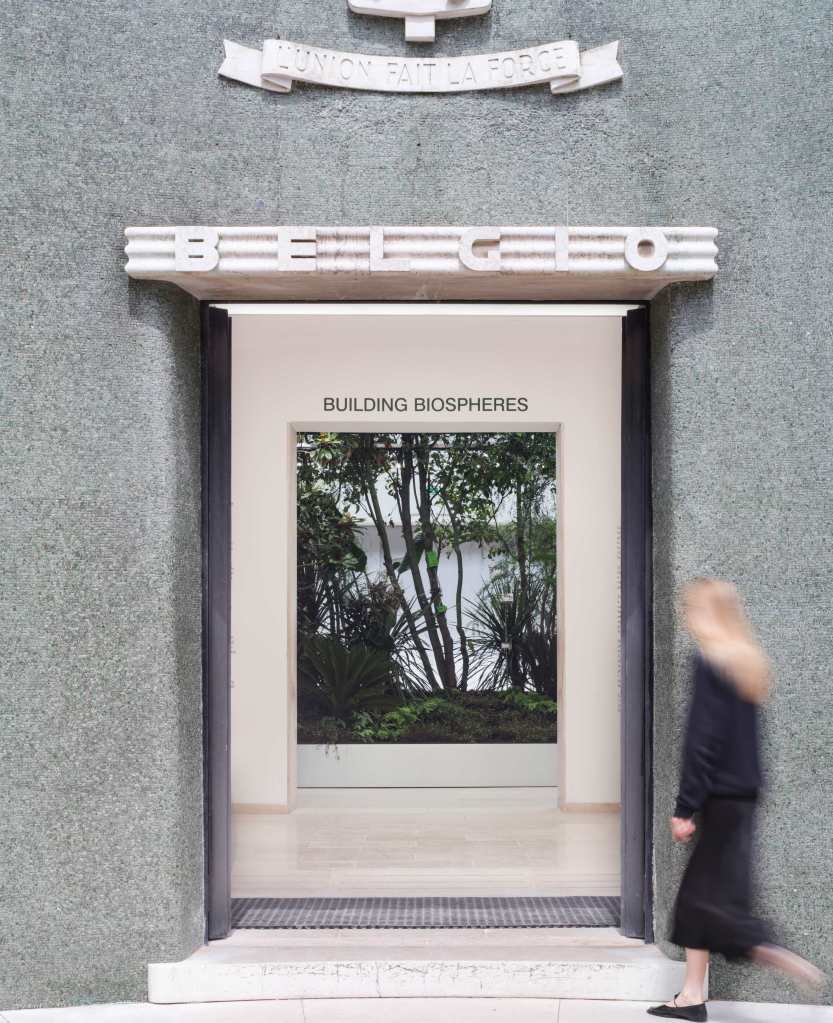
Building to the Biospheres by Bureau Bas Smets with Stefano Mancuso, Flanders Architecture Institute 2025 credit Michiel De Cleene
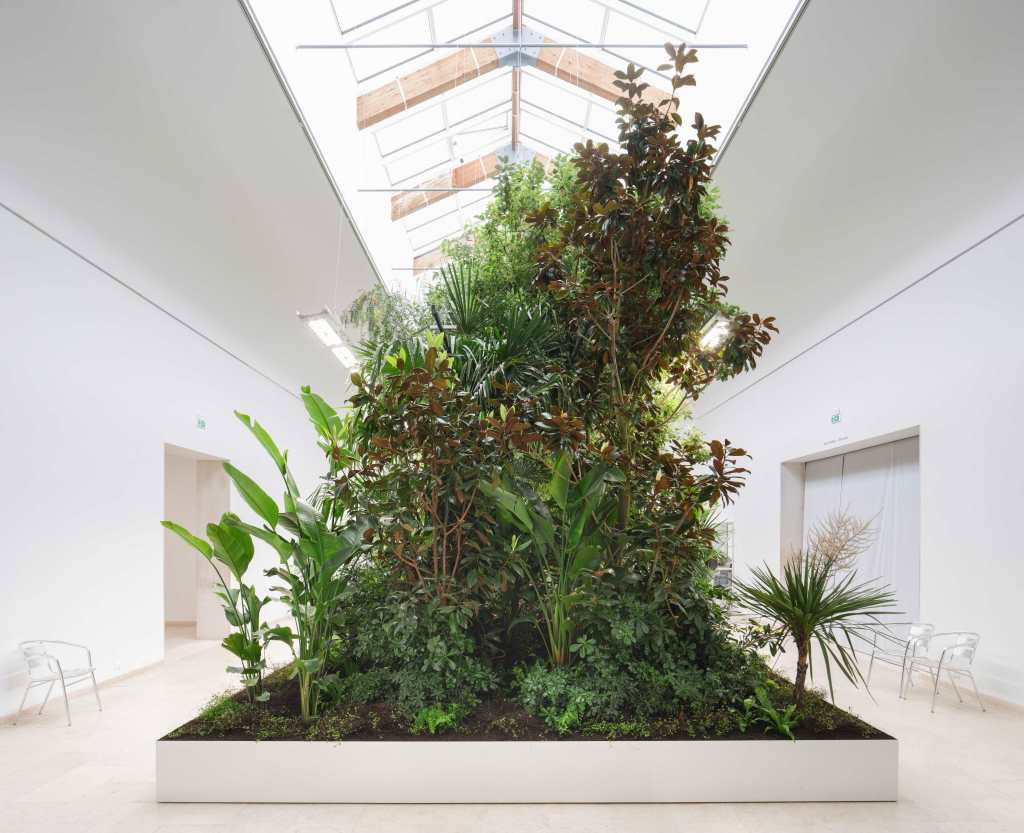
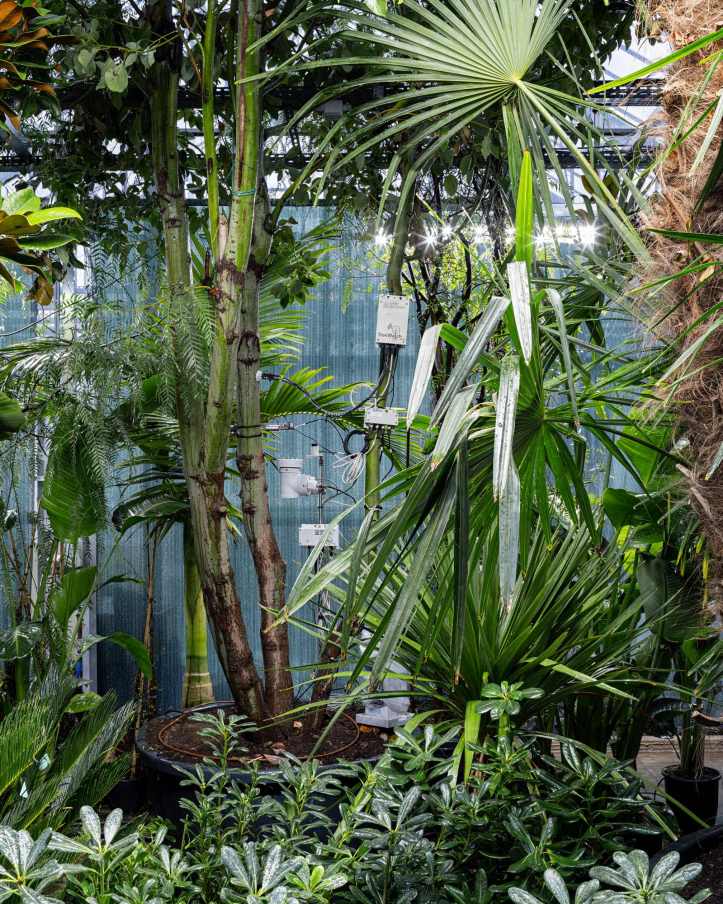
credit Michiel De Cleene
The central theme, Plant Intelligence, addresses one of the most pressing questions of our time: how can buildings adapt to the climate crisis in ways that work with, rather than against, natural systems? For centuries, architecture has been conceived as a form of protection from unpredictable weather, gradually evolving into fully controlled artificial climates. Today, most buildings isolate their interiors from external conditions. By contrast, Building Biospheres proposes a radical shift: letting plants actively regulate indoor temperatures.
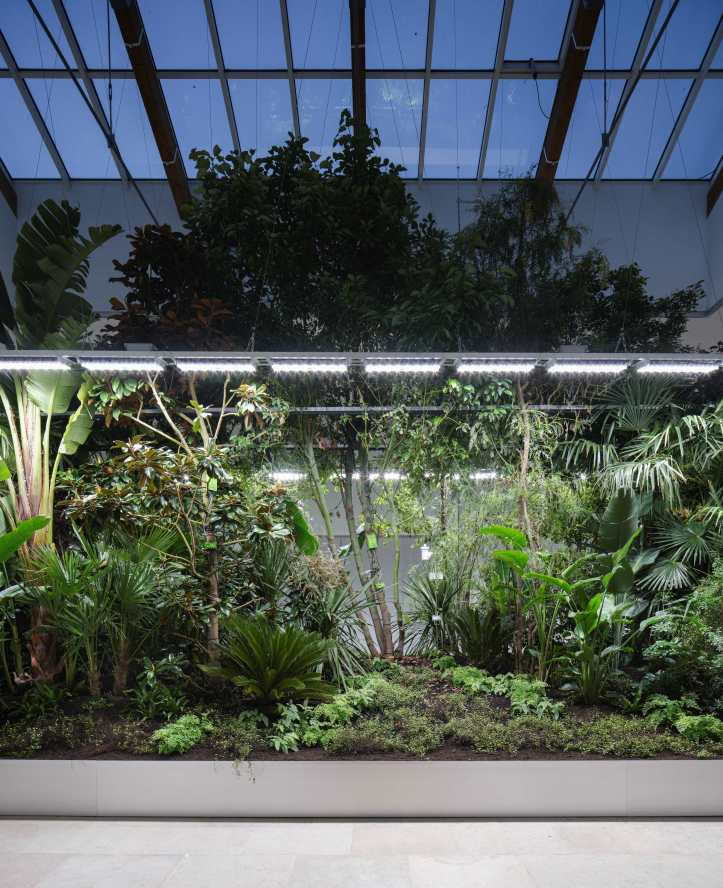
The pavilion’s main hall will house more than 200 plants beneath its skylight, creating a self-regulating microclimate. Using advanced monitoring systems, the behaviour of these plants, such as their hydration needs and responses to light, will be tracked in real time. This data will then be used to trigger irrigation, lighting, and ventilation, establishing a feedback loop where the needs of plants, humans, and buildings converge. As Smets explains, the aim is to test “the possibility for plants to actively produce and control a building’s indoor climate,” opening the door to architecture as a living microclimate shared by humans and non-humans alike.
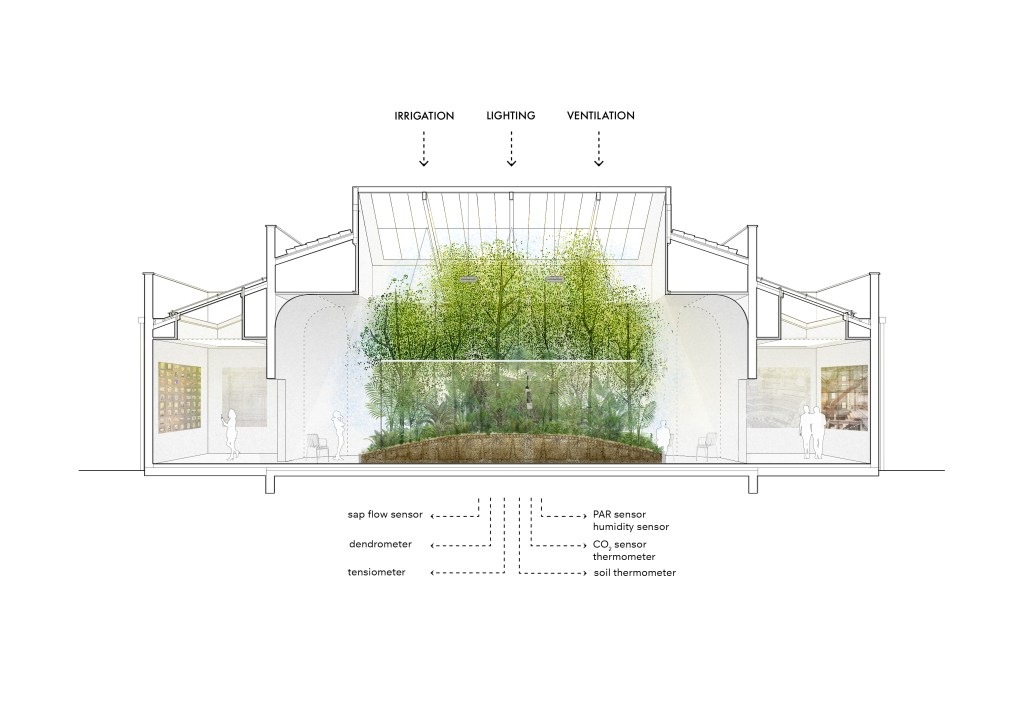
credit Bureau Bas Smets
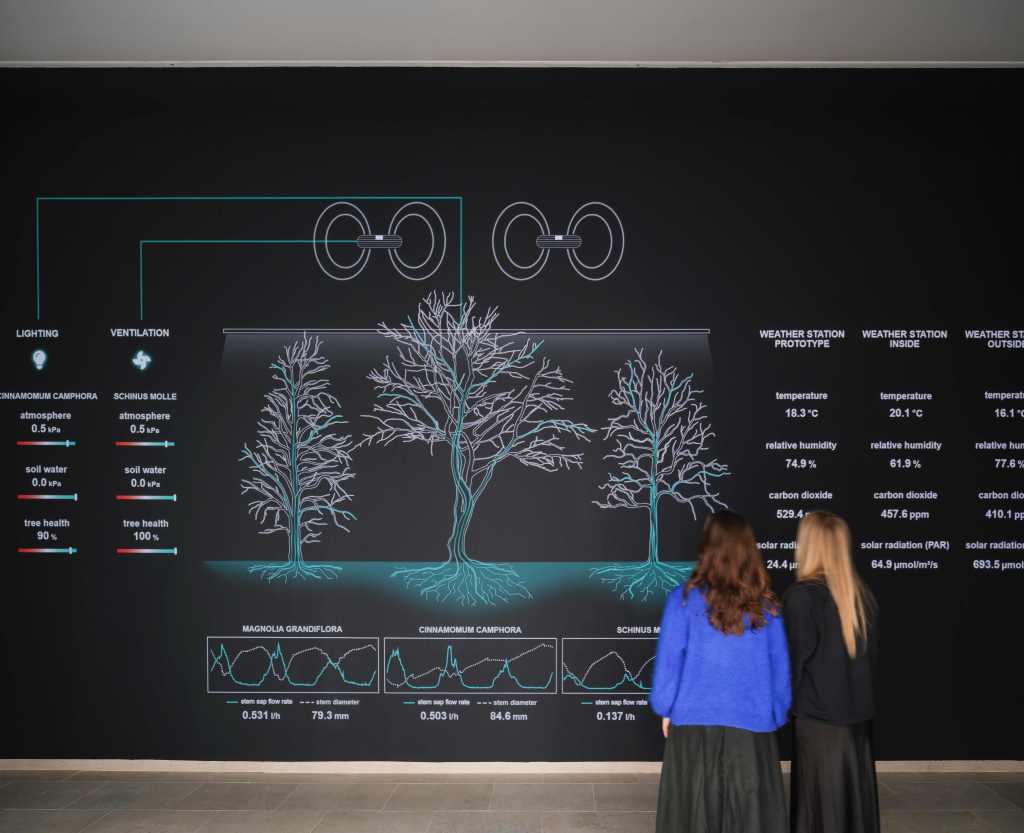
The Belgian Pavilion, built in 1907 and the oldest national pavilion in the Giardini, has been reimagined for the occasion. Its side rooms provide historical context and showcase experiments by a new generation of Belgian architects, while the back room displays live data from the functioning prototype. Four young architectural teams, Elmēs, Maud Gerard Goossens and Henri Uijtterhaegen, and Panta, Lisa Mandelartz Schenk and Steven Schenk, have been invited to expand on the curators’ ideas, speculating on future architectural forms driven by natural intelligence.
The project reflects a profound cultural and scientific collaboration. Mancuso, a pioneer of plant neurobiology, has long argued that plants possess forms of intelligence capable of informing human systems. Smets, known for his innovative landscapes such as the redesign of Notre-Dame’s surroundings in Paris, brings this vision into the realm of architecture and urban design. Together, their work imagines a future where buildings are not inert shells but responsive biospheres, embedded in the rhythms of life.
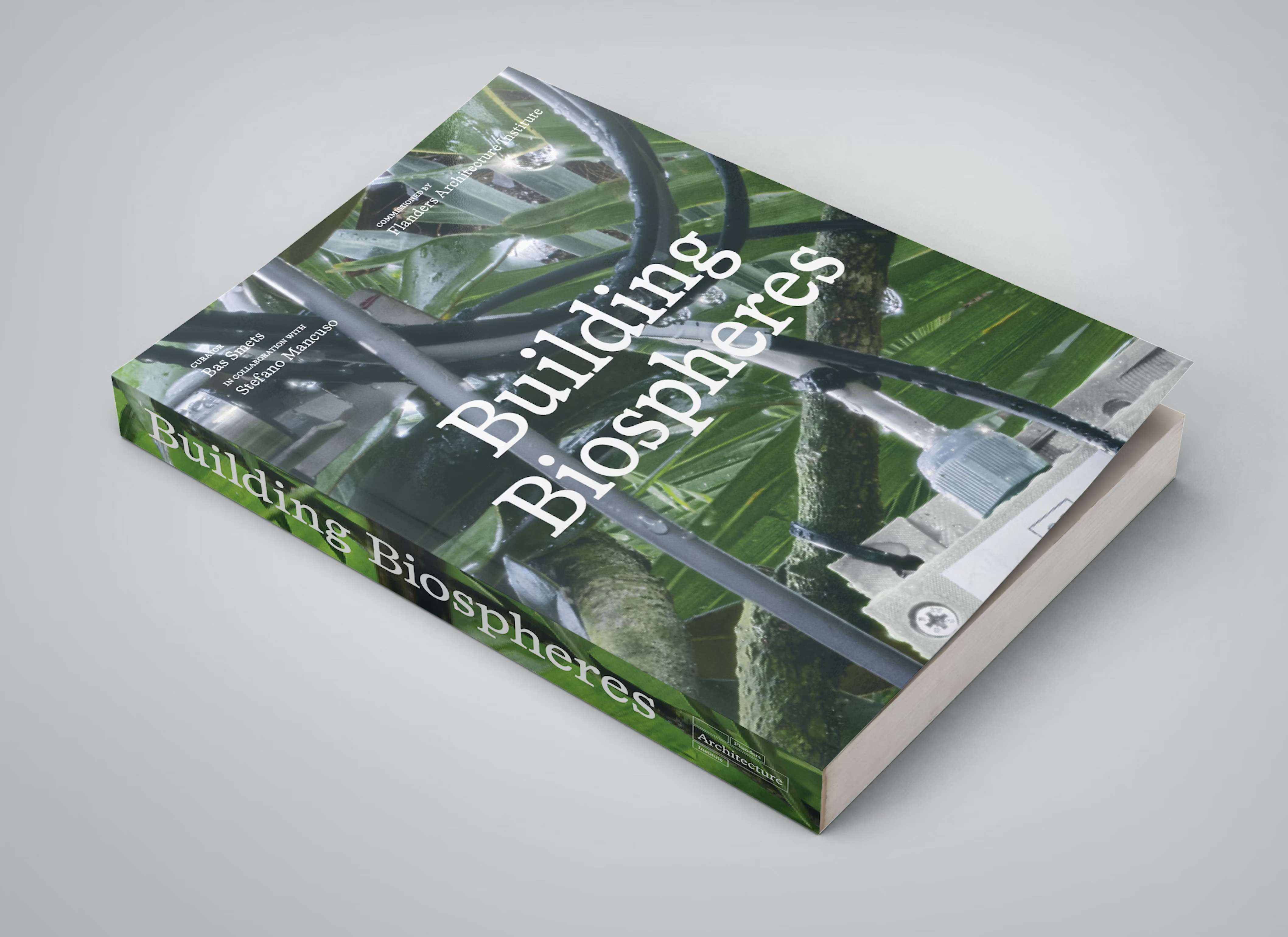
Accompanying the exhibition is a comprehensive catalogue, featuring essays from leading voices in architecture, ecology, and philosophy. The publication further situates Building Biospheres within a growing discourse on how to confront climate change through interdisciplinary design.
Ultimately, the Belgian Pavilion is not simply an exhibition but an experiment in resilience. By turning the pavilion into a laboratory for plant-human collaboration, it asks us to reconsider what buildings are and what they could become. As Dennis Pohl, director of the VAi, notes: “We have to design with our biosphere, not against it.” In Venice, Building Biospheres makes this call both tangible and urgent.
credit Flemish Architecture Institute photo Michiel De Cleene/Design Haegeman Temmerman studio
 The Flora Journal