The creation of Calder Gardens on Philadelphia’s Benjamin Franklin Parkway is the result of a rare collaboration between two world-renowned figures: Swiss architects Herzog & de Meuron and Dutch landscape designer Piet Oudolf. Together, they have shaped a cultural destination where building and planting are inseparable, and where Alexander Calder’s sculptures converse with a living, evolving environment.
From the outset, the ambition was not to design a museum in the traditional sense, but to immerse visitors in a choreography of art, architecture, and landscape. Herzog & de Meuron’s curved, partially embedded structure appears to rise gently from the earth, its shimmering façades catching the light without imposing on the skyline. Around and within it, Oudolf has composed a 1.8-acre garden of over 250 plant species: a dynamic environment that changes not only season by season, but day by day.
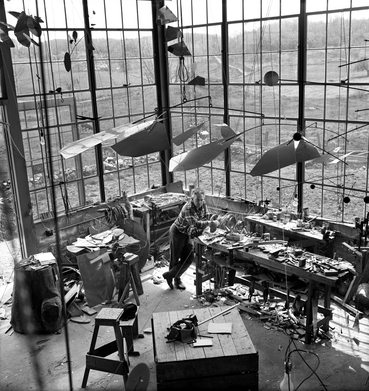
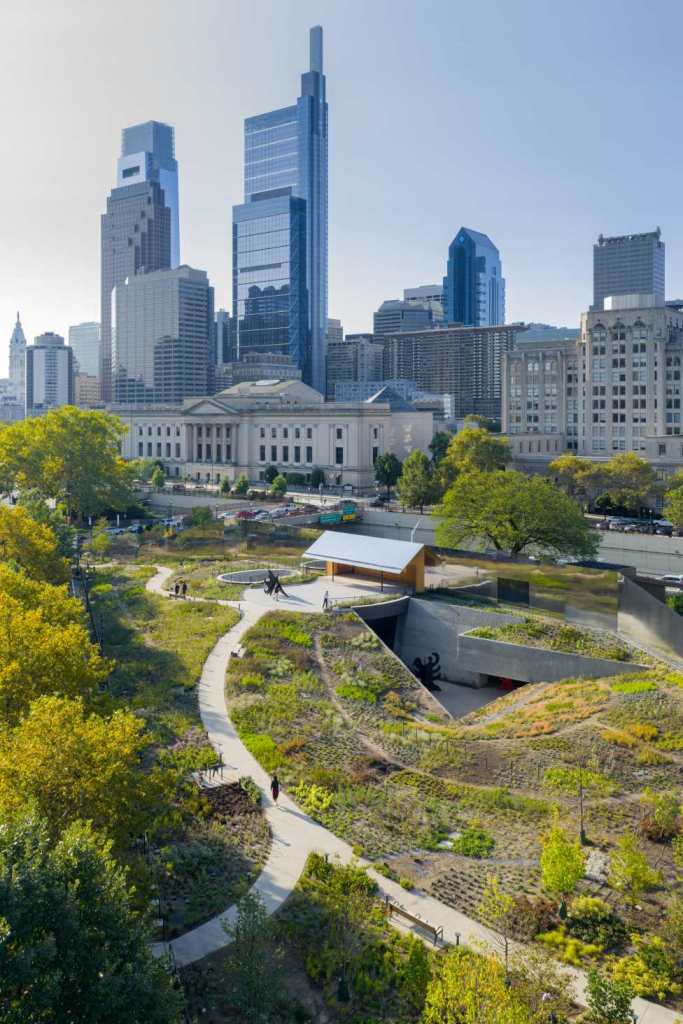
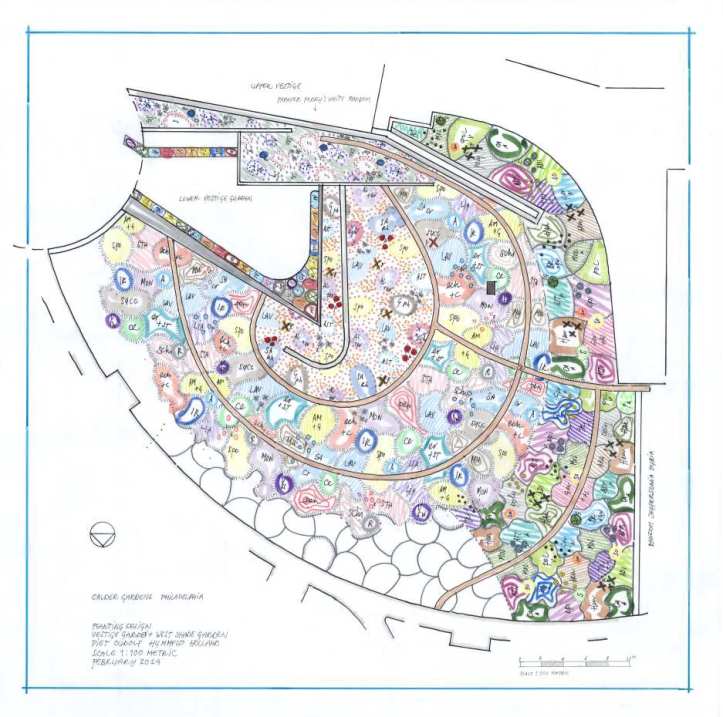
Oudolf is celebrated for transforming how the world understands planting design. His work favors the beauty of structure and movement, even in decay, over fleeting ornament. “At Calder Gardens, I have designed a landscape that responds not only to the specific conditions of the site but to Calder’s powerful embrace of movement and change as defining elements of his art,” Oudolf explained.
Visitors encounter a sequence of distinct garden rooms, each offering new atmospheres and perspectives. Gentle curving paths encourage a contemplative pace, revealing fresh views at every turn. At one entrance, a canopy of young oaks leads to a sunlit meadow where Asters, Beebalm, and Turkish Sage bloom in succession. From another approach, towering perennials such as Eupatorium and Thalictrum rise above eye level, attracting pollinators and enveloping visitors in color and motion. Toward the center, planting dissolves into a prairie-inspired matrix dominated by little Bluestem and Sporobolus grasses, their motion evoking the vast landscapes of Middle America.
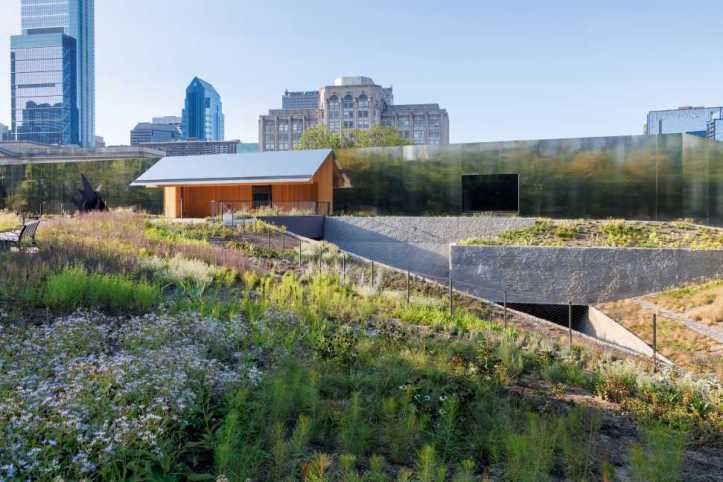
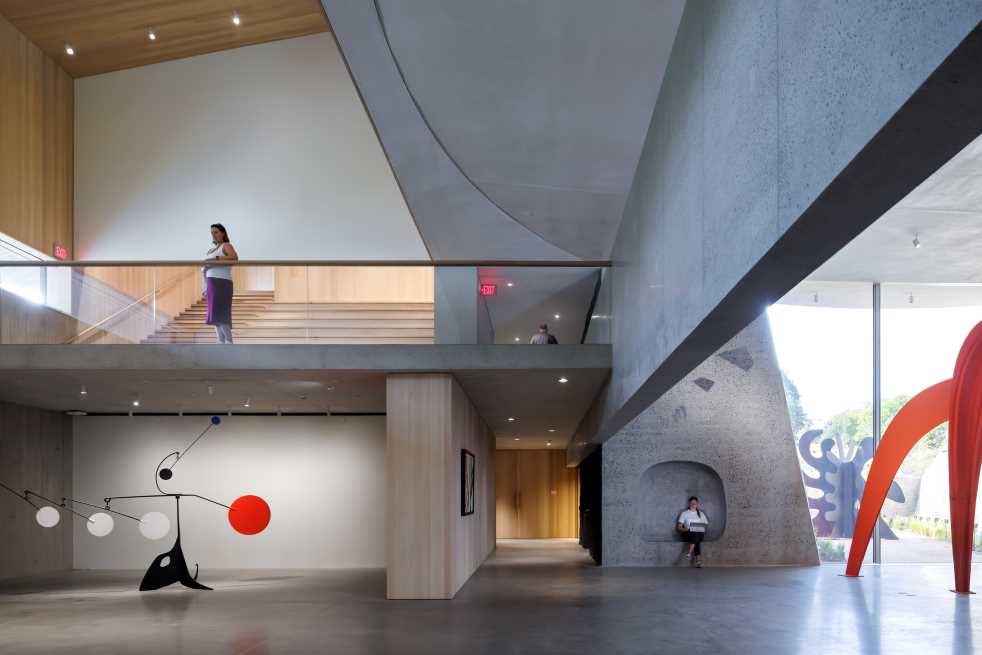
The building by Herzog & de Meuron reinforces this integration. Curved and partially embedded into the earth, it appears to emerge from the planting rather than dominate it. Two sunken gardens, visible from inside through vast panes of glass, entwine Calder’s sculptures with walls of Virginia creeper, climbing Hydrangea, and Wisteria, creating intimate spaces for reflection. “Calder Gardens embodies a kind of ‘no-design’ architecture,” said Jacques Herzog. “It’s a place where you can sit, wander, and observe, whether it’s nature or art, with the ease one has when one sits under a tree.”
For Philadelphia’s cultural leaders, the project strengthens the city’s identity. “Calder Gardens is an extraordinary space, and in joining the other cultural treasures along the Parkway, including the Barnes, the Rodin Museum, and the Philadelphia Museum of Art, it will further solidify Philadelphia’s position as one of the world’s most exciting cities in which to experience, and be transformed by art” said Marsha Perelman, President of the Trustees of Calder Gardens.
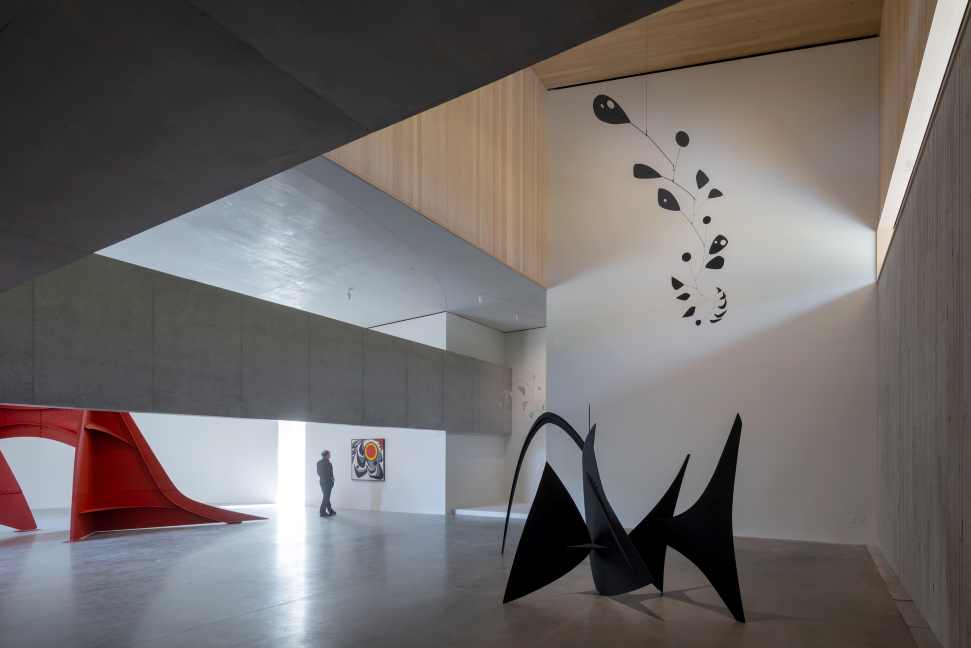
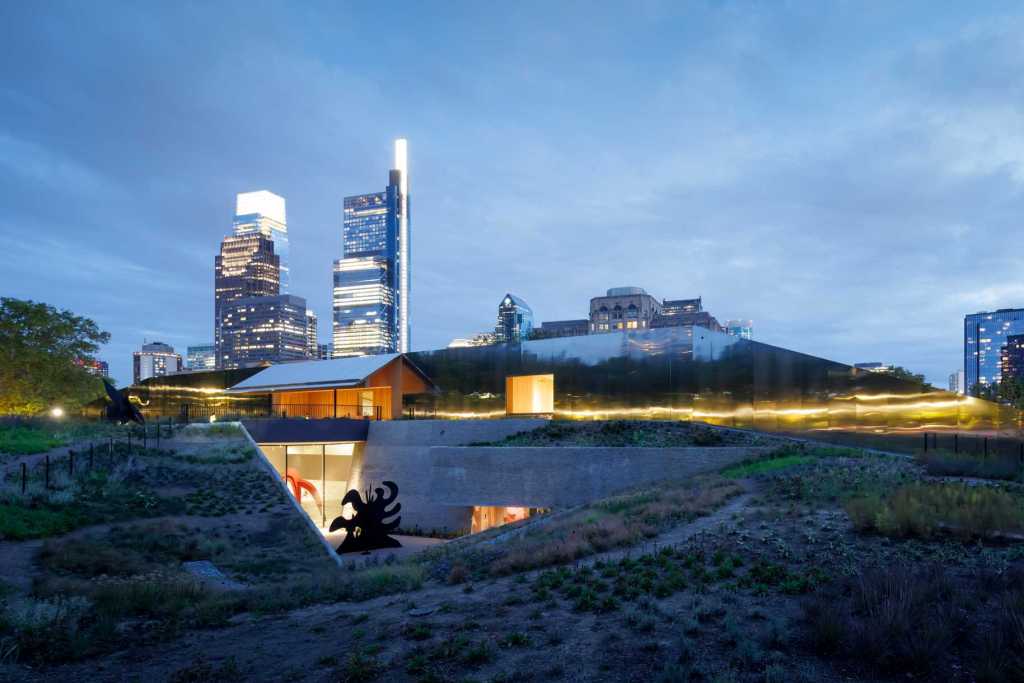
For Calder’s family, the setting captures his radical legacy. “On the surface, my grandfather pushed beyond established norms by collapsing mass and setting sculpture in motion. But on a deeper level, he explored how art can be experienced in a perpetual present—one that is always unfolding. Calder Gardens does not so much present a story as it offers an opportunity to activate this challenging notion. The architecture and gardens invite us to direct our own journey, to interpret what we see in a uniquely personal way, to use our hearts more than our heads. This is a site for reflection, introspection, and discovery” said Alexander S. C. Rower, President of the Calder Foundation.
Ultimately, Calder Gardens proposes more than a display of art objects. It is a sensory environment where sculpture, architecture, and landscape converge: a living landscape in which every visit offers a different encounter, shaped by time, season, and the visitor’s own pace of discovery.
 The Flora Journal