At the Museo di Roma at Palazzo Braschi, Italy, until April 12, 2026, the exhibition “Ville e Giardini di Roma: Una Corona di Delizie” (Rome’s villas and gardens: a crown of delights) offers a landmark exploration of the artistic evolution of Rome’s historic villas and gardens. Bringing together nearly 190 works: paintings, drawings, prints, and manuscripts; the exhibition presents the most comprehensive visual journey ever assembled on the subject, tracing the development of Roman gardens from the Renaissance to the late twentieth century.
Promoted by Roma Capitale and curated by Alberta Campitelli, Alessandro Cremona, Federica Pirani, and Sandro Santolini, with the support of an international scientific committee, the exhibition forms part of a broader initiative to enhance the city’s landscape heritage. Its mission is twofold: to explore how villas and gardens expressed power, culture, and refinement for popes, cardinals, and aristocrats, and to document how these spaces transformed alongside Rome itself, shifting from private realms of otium to public green spaces shaped by modern urban needs.
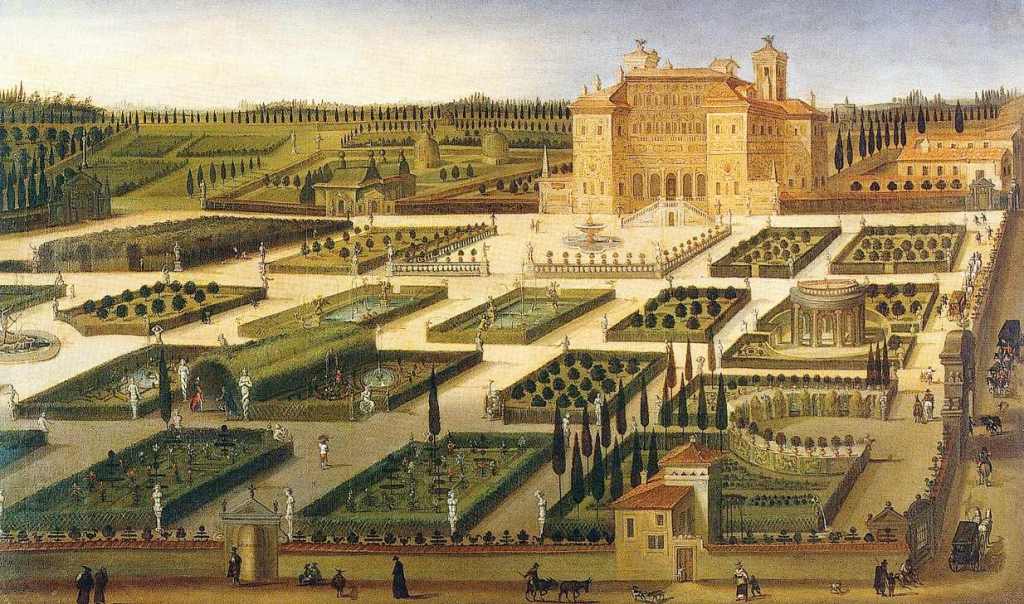
View of Villa Borghese credit Private collection
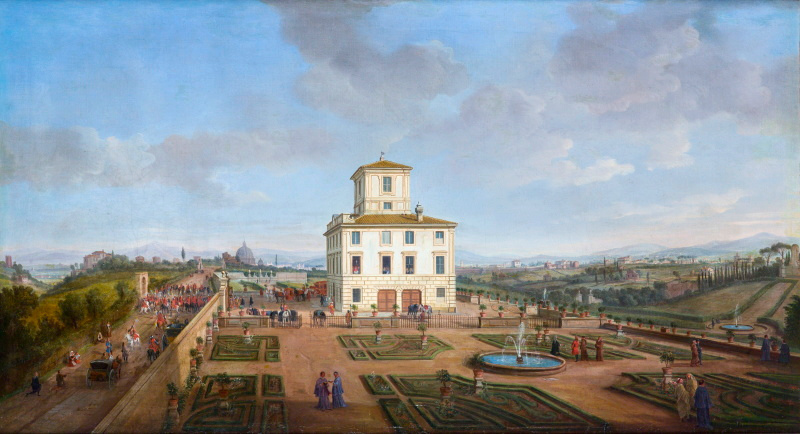
The exhibition unfolds across six thematic sections enriched by multimedia and immersive installations. Visitors are welcomed by an interactive map of Rome’s historic villas, offering a virtual gateway into the architectural and artistic wonders represented in the galleries.
The journey begins with the Renaissance villas of the 16th century, created as Rome re-emerged from medieval decline. Here, villas such as Villa Madama, Villa Giulia, and the Belvedere Vatican are illustrated through works by Hendrick van Cleve, Caspar van Wittel, Paolo Anesi, and others. These images capture the rediscovery of ancient ideals and the emergence of a distinctly Roman model of the garden, shaped by masters such asBramante, Raphael, and Vignola. A highlight is Joseph Heintz the Younger’s detailed view of Villa Mattei Celimontana.
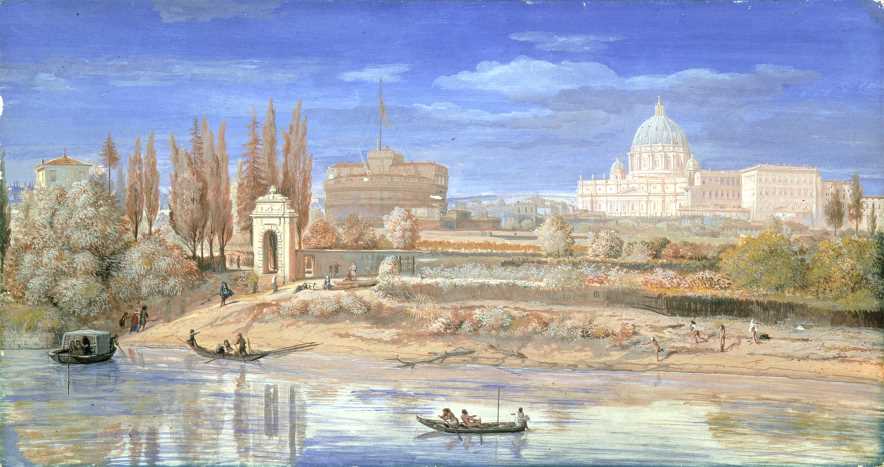

The 17th century section explores the Baroque villas, grand theatrical landscapes animated by fountains, sculptures, and exuberant architectural settings made possible by the revitalization of ancient aqueducts. The splendour of Villa Borghese and the now-lost Villa Ludovisi and Villa del Pigneto Sacchetti is captured in evocative paintings of the period.
The 18th century, marked by both magnificence and restraint, features villas with French-style parterres and more intimate designs shaped by economic change and shifting taste. The celebrated Villa Albani, designed with contributions from Marchionni, Piranesi, and Winckelmann, represents a pinnacle of Enlightenment culture, blending formal garden layouts with early elements of the English garden style.

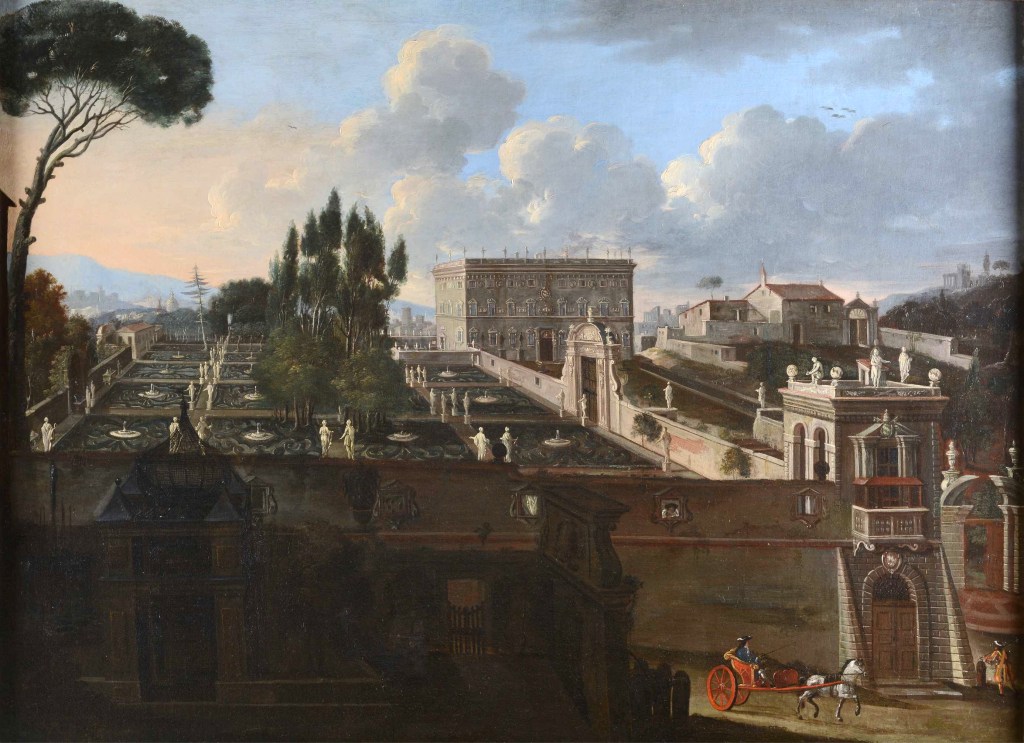
Villa Aldobrandini, 1648–53, credit Museo di Roma
The exhibition then examines the dramatic transformations of the 19th century, when warfare, political upheaval, and Rome’s designation as the capital of the Kingdom of Italy led to the destruction of several villas, including the fabled Villa Ludovisi. At the same time, new concepts of public green emerged, giving birth to promenades and civic parks.
In the 20th century, Fascist-era urbanism brought both devastation and expansion of public greenery. The works of landscape architect Raffaele de Vico, such as Parco degli Scipioni and Parco Nemorense, illustrate this dual legacy and are prominently featured through paintings by Carlo Montani.
A final section, “Life in the Villa,” explores the social and cultural practices that animated these spaces, from Renaissance banquets to the leisurely strolls and public events that characterized Villa Borghese and the Pincio in the modern era.
Through its rich visual documentation and innovative interpretation, “Una Corona di Delizie” invites visitors to rediscover Rome’s gardens as living witnesses to the city’s artistic, social, and urban history.
 The Flora Journal