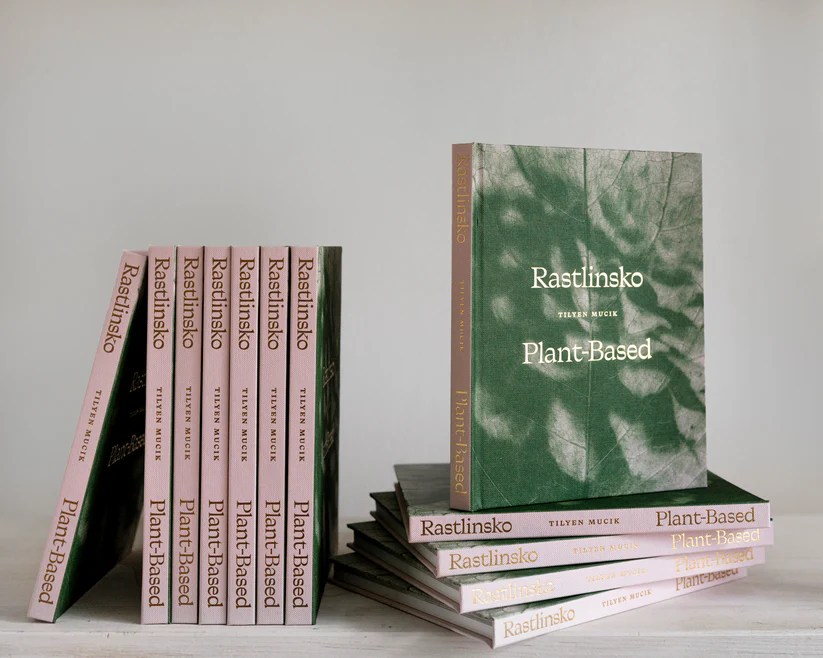
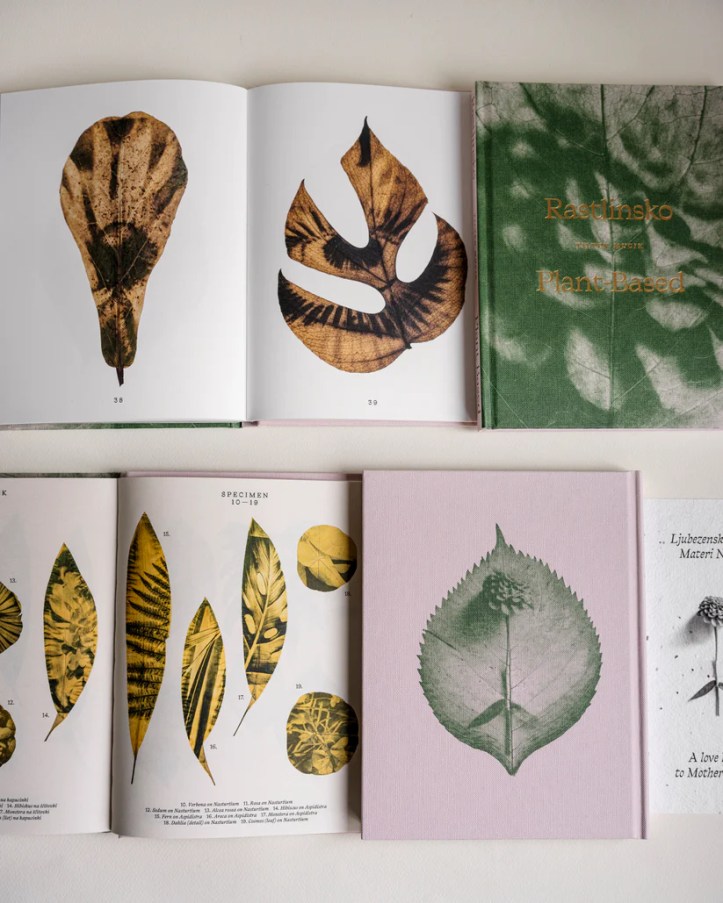
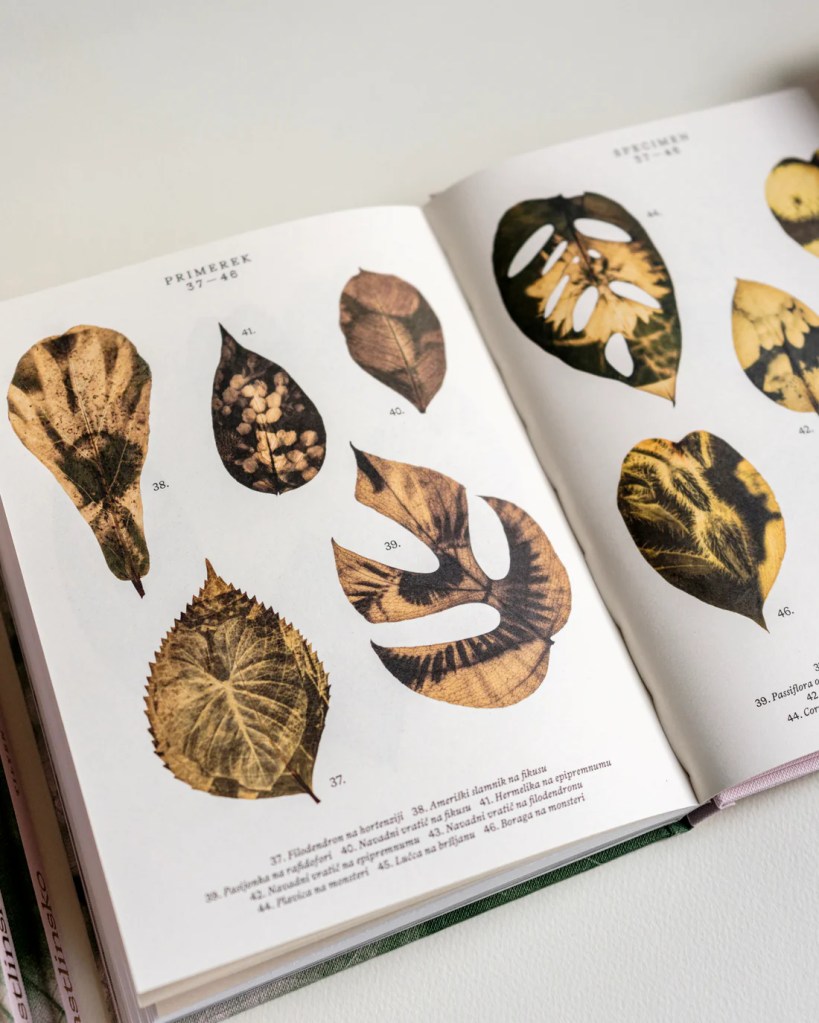
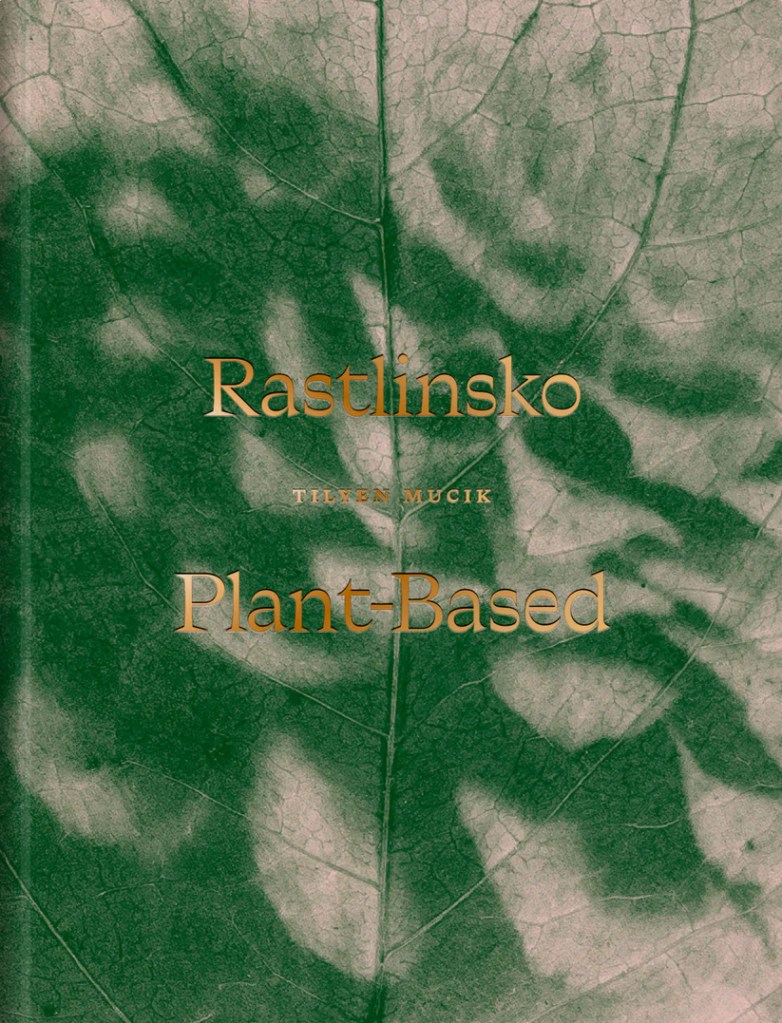
Represented by Galerija Fotografija, Ljubljana-based visual artist Tilyen Mucik presents Rastlinsko/ Plant-Based, a photobook that is not merely a collection of images but a living meditation on the fragile reciprocity between image and organism. Created using the chlorophyll process, an alternative photographic technique in which images emerge directly on plant leaves through their reaction to ultraviolet sunlight, the series transforms photography into an organic collaboration with nature. In Mucik’s hands, the leaf is no longer subject or symbol; it becomes both surface and co-author.
credit Galerija Fotografija
credit Galerija Fotografija
Mucik has long explored botanical photography as the central thread of her artwork. With Plant-Based, she deepens this inquiry by allowing nature to dictate not only the theme but the very material conditions of image-making. The chlorophyll process resists speed and control. It depends on sunlight, time, and the photosensitive vitality of the plant itself. The resulting images appear ghostly yet precise, suspended between presence and disappearance, a reminder that every act of inscription carries within it the possibility of decay.
The book’s structure, designed by Anja Delbello and Aljaž Vesel/AA and with foreword by art historian Miha Colner mirrors its conceptual core. Designed in the spirit of a herbarium, it evokes the tactile and contemplative rituals of collecting and preserving plants. This formal choice is deeply personal: Mucik’s childhood encounters with herbariums sparked her enduring fascination with the plant world. In this sense, Plant-Based is both an artistic culmination and a return to origins.
credit Galerija Fotografija
credit Galerija Fotografija
Beyond reproductions of the leaf-based works, the book offers rare insight into the artist’s creative process. It includes visual motifs derived from the foils used during exposure, revealing the delicate interplay between intervention and growth. These elements expand the project beyond documentation, inviting readers into the laboratory-like intimacy of experimentation.
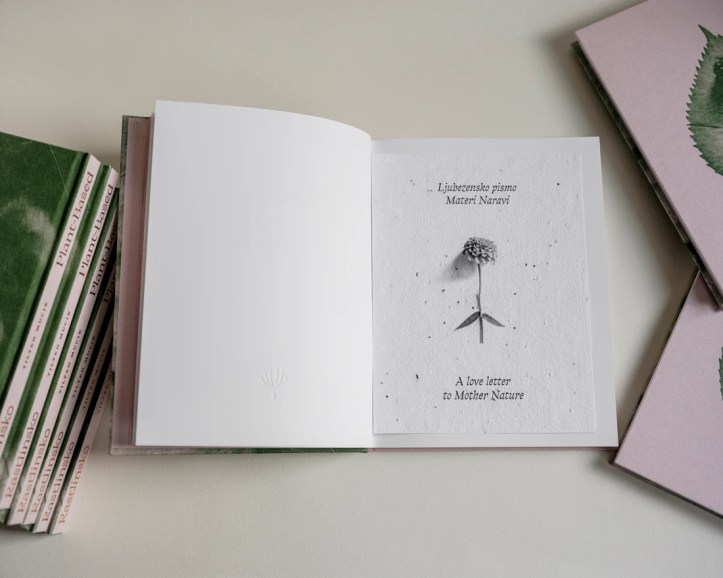
One of the book’s most poetic gestures is the inclusion of a love letter to Mother Nature, printed on seed paper. This detail transforms the act of reading into a participatory ecological statement: the letter can be planted, returning language to soil. It is a quiet but powerful call for environmental stewardship, aligning aesthetic contemplation with tangible action.
Supported by the Slovenian Book Agency and awarded the Belfast Photo Festival Photo-Book Award 2025, Plant-Based stands as a significant contribution to contemporary photographic practice. It challenges conventional notions of authorship, permanence, and medium specificity. Ultimately, Mucik proposes that photography need not extract from nature: it can grow with it.
credit Galerija Fotografija
 The Flora Journal