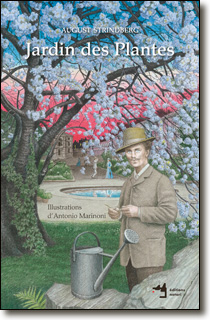
Jardin des Plantes written by August Strindberg, marking the first centenary of his death, published by Éditions Notari in 2012, in the Collection BotanicArt with illustrations by Antonio Marinoni and a preface and French translation by Sylvain Briens, offers readers the opportunity to rediscover a little-known text by one of Scandinavia’s most influential writers. Although Strindberg is internationally celebrated for his dramatic works, this book reveals another side of his intellectual personality: that of a restless observer of nature and an avid reader of scientific literature. The edition is presented in French, making this unusual work accessible to a wider contemporary audience.
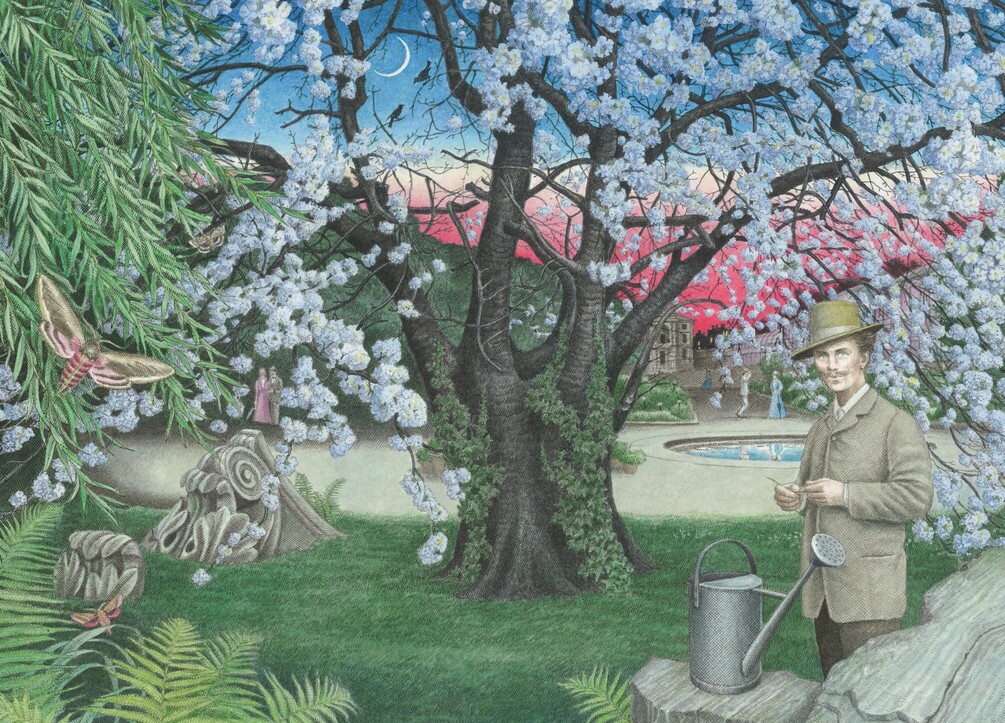

Written between 1895 and 1896, Jardin des Plantes reflects a period in which Strindberg’s curiosity extended far beyond literature. At the time, he was deeply interested in chemistry, botany, and various branches of natural science. Historical accounts describe him performing chemical experiments in his hotel room and even working briefly in a laboratory at the Sorbonne. This scientific enthusiasm permeates the text. Rather than composing a conventional narrative, Strindberg offers a series of reflections and observations inspired by his visits to the Jardin des Plantes in Paris.
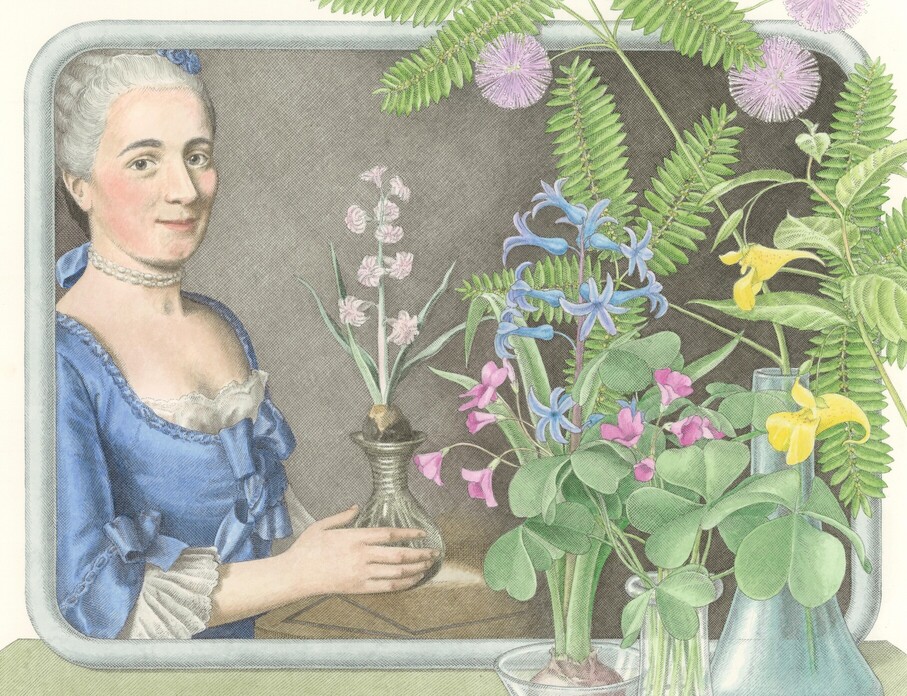
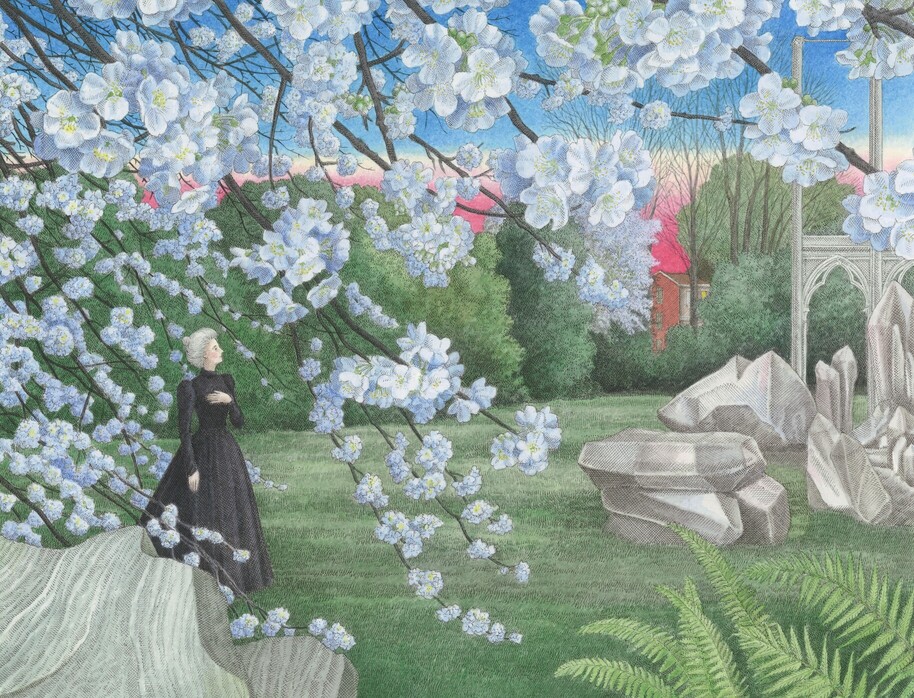
In the book, the garden becomes more than a botanical space. For Strindberg, it represents a symbolic microcosm of the universe, a place where the entire “text of creation” seems to unfold. This idea is introduced at the beginning of the first section, “The Sigh of the Stones,” where natural elements, plants, minerals, and landscapes, are contemplated not only as scientific objects but also as metaphysical signs. Strindberg’s writing moves freely between empirical curiosity and philosophical speculation, producing a hybrid work that blends essay, meditation, and poetic fragment.
A distinctive feature of this edition is the presence of illustrations by the Italian artist Antonio Marinoni. Known to the French public for his work in illustrated children’s books, Marinoni approaches Strindberg’s text with an imaginative and layered visual language. His drawings combine references to art history with botanical imagery, creating scenes that are both playful and thought-provoking. Rather than simply accompanying the text, the illustrations reinterpret it, inviting readers to see the garden through a new visual perspective.
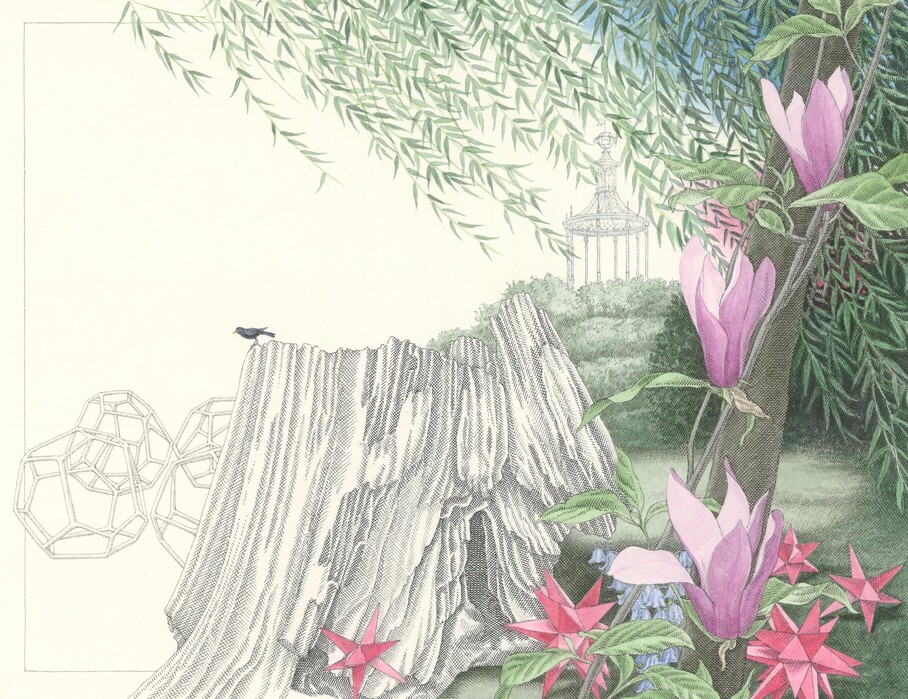
credit éditions Notari
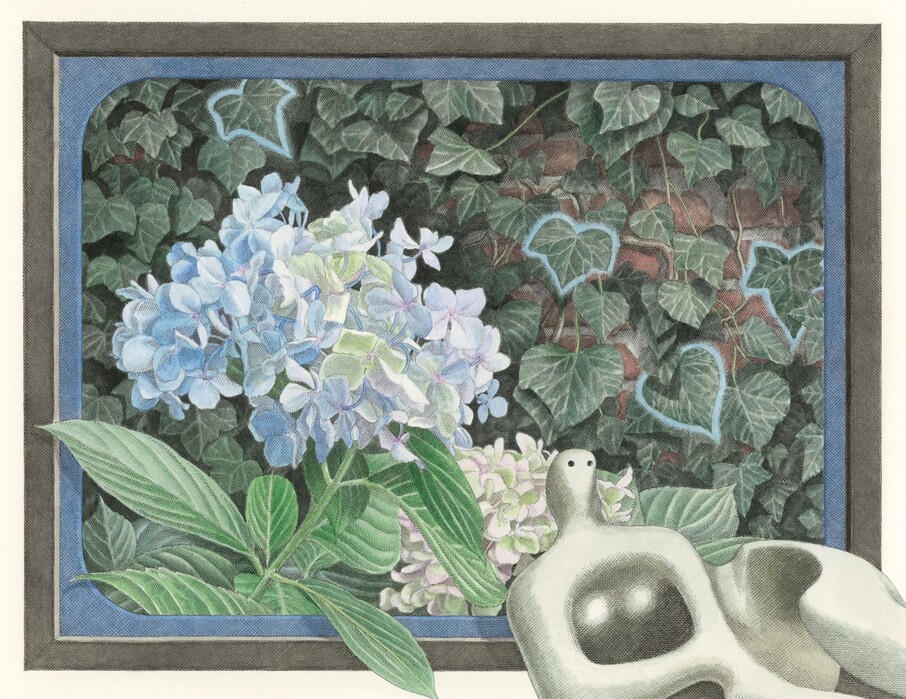
Marinoni’s compositions stage plants almost like characters, transforming botanical forms into elements of an artistic narrative. This approach resonates strongly with Strindberg’s experimental spirit, reinforcing the sense that Jardin des Plantes is not only a literary exploration but also a visual and intellectual one.
Since the text had not been republished since its original appearance in 1896, this edition represents an important act of rediscovery. It highlights Strindberg’s remarkable intellectual breadth and his desire to explore the connections between science, philosophy, and art. For modern readers, Jardin des Plantes offers a surprising glimpse into the experimental imagination of a writer whose curiosity knew no disciplinary boundaries.
 The Flora Journal