American photographic artist Sarah Schorr’s Ephemeral Field Journal: Climate and Love in Claude Monet’s Garden, published by Kehrer Verlag, 2025, is an exquisite meditation on impermanence, beauty, and the fragility of nature. Conceived as a tribute to the centenary of Monet’s death, this volume offers more than photography; it is a poetic conversation across time, framed by themes of ecology, memory, and love.
Rather than romanticising Giverny as a fixed monument to Impressionism, Schorr treats it as a “living laboratory.” Her work is born from close observation—rain’s delicate touch, petals drifting on water, reflections that dissolve boundaries between earth and sky. Across 116 pages, the book presents eighty-eight colour images that elevate fallen or damaged flowers into luminous still lifes. Schorr collects these fragments and revives them with layers of light, water, and paint, transforming decay into a state of vitality. Her method is an ecological gesture: art as both witness and response to a world in flux.

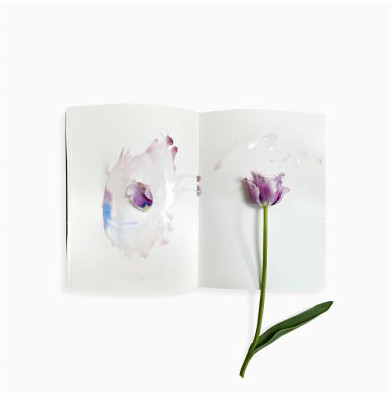
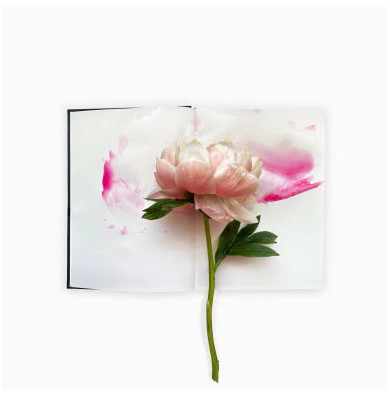
credit Sarah Schorr
The visual experience is paired with elegant writing by Schorr and a philosophical essay by Charles M. Stang, director at Harvard’s Center for the Study of World Religions. Stang situates Schorr in “Thales’ lineage of seers, those who watch water,” aligning her attentive practice with ancient traditions of contemplative seeing. Schorr’s own words echo this intimacy: “There is a cadence transition that occurs between knowing Monet’s painted landscapes and stepping into the real place.” These reflections, together with a lyrical quote from musician Adrianne Lenker, infuse the book with polyphonic resonance.


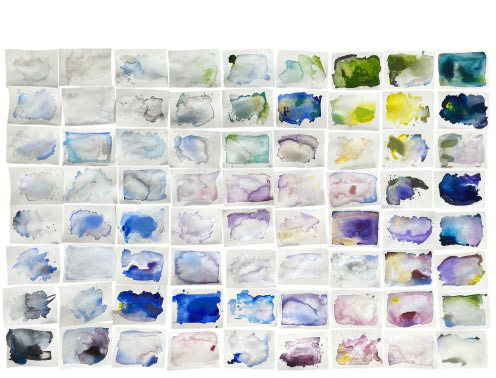
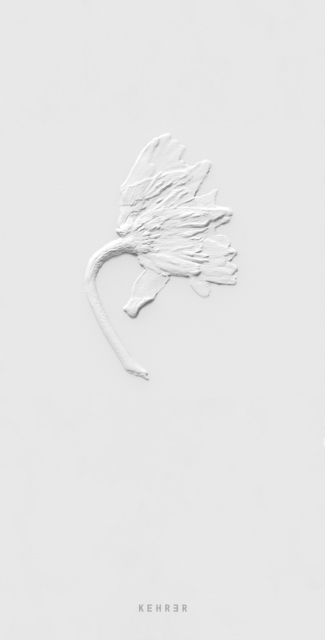
Designed by Aneta Kowalczyk, the publication itself is a tactile pleasure, featuring a Swiss brochure format with embossed details and bilingual text in English and French. It is as much an art object as a book, intended for slow engagement.
Ephemeral Field Journal ultimately feels urgent yet hopeful. It acknowledges ecological precarity without collapsing into despair, instead offering beauty as an ethic of care. Schorr’s photographs remind us that impermanence is not the opposite of value but its very condition. For readers drawn to photography, environmental art, or the spiritual dimensions of creativity, this book is essential—a visual and intellectual feast that lingers like Monet’s own watery reflections.
credit Kehrer Verlag
 The Flora Journal