Through September 7, 2025 at the Brandywine Museum of Art, in Chadds Ford, Pennsylvania, USA, supported by The Arcadia Foundation and PNC Foundation, the exhibition ‘This Earthen Door: Nature as Muse and Material’ invites visitors into a richly layered world where art, science, and poetry intertwine. This cross-disciplinary exhibition is the result of nearly five years of collaboration between artists Amanda Marchand and Leah Sobsey, whose plant-based works draw directly from Emily Dickinson’s mid-nineteenth-century herbarium—a collection of more than 400 pressed flowers preserved by the poet in her youth.


Though best remembered for her verse, Dickinson was also a dedicated gardener and student of botany. As a teenager in Amherst, Massachusetts, she meticulously assembled her herbarium, arranging and labeling plant specimens collected from her garden and nearby landscapes. Today, the original book resides in a climate-controlled vault at Harvard University’s Houghton Library, too fragile to handle. Marchand and Sobsey, inspired by its hidden beauty and botanical history, set out to recreate and reinterpret it for contemporary audiences.
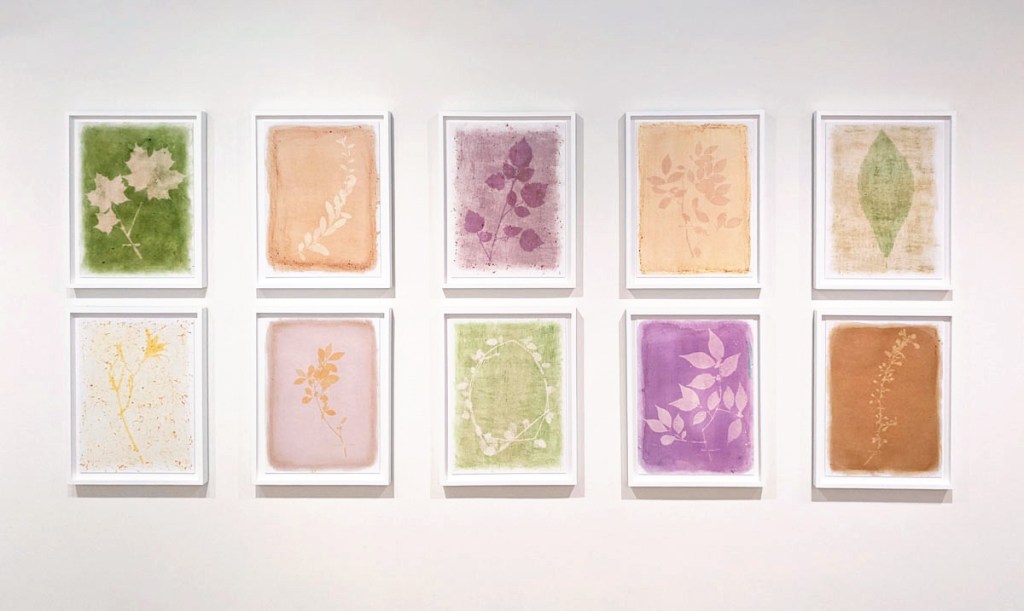
To do so, the artists turned to anthotypes, one of the earliest photographic processes—entirely plant-based and camera-free. They extracted pure pigments from flowers, coating sheets of paper with light-sensitive emulsions. Over weeks and months, they placed transparencies of Dickinson’s original pages atop the prepared papers and exposed them to sunlight. The result: delicate, camera-less sun prints that capture the silhouettes of the poet’s specimens, reanimating her botanical vision for the twenty-first century.
credit Brandywine Museum
credit Brandywine Museum
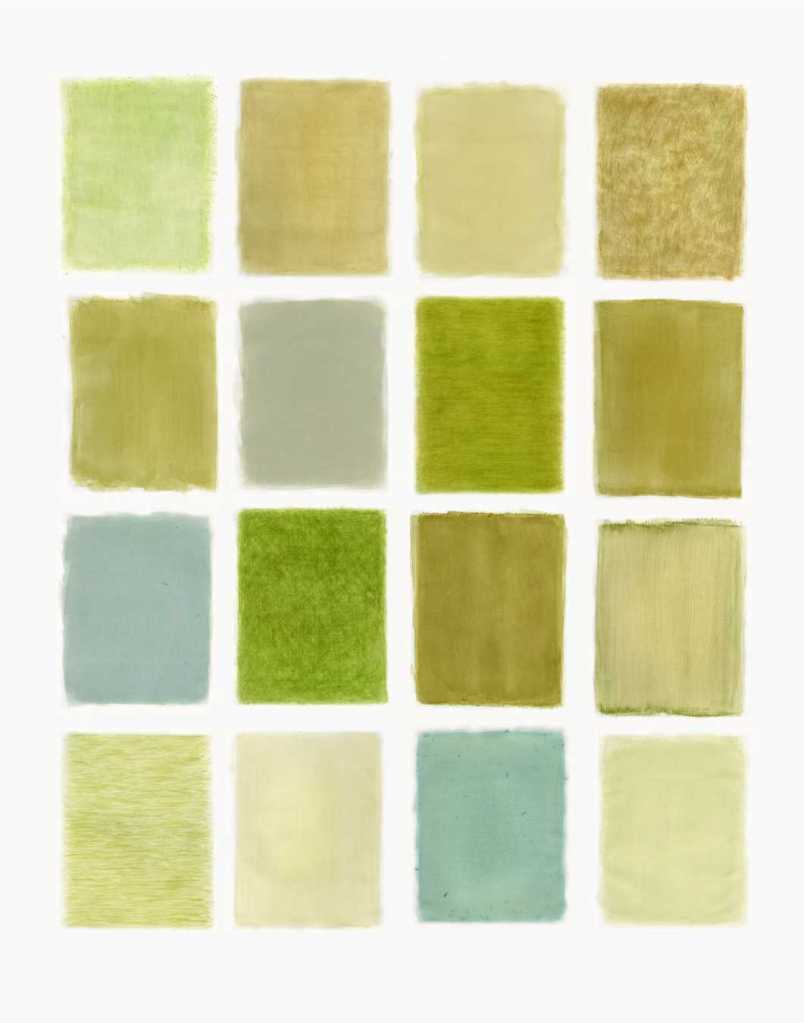
The exhibition features over 50 works, including two site-specific commissions. Among the most striking are pieces from The Chromotaxia, compositions created from the colored sheets of pure pigment—each derived from a flower in Dickinson’s herbarium. Every chromotaxy takes its title from the opening line of a Dickinson poem, grouping pigments according to botanical themes. For instance, To make a prairie, a 94-panel grid, focuses on self-compatible plants—species that can self-fertilize without pollinators, a trait increasingly important as pollinator populations decline.
Director Thomas Padon describes This Earthen Door as “a lush inquiry into the ephemerality of nature” that connects audiences to “the full meaning—visually and conceptually—that these plants held for Dickinson and still hold today.”
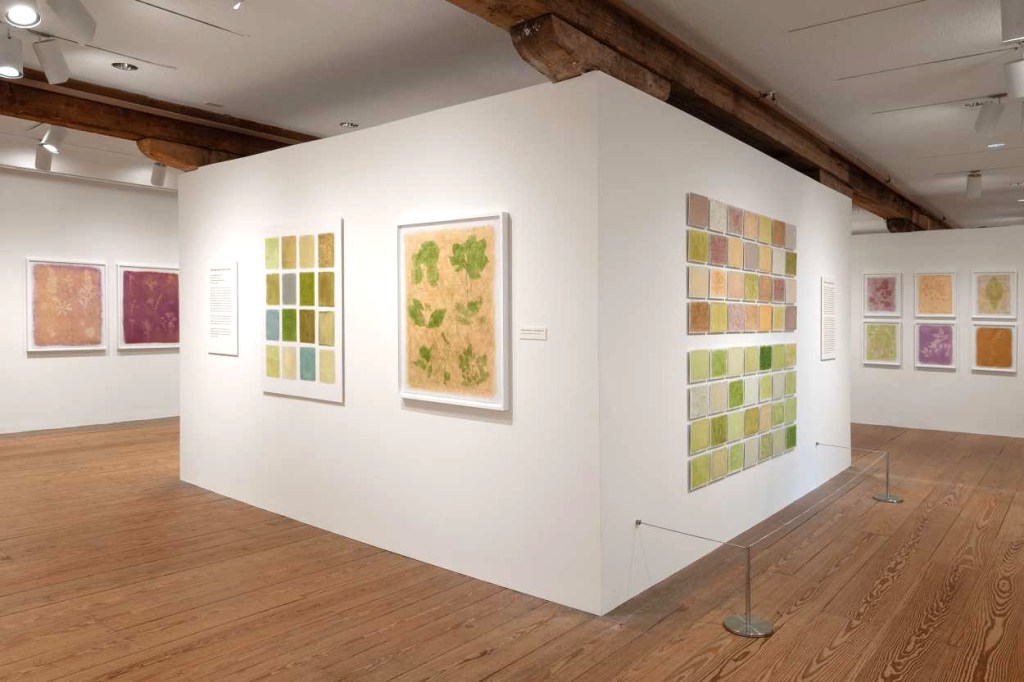
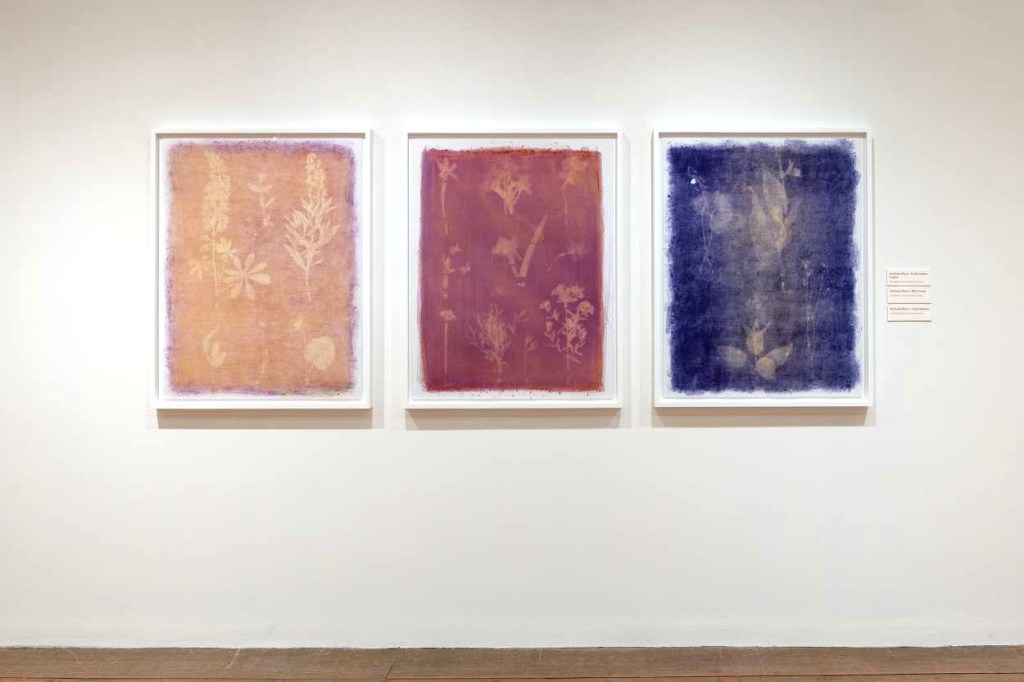
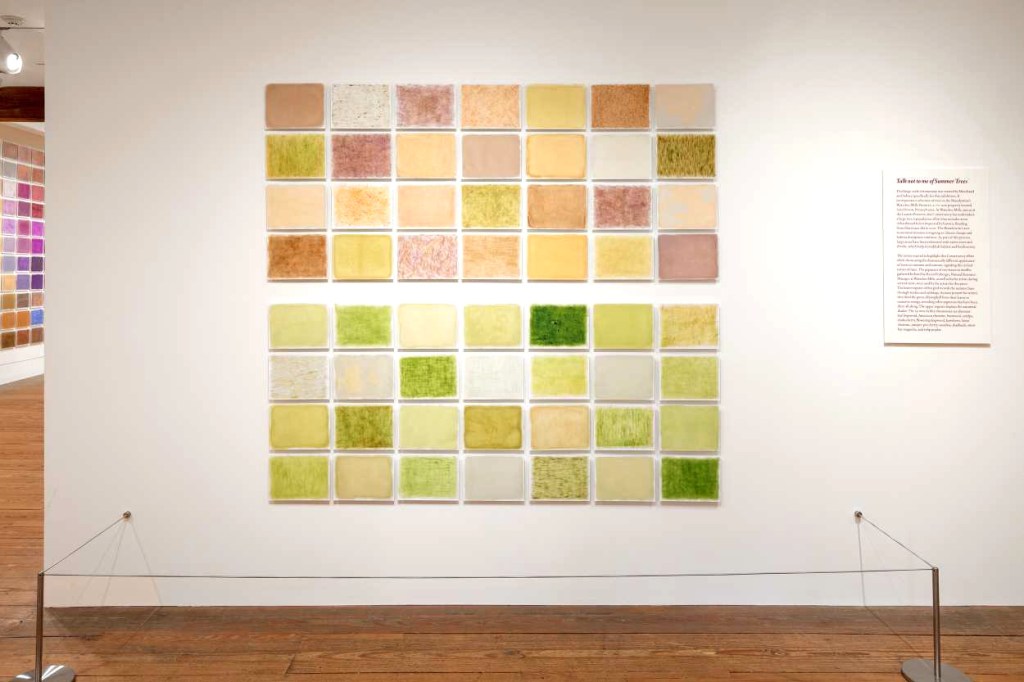
The first site-specific work, Estranged from Beauty – none can be –, features ten anthotypes of invasive plant species found in the Brandywine Conservancy’s Waterloo Mills Preserve. The images acknowledge the plants’ visual appeal while addressing their ecological threat. The second, Talk not to me of Summer Trees, is a chromotaxy made from pigments extracted from 14 tree species at the preserve, presented in both summer and autumn tones—an homage to seasonal cycles and environmental stewardship.
For Marchand and Sobsey, recreating Dickinson’s herbarium was both an act of homage and creative reinterpretation. “Her book of flowers was an object that had long inspired us,” Sobsey explains. “We knew we could never hold it, so why not remake it for ourselves—and others?”
 The Flora Journal