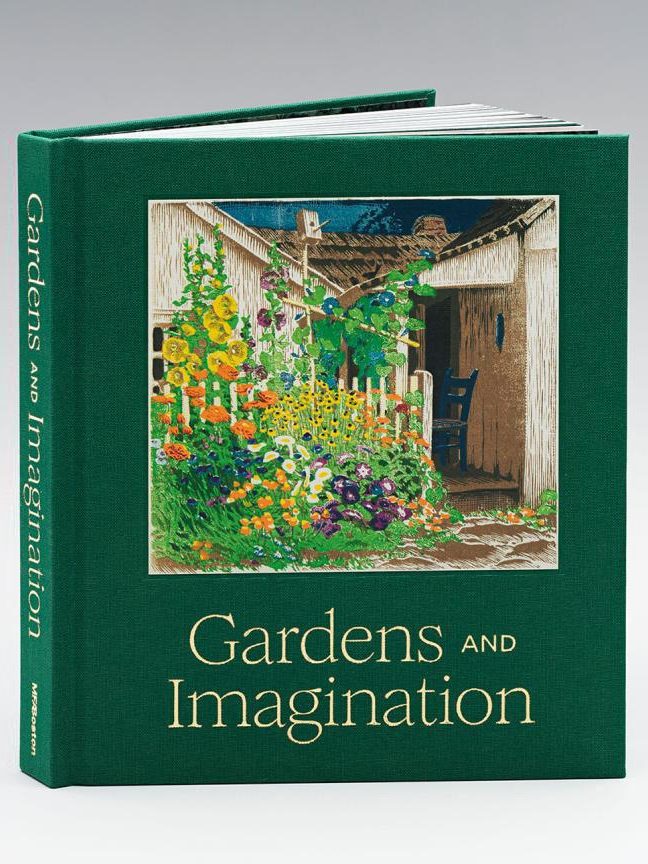
“Framing Nature: Gardens and Imagination”, on view at the Museum of Fine Arts, Boston, US until June 28, 2026, offers a rich and immersive exploration of how gardens have inspired artistic expression across cultures and centuries. Featuring nearly 120 works drawn from the museum’s global collection, the exhibition positions the garden as both a physical space and a powerful symbol—one that reflects humanity’s evolving relationship with nature, creativity, and control.
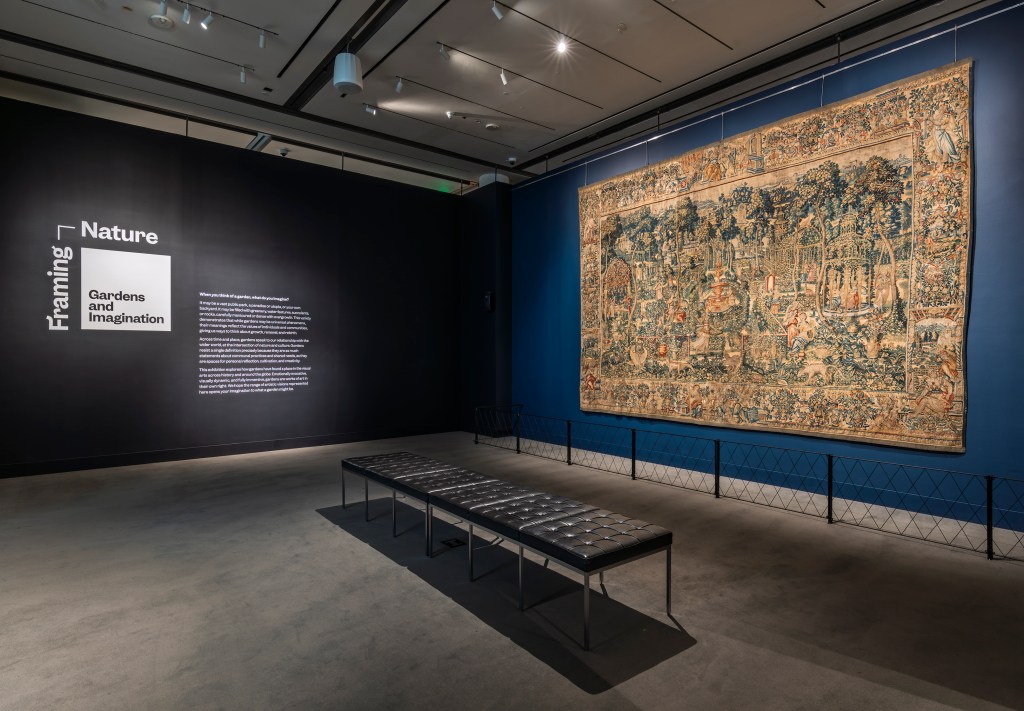
Organized thematically, the exhibition unfolds as a series of interconnected narratives and opens with an important and striking tapestry: a monumental Flemish work depicting an idealized park scene. Woven in wool and silk, this rarely displayed piece immediately sets the tone for the exhibition, immersing visitors in a lush, imagined landscape filled with human activity: music, leisure, and cultivation, while highlighting the historical significance of gardens as curated, symbolic environments.
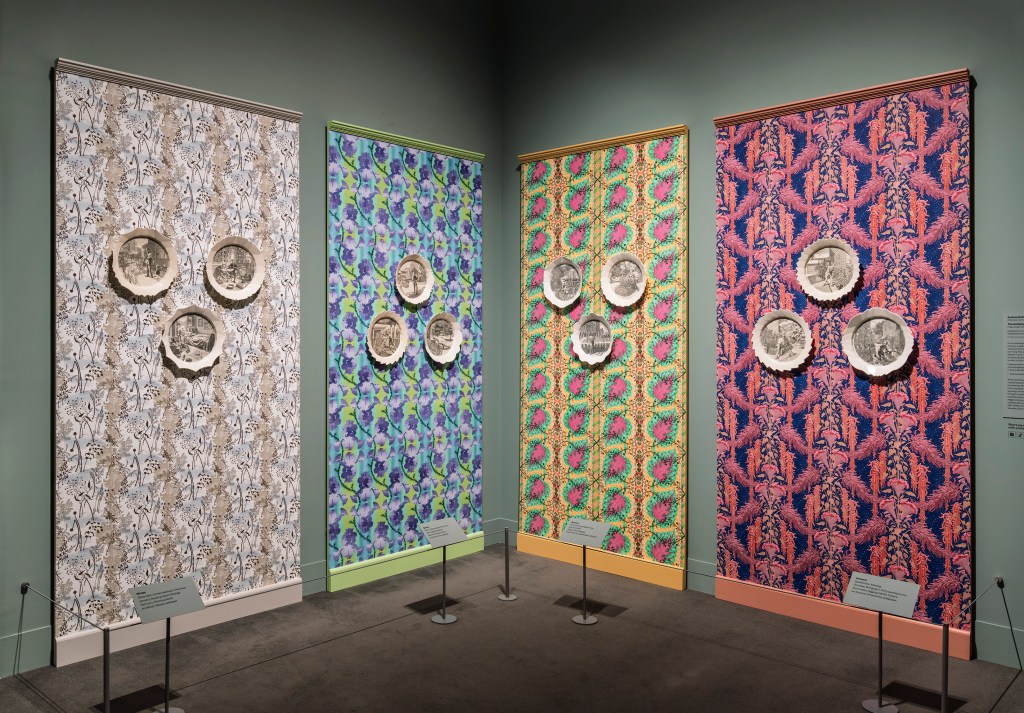
The first section, “Gardens as Art,” invites visitors to consider gardens not merely as subjects but as artistic creations in their own right. Highlights include intricate Chinese scrolls and contemporary installations, such as Andrew Raftery’s Autobiography of a Garden, which documents the artist’s personal gardening journey through a series of ceramic plates representing the months of the year. This section effectively establishes the exhibition’s central premise: gardens are sites of imagination, shaped as much by cultural ideals as by natural processes.
The following section, “Gardens through Time,” broadens the historical scope, juxtaposing ancient Roman artifacts with later interpretations of garden spaces. Frescoes, sculptures, and watercolors reveal how the concept of the garden has persisted and transformed over millennia. Particularly compelling is the exploration of the Garden of Eden as a cross-cultural symbol of paradise, reinterpreted in works that challenge traditional narratives and introduce contemporary perspectives on identity and utopia.
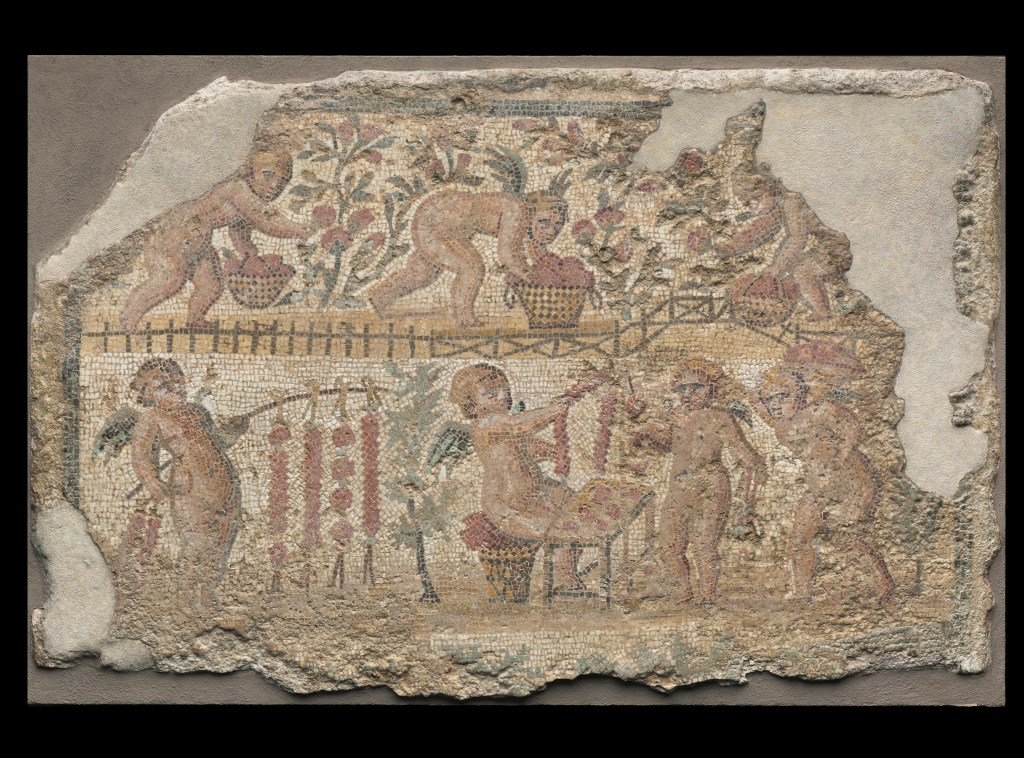
late 2nd–mid‑3rd century
Fine stone and glass tesserae on terracotta panel
* Museum purchase with funds donated by Jeffrey and Pamela Dippel Choney
credit MFA Boston
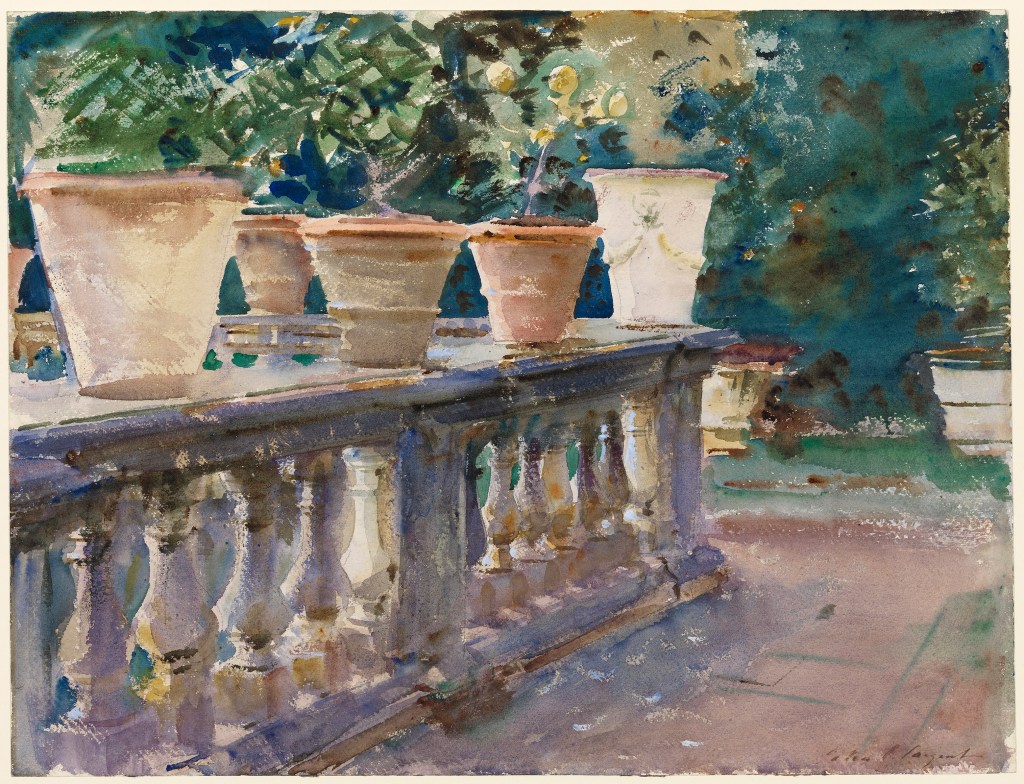
A notable strength of the exhibition lies in its attention to the often-overlooked labor behind gardens. “Gardens and Gardeners” foregrounds the human effort required to cultivate and maintain these spaces, presenting works that honor agricultural workers and communal practices. This theme adds a social dimension to the exhibition, reminding viewers that gardens are not only aesthetic constructs but also products of human toil and collaboration.
The exhibition also excels in its sensory and immersive elements. A video installation of Tenshin-en, the museum’s Japanese garden, provides a calm interlude that bridges the indoor gallery experience with the living landscape outside. Meanwhile, “Taking the Garden with You” expands the definition of garden-inspired art to include fashion, design, and even scent, featuring garments by major designers and a recreated 19th-century wallpaper that demonstrates remarkable craftsmanship.
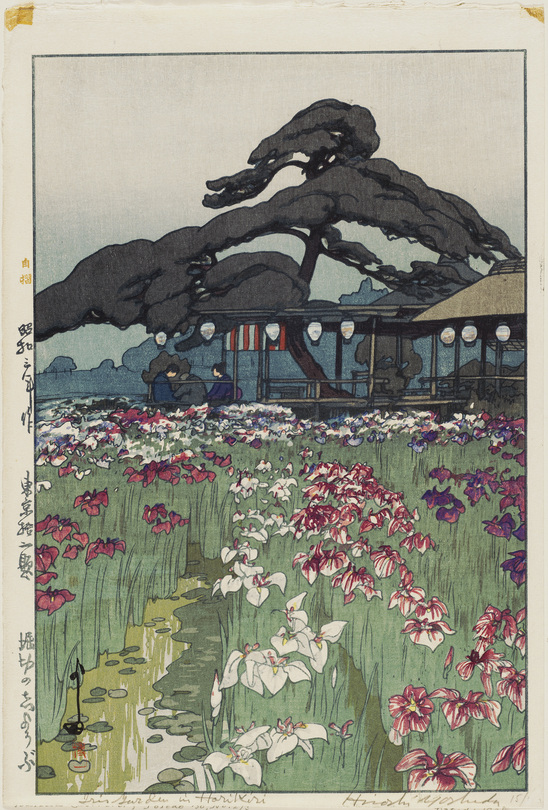
Yoshida Hiroshi
1928 (Shōwa 3)
Woodblock print; ink and color on paper
* Gift of L. Aaron Lebowich
* Photograph credit MFA Boston

Sèvres Manufactory (France)
1803–04
Hard‑paste porcelain with colored enamel and gilded decoration
* Gift of Mr. and Mrs. Henry R. Kravis
credit MFA Boston
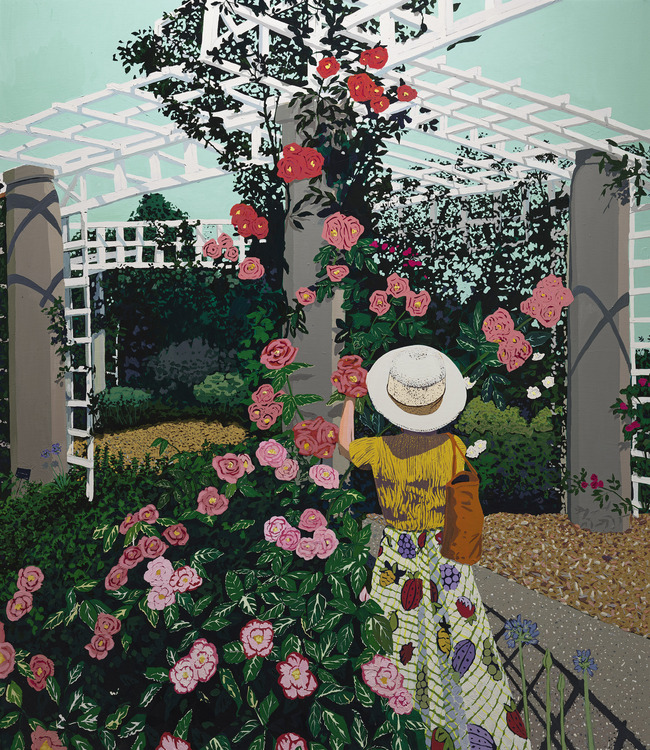
* Gift of Federico Martin Castro Debernardi
credit MFA Boston
In its final sections, “Gardens and Power” and “Garden Futures,” the exhibition takes a more critical turn. It examines how gardens have been used to assert dominance over nature and symbolize social hierarchies, while also imagining new possibilities for ecological and artistic futures. Contemporary works addressing environmental change and sustainability leave a lasting impression, encouraging visitors to reconsider their own relationship with the natural world.
Overall, “Framing Nature: Gardens and Imagination” is a thoughtfully curated and visually engaging exhibition that successfully bridges past and present. By combining historical depth with contemporary relevance, it invites audiences to see gardens not just as places of beauty, but as complex cultural landscapes shaped by human vision, labor, and aspiration.