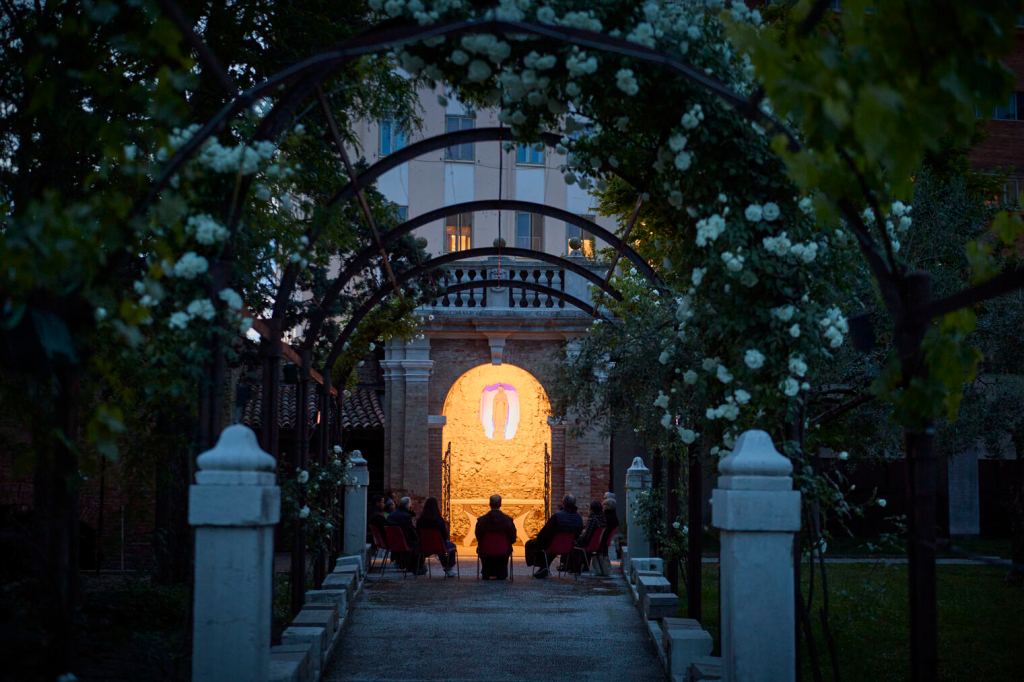
At the 61st International Art Exhibition of La Biennale di Venezia, the Holy See Pavilion presents an ambitious and deeply contemplative project titled The Ear is the Eye of the Soul. Curated by Hans Ulrich Obrist and Ben Vickers in collaboration with Soundwalk Collective, the exhibition gathers 24 international artists, musicians, poets, architects, and filmmakers in a meditation on listening, spirituality, and human connection.
Inspired by the life and teachings of Hildegard of Bingen, the Pavilion responds to the 2026 Biennale’s invitation to slow down and attune to quieter forms of experience. Hildegard, the 12th-century mystic, healer, composer, and theologian, becomes both subject and guide for an exhibition that treats sound not merely as artistic medium, but as a path toward reflection and transcendence.
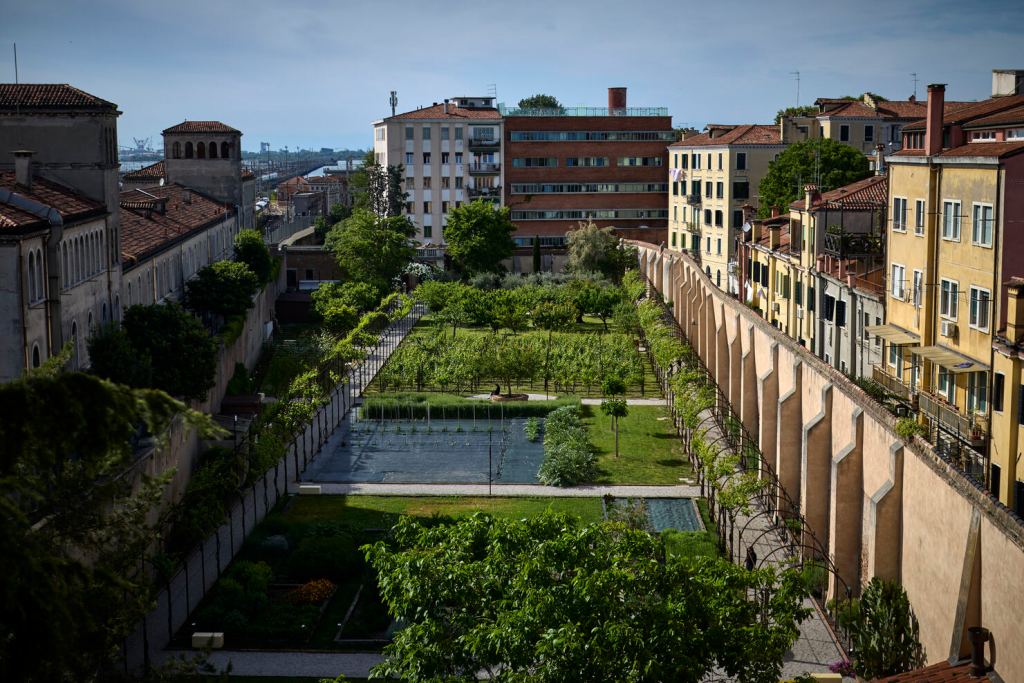
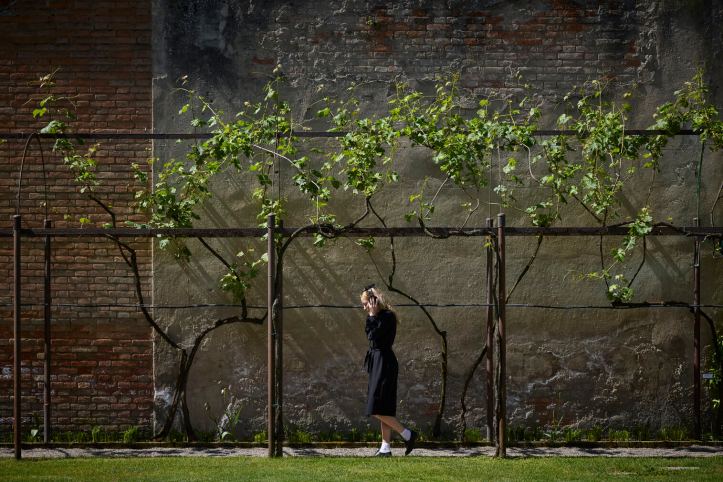
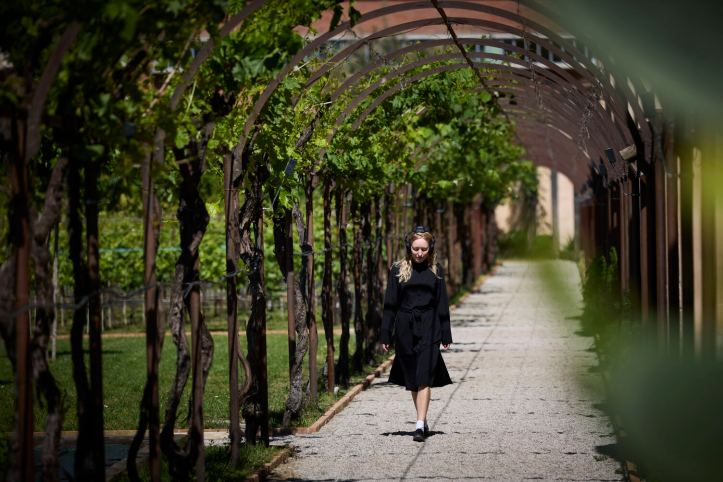
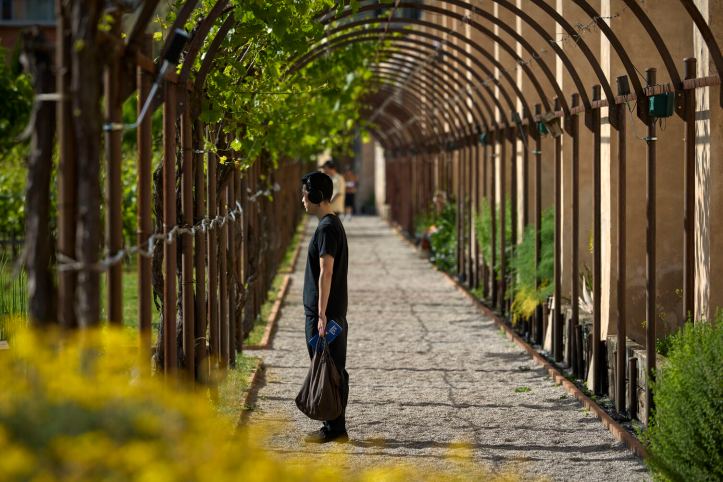
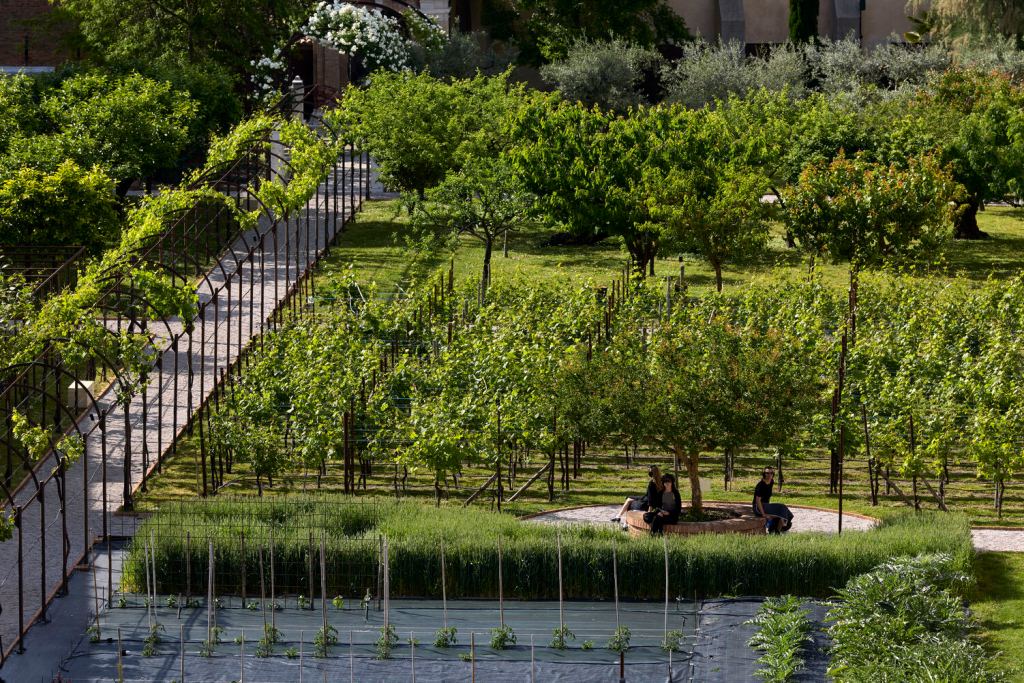
The Pavilion unfolds across two locations in Venice. The first is the hidden Giardino Mistico of the Discalced Carmelites in Cannaregio, an enclosed monastic garden transformed into a living sound environment. Visitors move through the garden wearing headphones, immersed in newly commissioned works by artists including Brian Eno, FKA Twigs, Patti Smith, Jim Jarmusch, Meredith Monk, and Terry Riley. Their compositions reinterpret Hildegard’s chants and visionary writings through voice, electronics, poetry, silence, and experimental sound.
At the center of the garden experience is a custom sonic instrument created by Soundwalk Collective. The device listens to the environment in real time, translating the bioelectrical activity of plants and the subtle acoustics of wind, water, insects, and soil into evolving compositions. Nature itself becomes performer and collaborator. The result is an artwork that dissolves boundaries between technology, ecology, and contemplation.
The Pavilion’s second venue, the Santa Maria Ausiliatrice Complex in Castello, functions as a contemporary scriptorium, a place of preservation, memory, and study. Here, visitors encounter a multilingual archive dedicated to Hildegard’s legacy, alongside artist books, architectural interventions, and a final installation by the late German filmmaker Alexander Kluge. Completed shortly before his death in 2026, Kluge’s twelve-part film and image installation gives the Pavilion its title, drawn from Hildegard’s writings: The Ear is the Eye of the Soul.
More than a religious or historical tribute, the Holy See Pavilion proposes listening as an ethical and creative act in an age dominated by speed, distraction, and algorithmic repetition. By bringing together experimental artists, sacred traditions, and ecological awareness, the exhibition offers a rare space for silence, attention, and wonder within the intensity of the Venice Biennale.