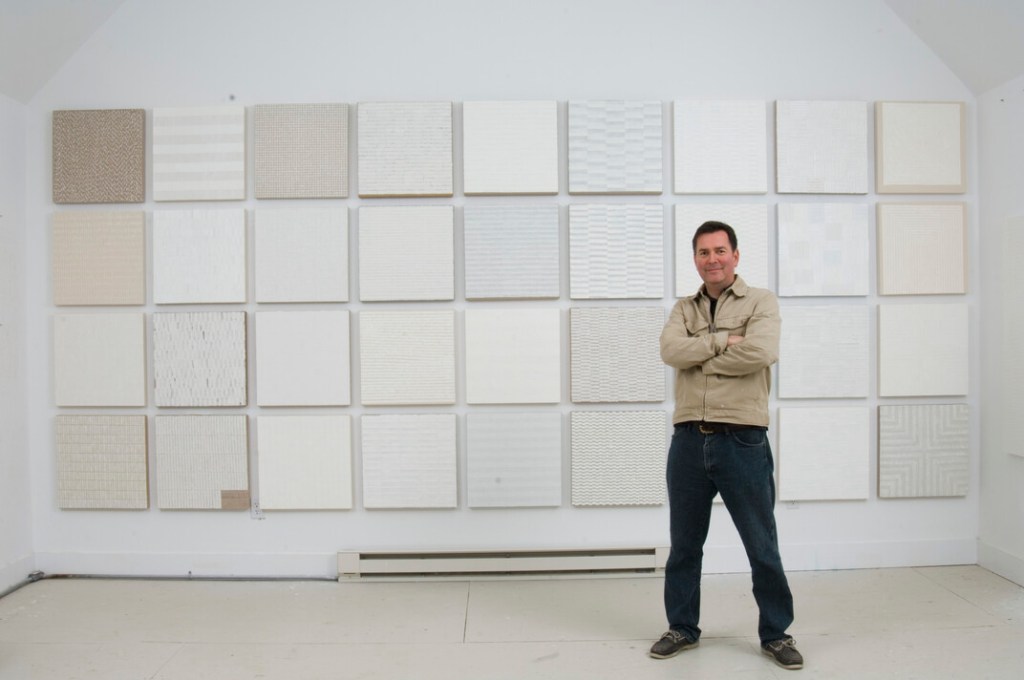
Looking at Eric Dever’s paintings today, it is difficult to imagine that for years his research was based on an almost exclusively white palette. And yet it is precisely from white that a fundamental part of his artistic journey emerged: an investigation into matter, light and perception that, over time, would lead him towards the natural world and an increasingly expansive palette. In his Career Narrative, the artist describes this evolution as a progression from “reductive abstraction” through “material nature”, then to “biomorphic abstraction” and, finally, to “nature itself today.” It is a sequence that provides a particularly clear way of understanding his work.
In Dever’s painting, white is never simply the absence of colour. It is a material to be observed, dissected and understood. By initially limiting his palette to zinc and titanium whites, the artist discovered what he calls a “spectrum of white,” capable of moving from opacity to translucency. The subsequent introduction of black, and then red, expanded his investigation, leading him to consider colour itself as a form of matter.
credit Gary Mamay
credit Berry Campbell Gallery
credit Berry Campbell Gallery
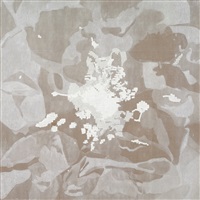
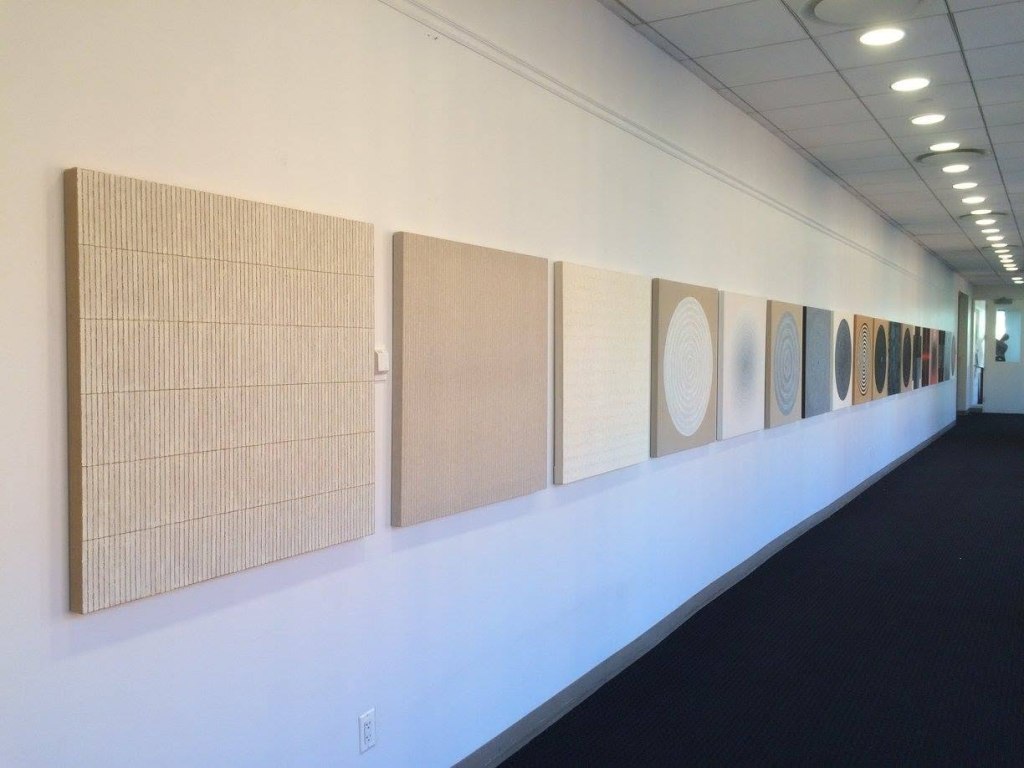
In 2014, TWZW 28 still represents a form of painting deeply rooted in abstraction. The surface is constructed through layers and tonal variations, with a lighter central form seeming to emerge from the surrounding matter. White does not simply illuminate the composition: it appears to rise from within it. In the works NSIBTW 41 of 2015 and NSIBTW 75 and NSIBTW 66 of 2016, the relationship between white, black and red becomes a means of investigating the relative perception of colour. This phase culminated in the exhibition Clarity, Passion and Dark Inertia, presented at the Kimmel Galleries at New York University, where the painted surface became a space of tension between clarity, darkness, energy and matter.
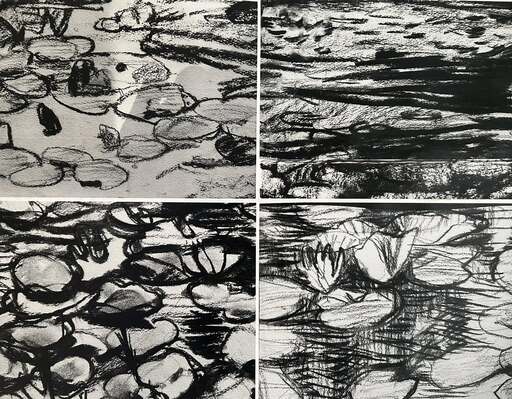
The surfaces of these works seem almost to be observed at close range, as though the eye were being invited to lose itself among traces, transparencies and layers. This is still a long way from botanical representation, yet the work is already deeply concerned with perception. It is therefore not surprising to find, among the selection, drawings inspired by Claude Monet’s Nymphéas. Drawing introduces a different relationship with nature: observation becomes a creative act before it becomes a representational one.
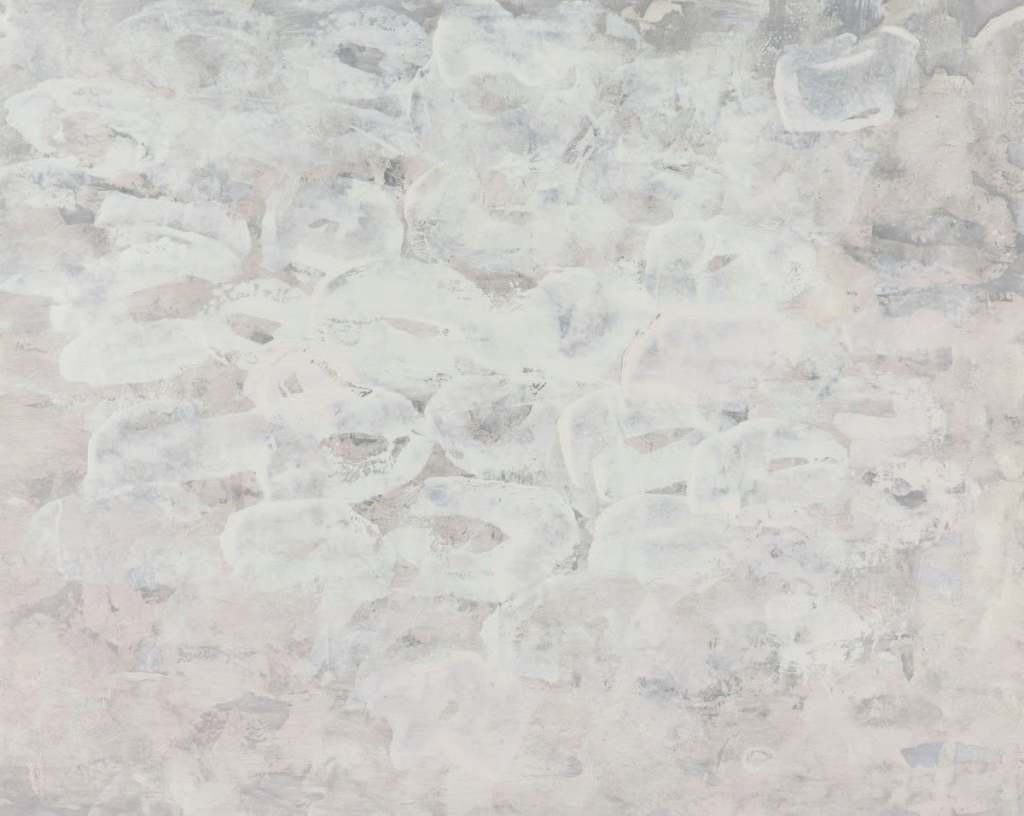
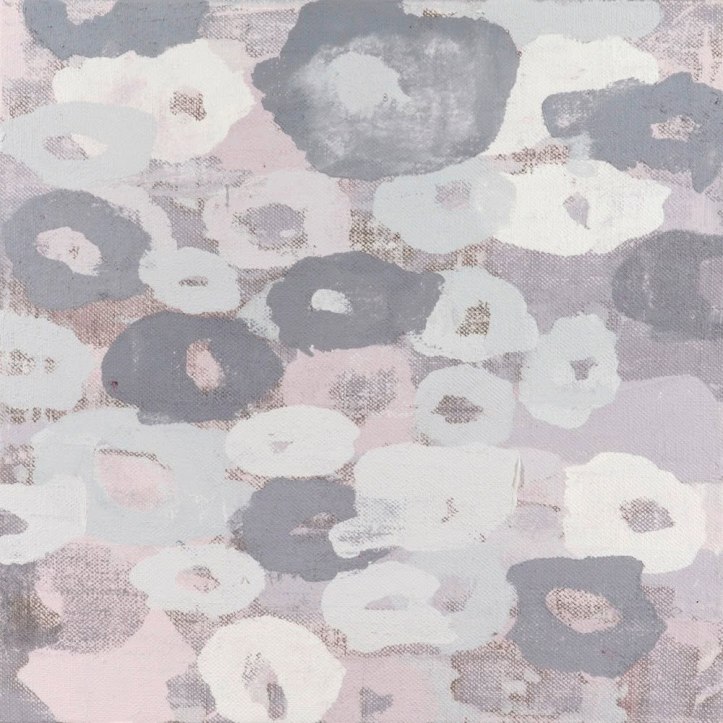
From this point onwards, something begins to change. White, initially the subject of an abstract and material investigation, gradually encounters the natural world itself. With Star Magnolia of 2021 and the works that followed, plant forms become recognisable, but they are not treated as botanical illustrations. Petals, leaves and flowers become structures through which Dever continues to explore surface, rhythm, light and colour. Nature offers him a new repertoire of forms through which to develop questions that were already present in his painting.
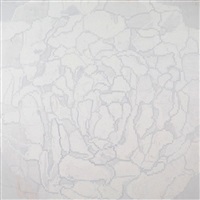
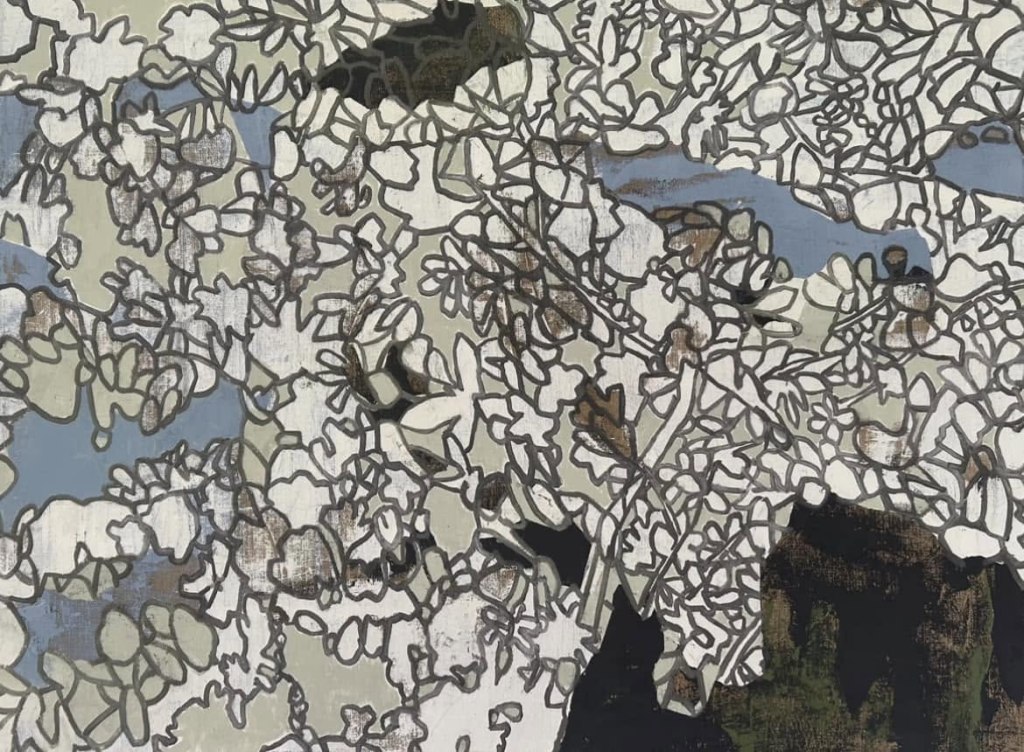
Tipping Point of 2022 occupies precisely this intermediate territory: vegetation emerges while simultaneously dissolving into an atmospheric surface. It is difficult to establish where landscape ends and abstraction begins. Nature thus becomes not so much a subject to be reproduced as an experience to be transformed into painting.
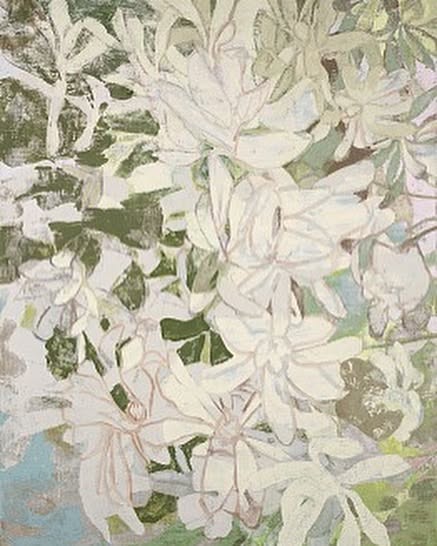
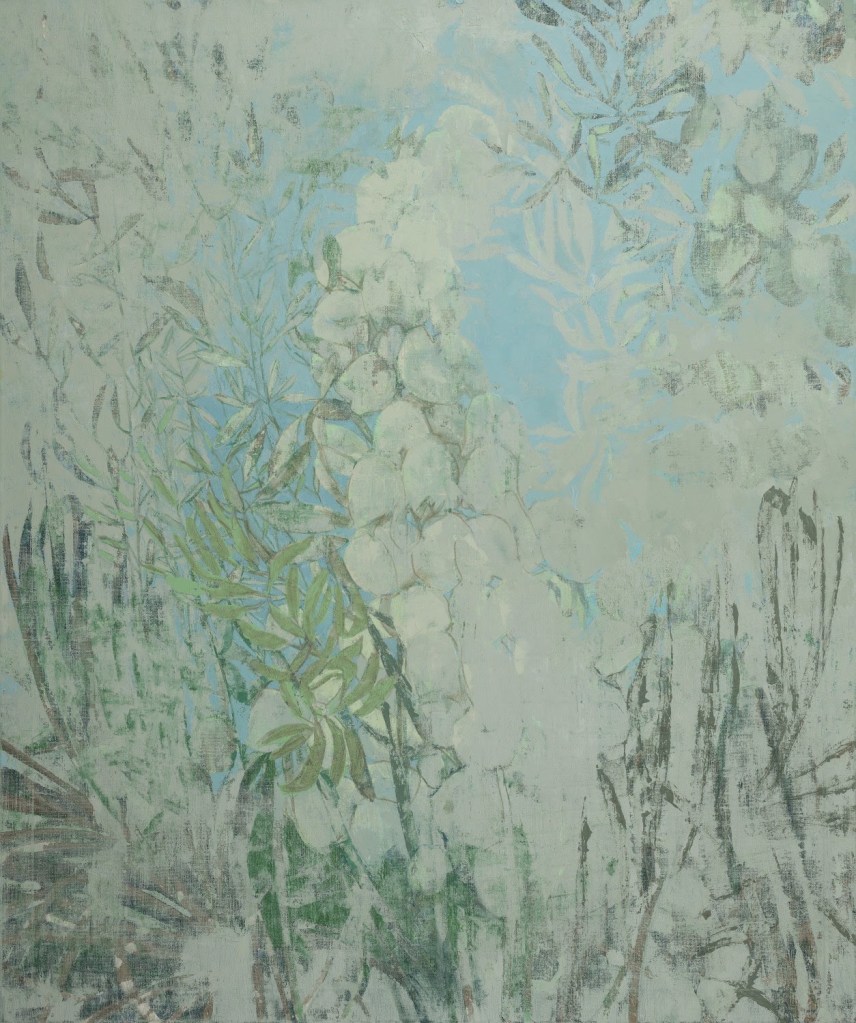
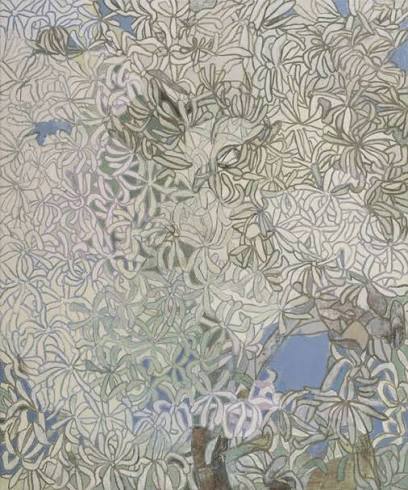
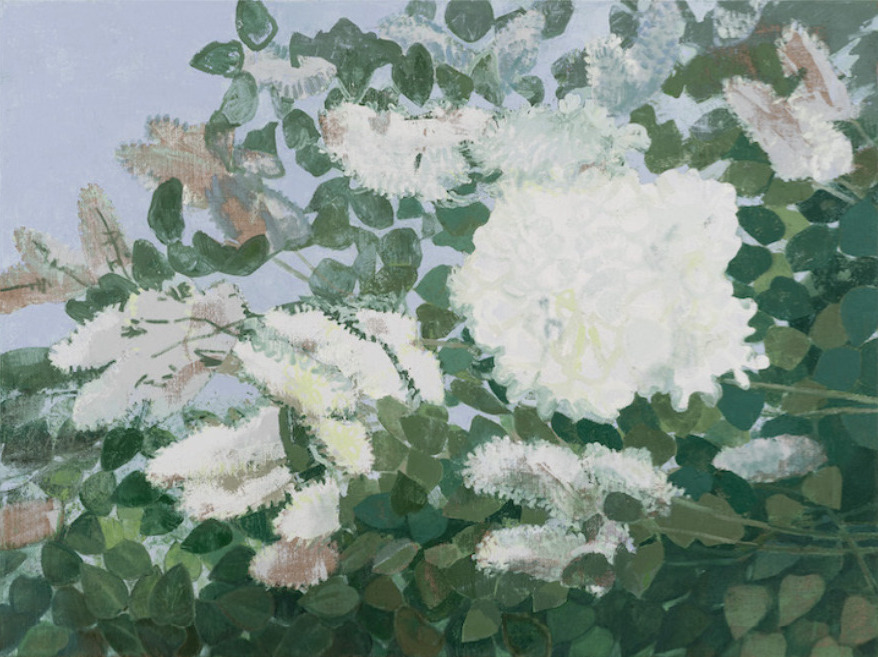
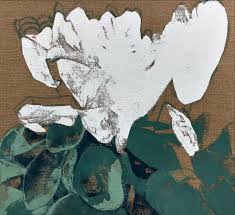
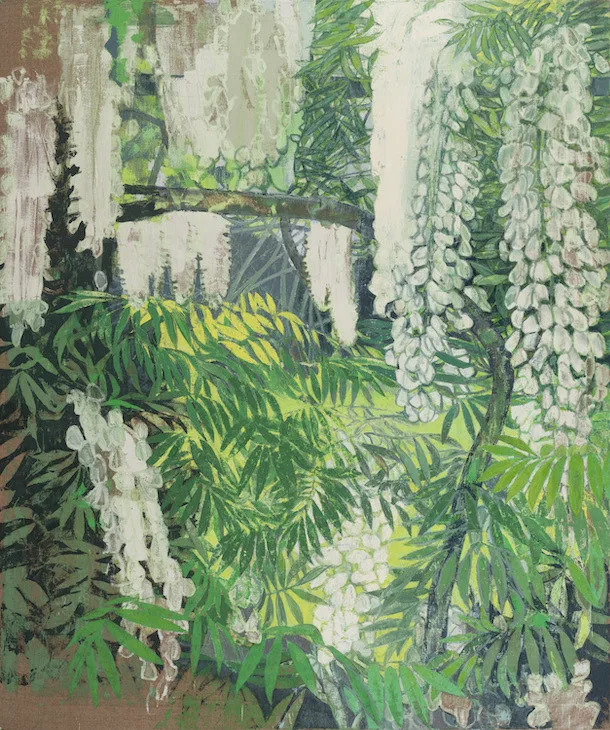
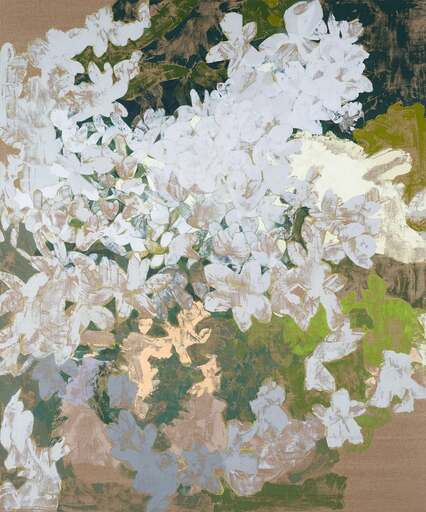
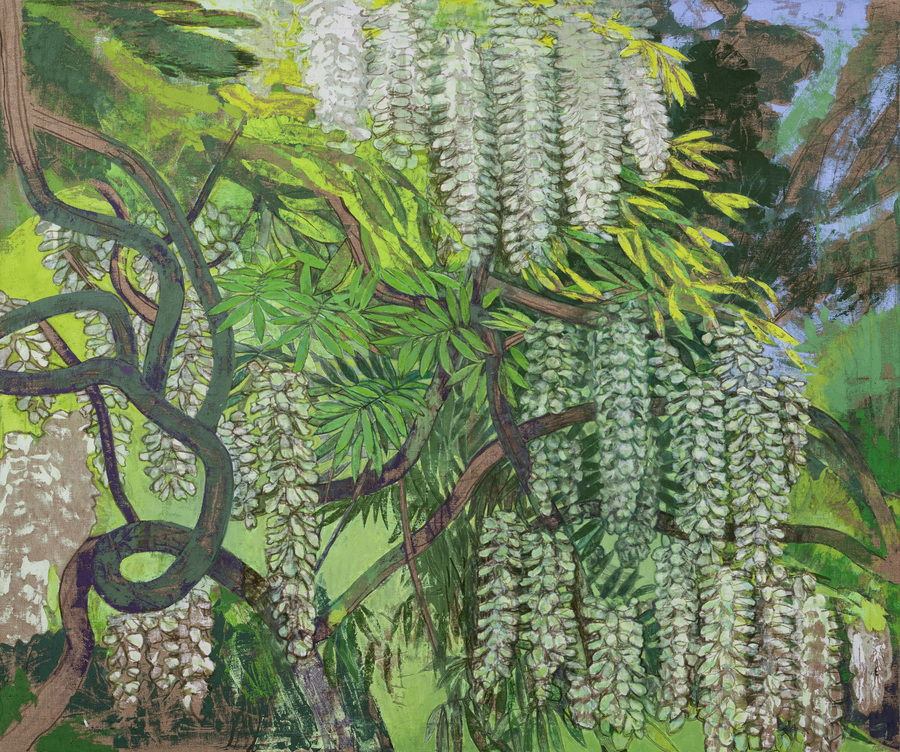
The process deepens in 2023 with Star Magnolia, Cold Spring and White Lilac II. The latter makes explicit, already in its title, the enduring role of white: no longer the abstract white of the early works, but an organic, shifting white, crossed by light and surrounded by other vegetal tones. Place also assumes an increasingly important role. Wisteria I, Dumbarton Oaks connects the painting to a specific garden and a specific experience of landscape, while Cyclamen I of 2024 and Yoshino Cherry, Central Park continue this relationship between observation, memory and place.
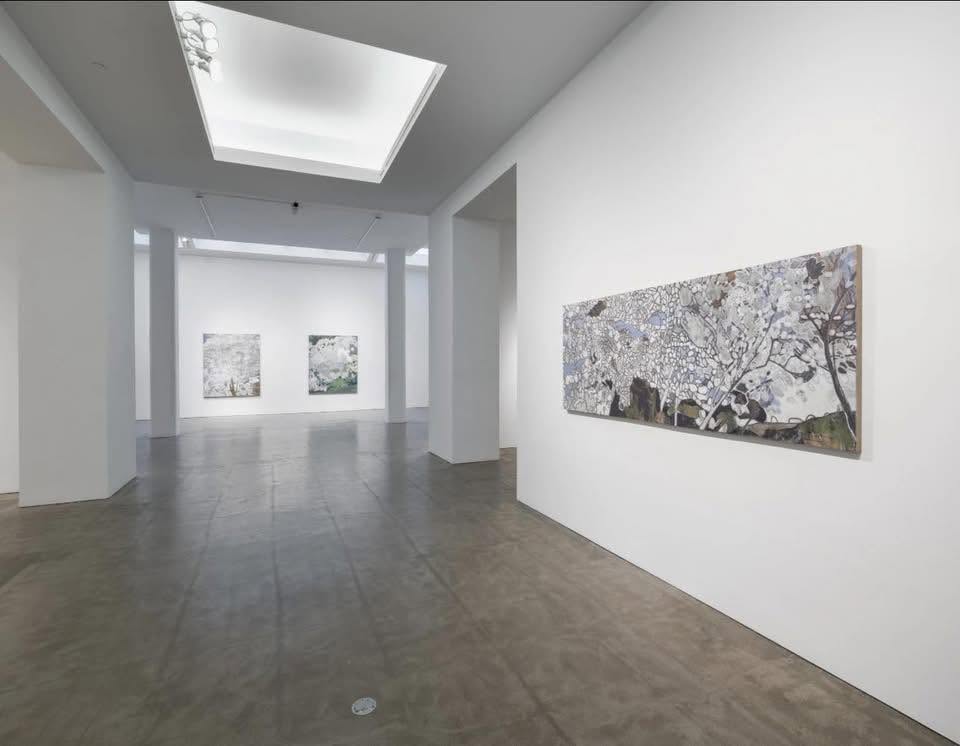
The exhibition Points of Interest, presented by Berry Campbell in 2025, takes this investigation towards an even broader dimension, considering plant life in its temporal dimension and the relationship between nature, landscape and change. Botanical forms may be immediately recognisable or may dissolve into abstract fields that seem to continue beyond the edges of the canvas.
credit Berry Campbell Gallery
credit Berry Campbell Gallery
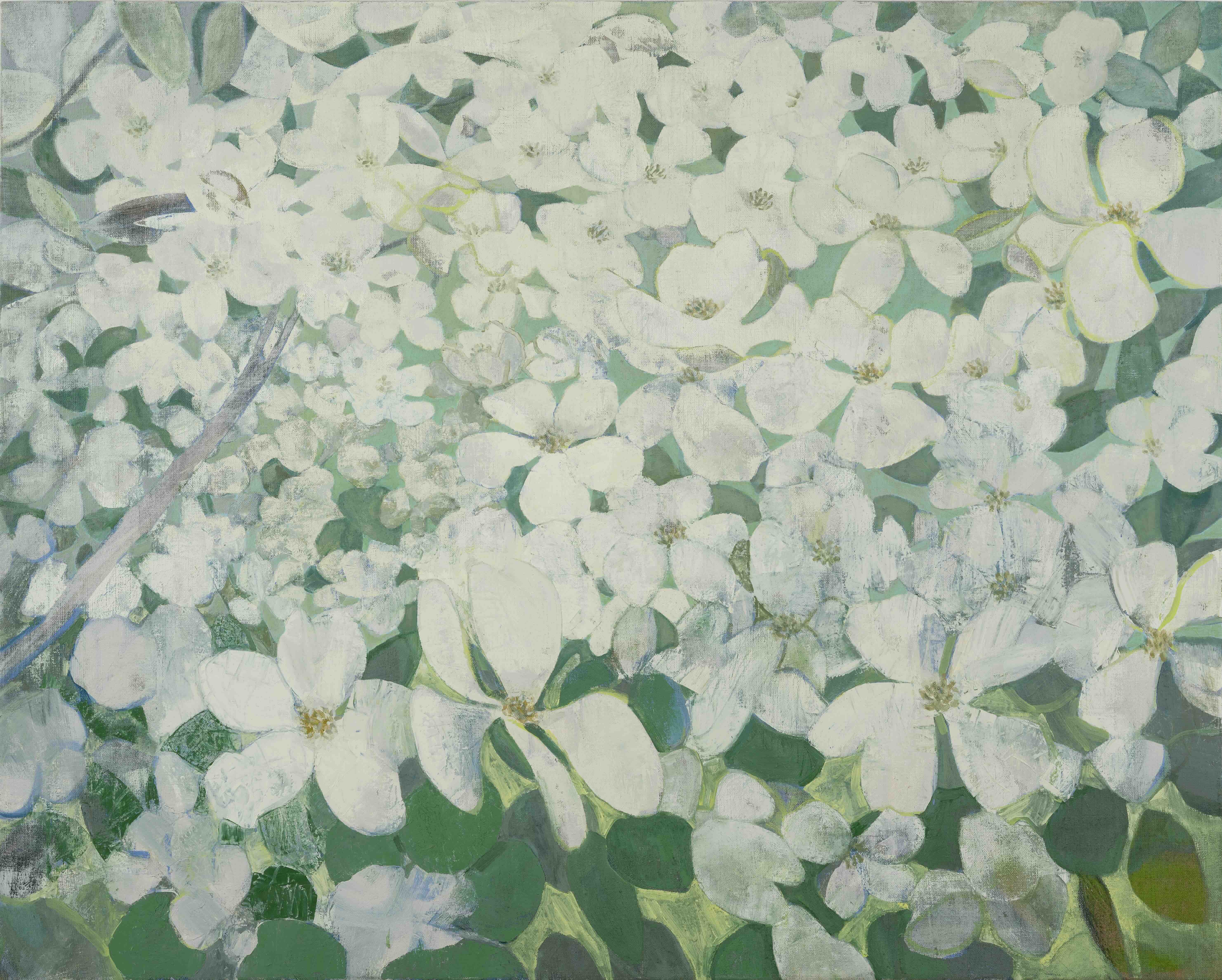
The most recent works in the selection, Dogwood, Villa Francesco of 2025, Azalea and Wisteria of 2026, show just how far this process has come. White is still present, particularly in the blossoms, but it now engages with greens, yellows, pinks, blues and deeper tones. The palette has opened up, but the investigation into light and matter has not disappeared.
This is not a passage from white to colour, but from white to a spectrum. White taught Dever to distinguish subtle variations within a seemingly uniform surface; black introduced contrast, red expanded the possibilities of relative colour perception, and nature offered an infinite combination of forms and colours. Colour thus became a form of matter.
credit Berry Campbell Gallery
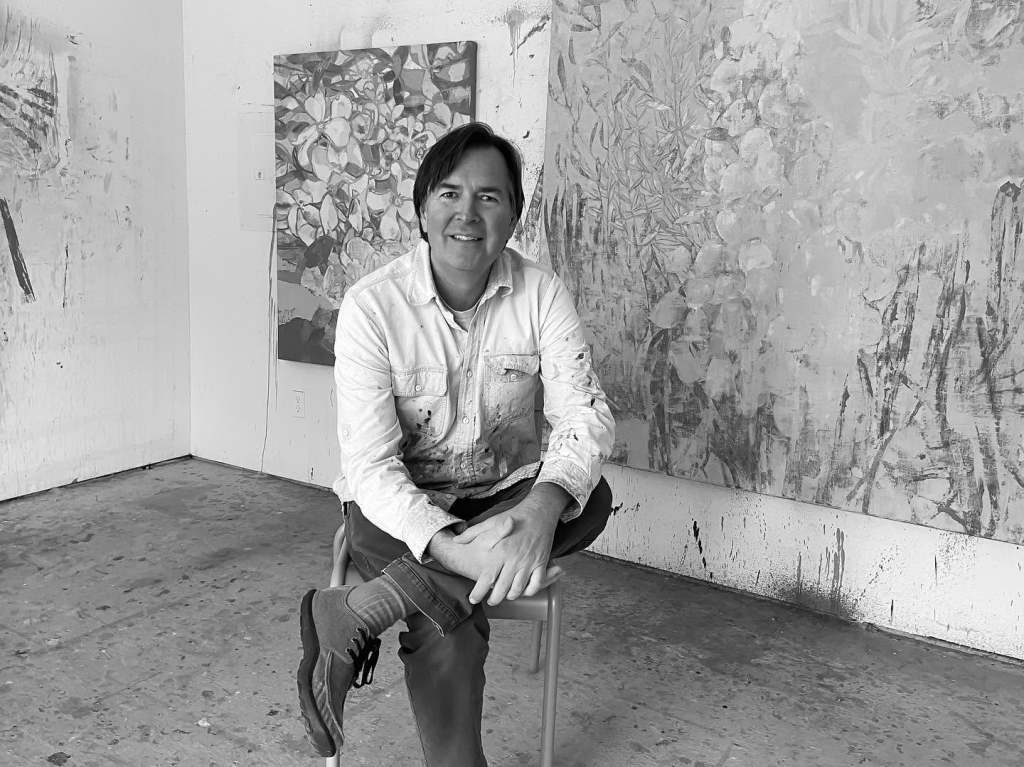
And the garden, in this process, is not simply a place from which to draw inspiration. It has become a laboratory for observation. In the garden surrounding his studio in Water Mill, Dever paints and directly observes the processes of the plant world. Here, his painterly investigation encounters a more experiential dimension.
There is also a personal story that predates this artistic evolution. As a child, Dever had a small porcelain sculpture of Saint Francis, depicting the saint with birds in his hands and small animals at his feet, placed on his bedside table by his mother. When he asked her who he was, she explained that he was “the man who regarded all creatures as his brothers and sisters and saw nature as a reflection of God.”
Decades later, a concrete sculpture of Saint Francis, with one raised hand missing, appeared on the grounds of his new studio. When it was moved to the centre of the garden, Dever recalls that “a swarm of dragonflies appeared overhead.” That swarm of dragonflies becomes almost an emblematic image of the relationship between art, nature and place that characterises his work today.
credit Berry Campbell Gallery
credit Berry Campbell Gallery
credit Berry Campbell Gallery
Perhaps this is the thread that connects TWZW 28 of 2014 with the blossoms of 2026. White has not been left behind. It has become a way of seeing. From the almost monochromatic surface to magnolias, from abstract marks to wisterias, Dever has progressively expanded the field of his investigation without abandoning the original question: how much can what we see change when we truly learn how to look?
Today, his spectrum is that of nature. Yet within the greens, pinks, blues and white blossoms of his recent works, that first, quiet investigation into white remains: the discovery that even a single colour can contain a universe of variations.
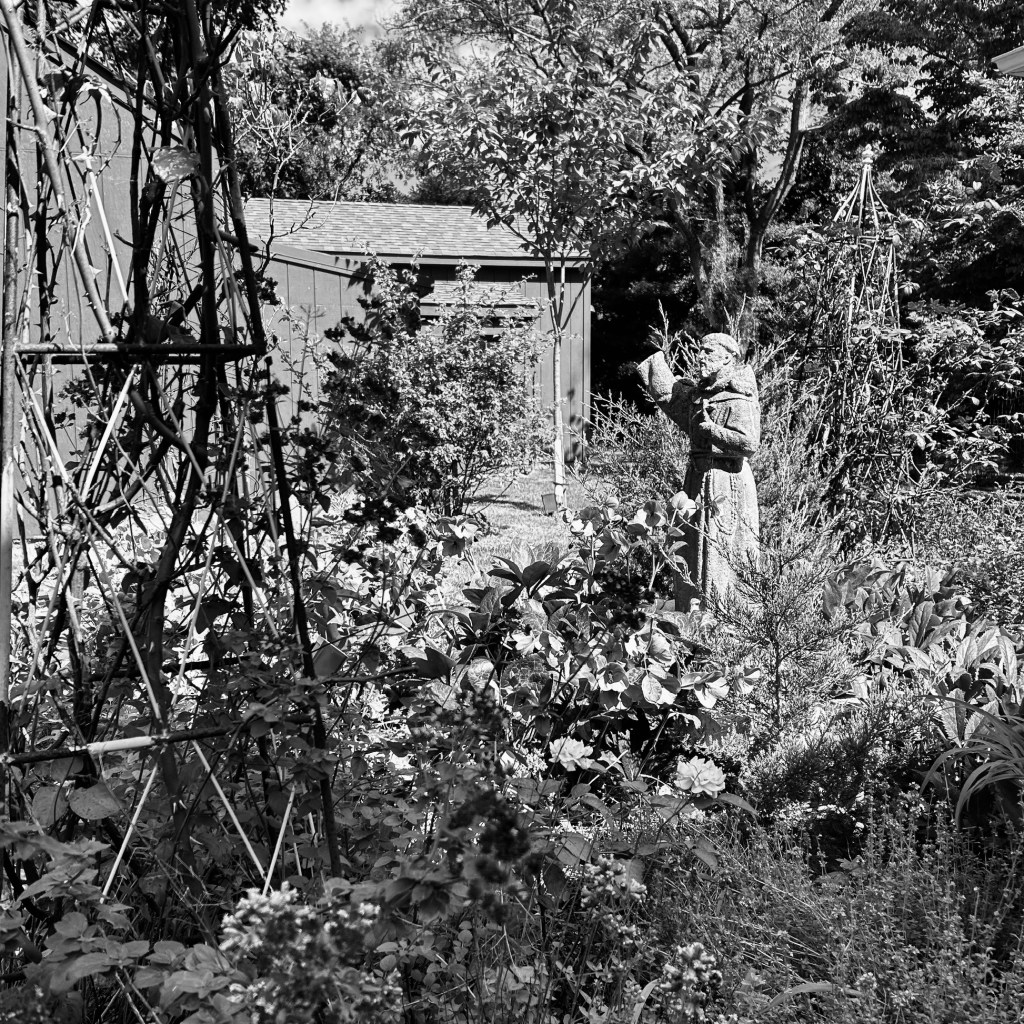
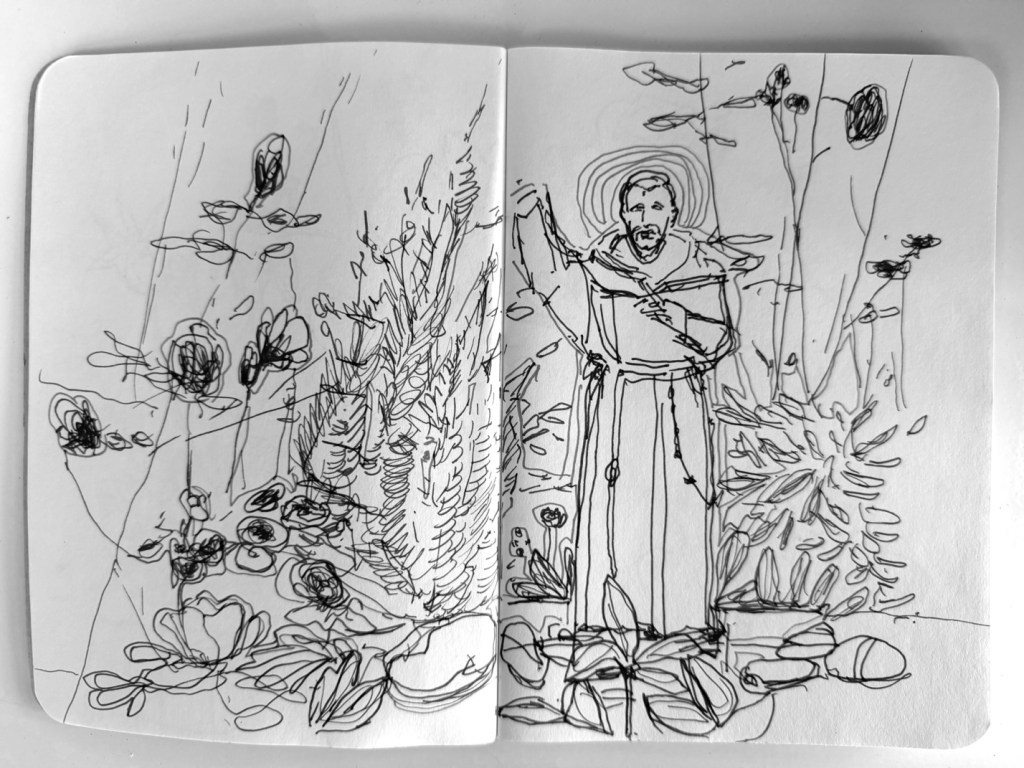
Sketch of the statue of St Francis in the garden, from the artist’s book, 2022 credit Eric Dever
It is a journey that continues to unfold through his forthcoming exhibitions. Among the events already announced are a presentation at Maya Frodeman Gallery in Jackson Hole, Wyoming, from April 2 to May 16, 2027, and an exhibition at the John Jermain Memorial Library in Sag Harbor, New York in 2027. These new contexts will offer further opportunities to follow the evolution of a painterly language that, having emerged from abstraction and matter, has found in nature not a destination, but an ever-expanding field of observation.
More info: https://www.ericdever.net/

