Alice Riehl’s Porcelain Florilegium, on view at the Museum of Arts and Design (MAD) in New York, US through October 12, 2026, presents a compelling exploration of the relationship between nature, urban life, and material transformation. Featuring four monumental porcelain wall murals, the exhibition marks the first major museum presentation of the French artist’s work in the United States and highlights her distinctive approach to contemporary ceramic practice.
Riehl is internationally recognized for her large-scale porcelain installations, which combine influences from French decorative arts, medieval and Renaissance tapestries, mythology, and close botanical observation. In Porcelain Florilegium, she transforms porcelain, a material traditionally associated with refinement and ornament, into a powerful medium for ecological reflection. Through intricate sculptural surfaces and immersive compositions, the artist invites viewers to reconsider the overlooked plant life that persists and adapts within modern cities.
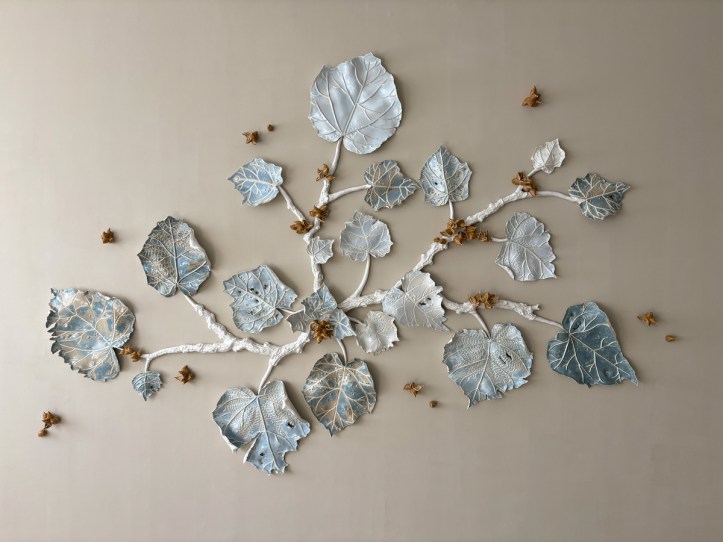
credit Todd Merrill Studio and the artist
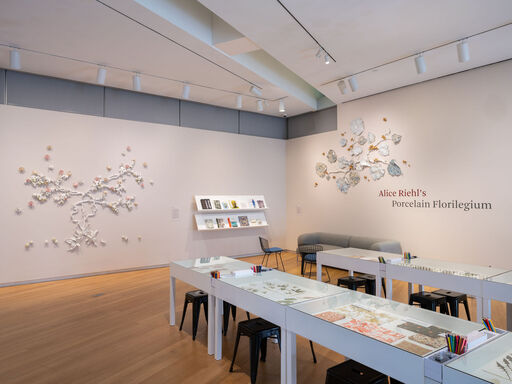
The exhibition brings together four major works: Alter Ego (2022), Dent-de-Lion (2024), Songe (2024), and Timidité (2025). While each mural addresses a distinct theme, all are united by a fascination with resilience, transformation, and the complex relationship between human and natural systems.
In Dent-de-Lion, Riehl shifts attention below the surface, focusing on the root structures of common plants often dismissed as weeds. By elevating these hidden forms to monumental scale, she challenges conventional hierarchies that separate valued species from those considered undesirable. The work encourages a deeper appreciation of the interconnected networks that sustain life, even in the most inhospitable environments.
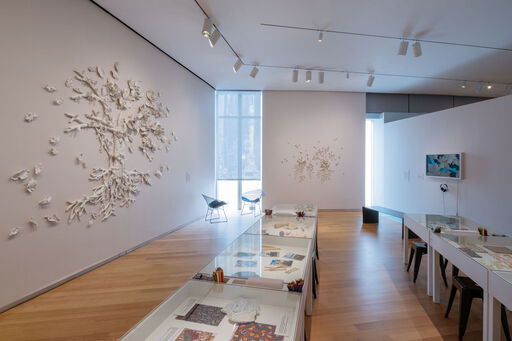
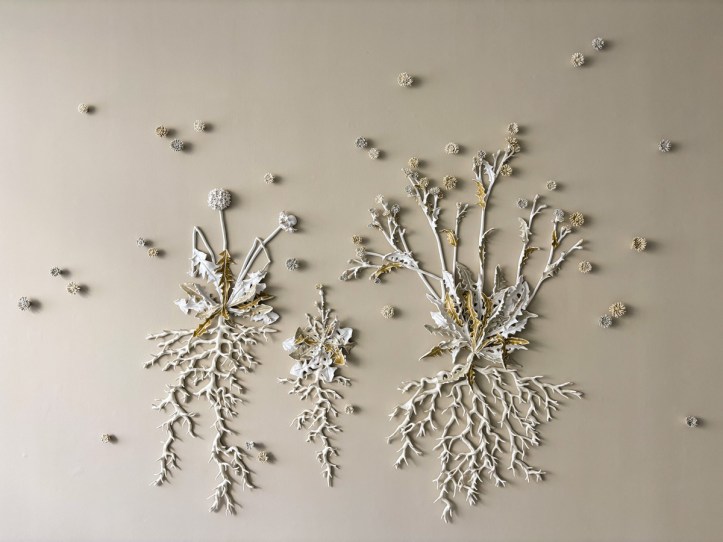
credit Todd Merrill Studio and the artist
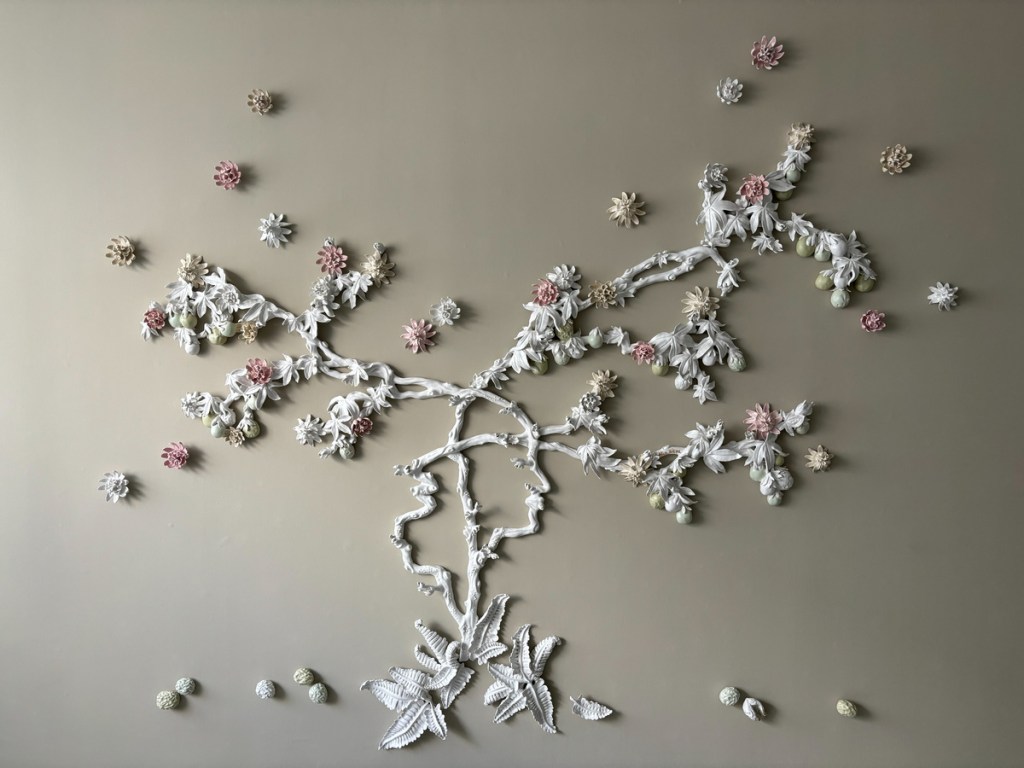
Songe draws inspiration from the passionflower and weaves together references to classical mythology, Shakespearean literature, and feminist art history. Through its layered symbolism, the mural reflects on themes of memory, visibility, and authorship, demonstrating Riehl’s ability to merge botanical imagery with broader cultural narratives.
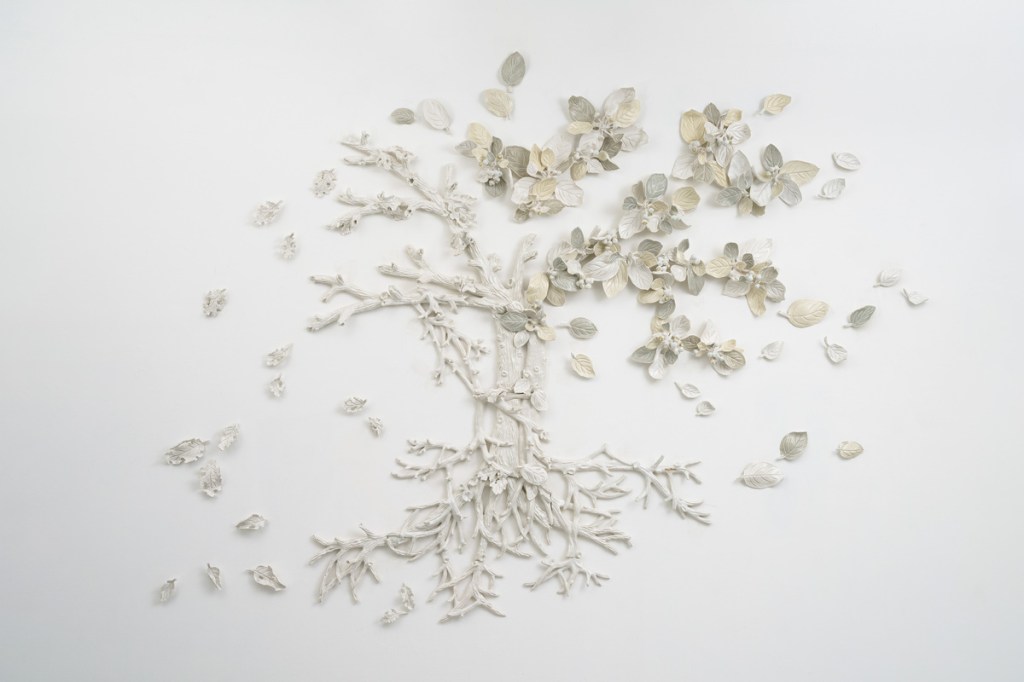
Created during the COVID-19 lockdown, Alter Ego takes the banyan tree as its point of departure. The work explores duality, vulnerability, and regeneration, offering a meditation on humanity’s often contradictory relationship with the natural world. Its intricate forms evoke both fragility and endurance, qualities that have become central to contemporary discussions about environmental and social resilience.
credit Todd Merrill Studio and the artist
credit Todd Merrill Studio and the artist
The exhibition’s newest work, Timidité, was inspired by Riehl’s experience of New York City. Responding to the city’s dramatic verticality, the mural examines how plant life occupies and negotiates space within dense urban environments. Through its ambitious scale and composition, the work highlights the tension between architectural expansion and organic growth.
Beyond the finished artworks, Porcelain Florilegium provides insight into Riehl’s creative process through displays of sketches, tools, clay and glaze samples, dried plants, textiles, and video documentation. These materials reveal the meticulous craftsmanship behind the murals and underscore the artist’s deep engagement with both material experimentation and botanical research.
By bringing together art, ecology, and contemporary craft, Porcelain Florilegium offers a timely reflection on how we perceive and interact with the natural world. Riehl’s luminous porcelain landscapes remind us that even within highly constructed urban environments, nature remains present, resilient, and worthy of sustained attention.

