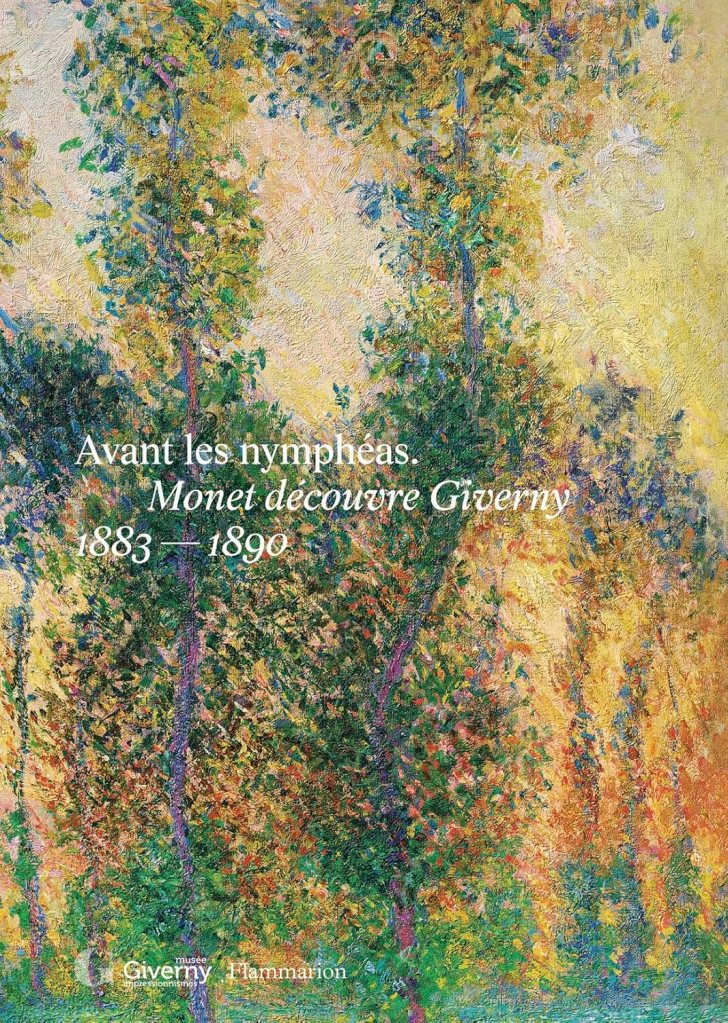
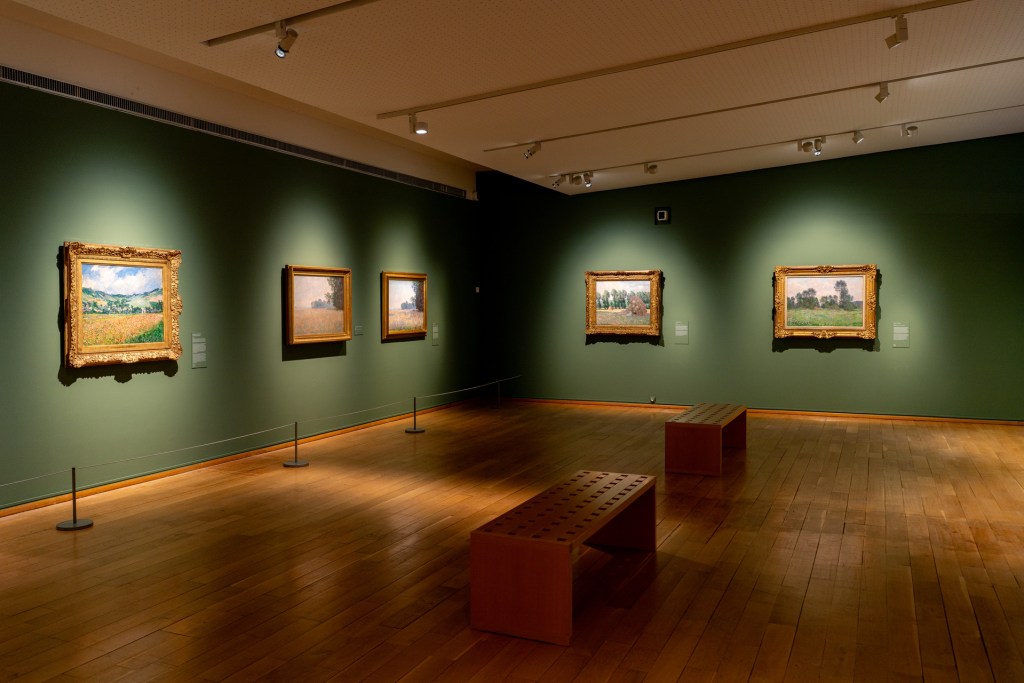
On the centenary of Claude Monet’s death (1840–1926), the Musée des impressionnismes in Giverny, France is dedicating an exhibition to one of the least discussed yet most decisive periods of his career. ‘Monet à Giverny. Avant les Nymphéas, 1883–1890‘ (Monet in Giverny : Before the Water Lilies, 1883-1890), on view until July 5, 2026, does not celebrate the already canonized painter of the famous Water Lilies, but rather the artist who, upon arriving in the small Norman village in 1883, was still searching for his own language and his place in the world.
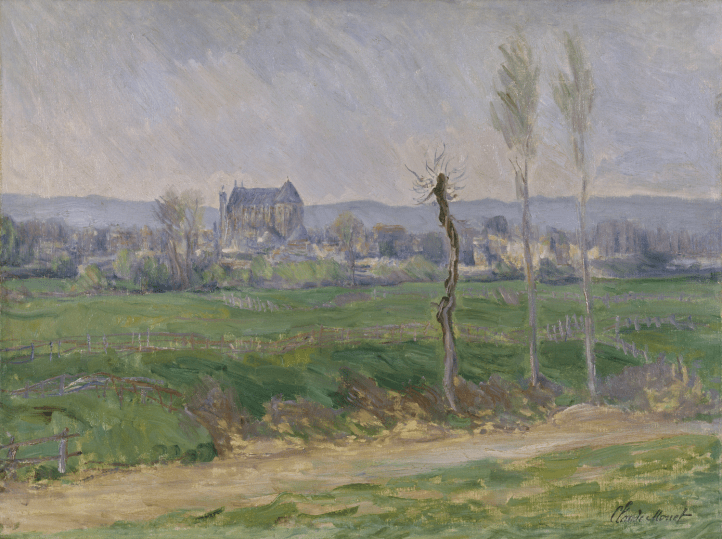
Panorama de Vernon [Panorama of Vernon], 1886
Oil on canvas credit Norfolk, Chrysler Museum of Art
The exhibition brings together around thirty paintings, many from private collections or rarely shown, tracing the years leading up to the creation of the water garden that would become the symbol of Monet’s work. These are the years in which Monet persistently observed meadows, poppy fields, poplars, the Seine, and the Epte, seeking in light and atmospheric variation a new grammar of painting.
As curator Cyrille Sciama emphasizes, this is still a restless Monet: ‘When he arrived in Giverny, he was forty-three years old and had just gone through a difficult personal period marked by the death of his wife Camille and by a still precarious financial situation. Only thanks to the support of the dealer Paul Durand-Ruel and the growing interest of American collectors would he, in the years that followed, achieve the stability that allowed him to buy the house in 1890 and transform its garden according to his own vision’.
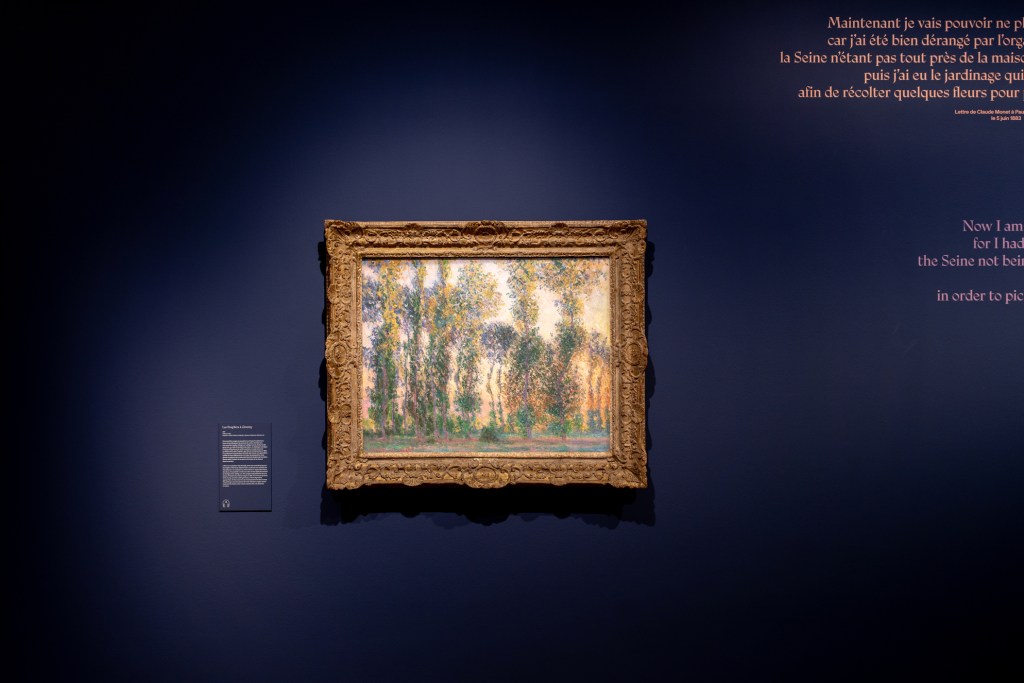
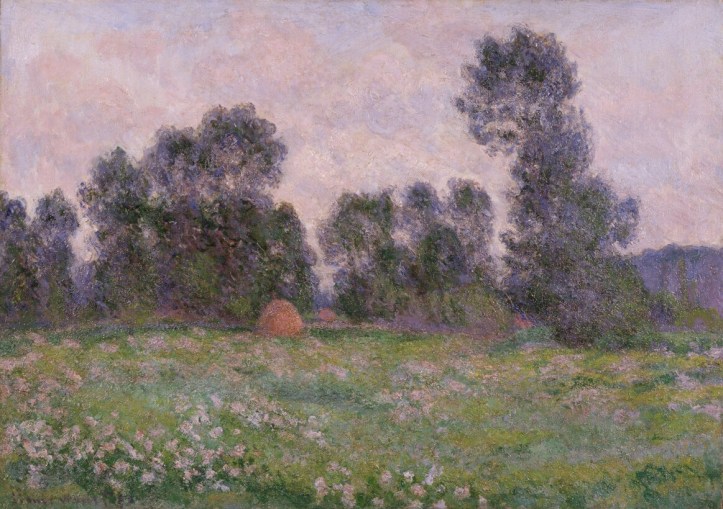
credit Fukushima Prefectural Museum of Art
The exhibition effectively conveys this phase of searching. Far from the reassuring image of the painter immersed in his flowering garden, what emerges is an artist who constantly doubts his work, destroys canvases, changes subjects, and experiments with new compositions. It is precisely from this creative tension that the great series devoted to the Haystacks, the Poplars, and ultimately the Water Lilies would emerge.
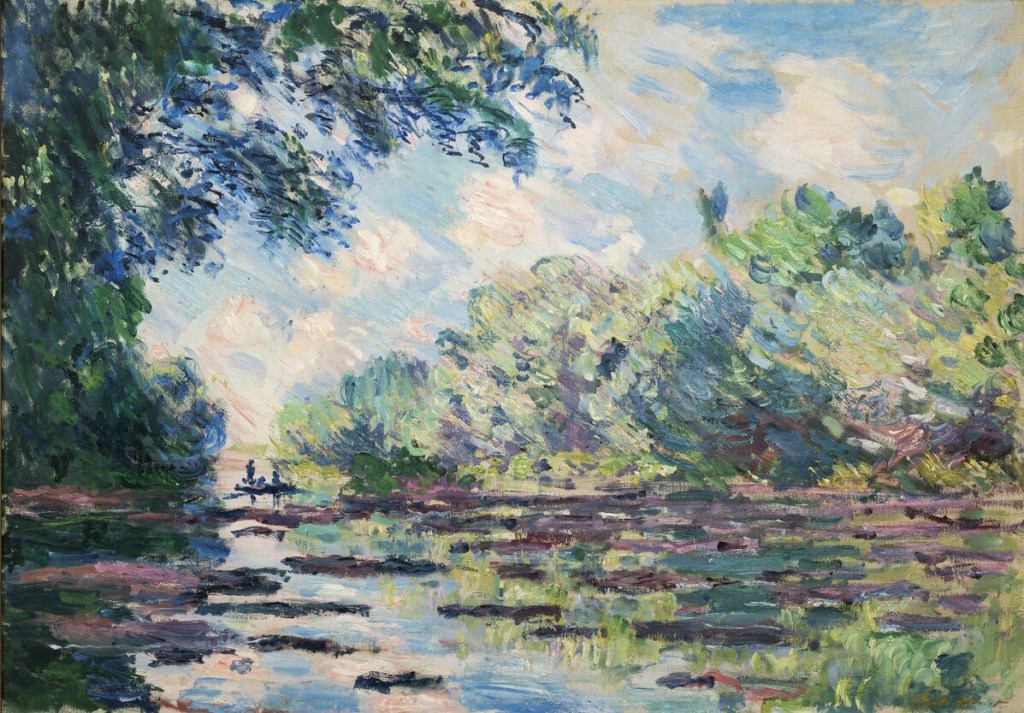
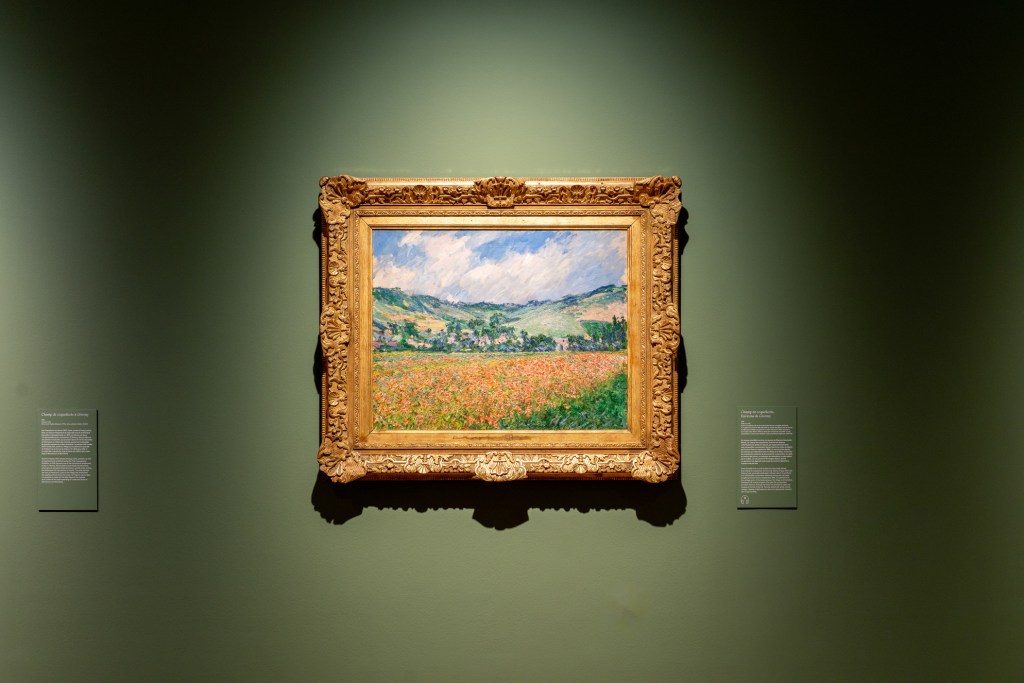
Giverny], 1885 Oil on canvas, GrandPalaisRmn (musée d’Orsay) credit Octave Bénard
Particularly interesting is the attention given to an aspect often overlooked: the relationship between landscape and architecture. The views of Vernon, the churches, the houses, and the perspectives of the surrounding territory are not merely backdrops, but structural elements of the composition. Monet observes the landscape as an organic whole in which nature and the built environment are in constant dialogue, anticipating that reflection on space which would reach full maturity in his later works.
The centenary also becomes an opportunity to highlight the botanical heritage that made Giverny famous. The museum has in fact established collaborations with two historic French nurseries. Latour-Marliac, which at the end of the nineteenth century supplied Monet with the hybrid water lilies destined for his garden, has donated four historic varieties now cultivated in the museum’s new ponds. Pépinières et Roseraies Georges Delbard, meanwhile, contributed fifty specimens of the “Claude Monet®” rose, enriching the rose garden as a tribute to the artist.
More than a simple retrospective, Before the Water Lilies invites visitors to rediscover the moment when Monet was constructing his artistic identity. It is an exhibition that speaks of the value of research, doubt, and patient observation of nature, reminding us that behind one of the most celebrated painters in history stood a man still in search of his own landscape.