As it approaches its closing date on 29 July, Blooming: The Art of Gardens in East and West at the Hong Kong Museum of Art (HKMoA) stands out as one of the most compelling exhibitions devoted to the culture of gardens and landscape in recent years. The exhibition is the second chapter of an international project that debuted at Beijing’s Palace Museum in 2025, before arriving in Hong Kong in an expanded edition developed in collaboration with the Art Institute of Chicago and the Palace of Versailles.
For the first time in Hong Kong, the exhibition brings together 106 paintings and artefacts from the four partner institutions, including paintings, prints, lacquerware, ceramics, glassware and sculpture. Yet its significance extends far beyond the exceptional quality of the works on display. Blooming presents the garden as a universal cultural expression, revealing how different civilisations have used landscape to articulate ideas of beauty, power, spirituality and everyday life.
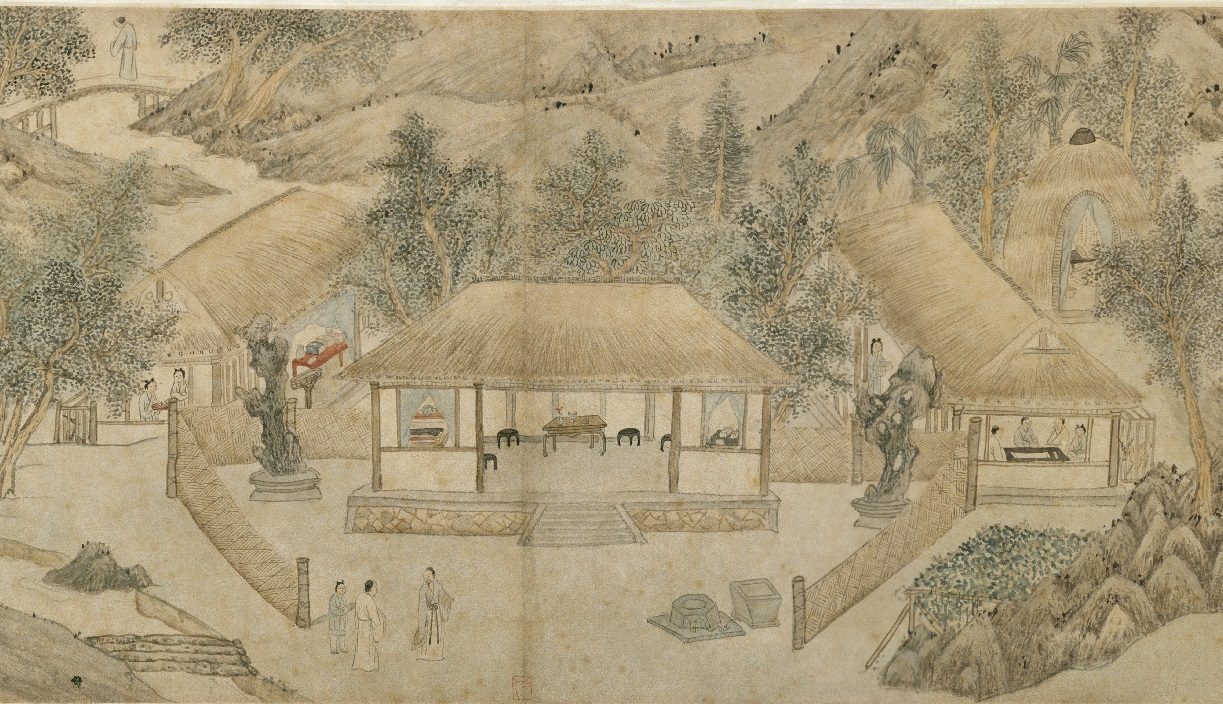
Nanxi Thatched Hall (detail), 1569 credit The Palace Museum
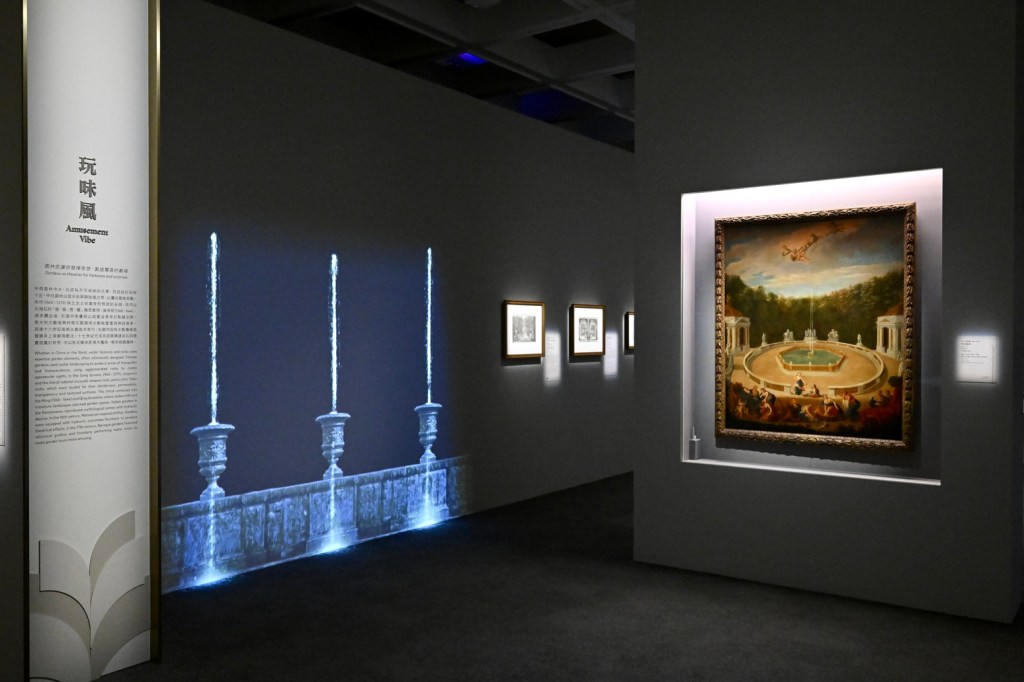
Rather than following a chronological narrative, the exhibition is organised around three interconnected themes: designing the garden, experiencing the garden, and representing the garden through art. This curatorial approach transforms the visit into an exploration of gardens as living cultural spaces, where East and West engage in an ongoing dialogue. The garden emerges simultaneously as a place of contemplation for scholars, a private retreat, a symbol of social prestige and a stage for political authority.

credit Art Institute of Chicago
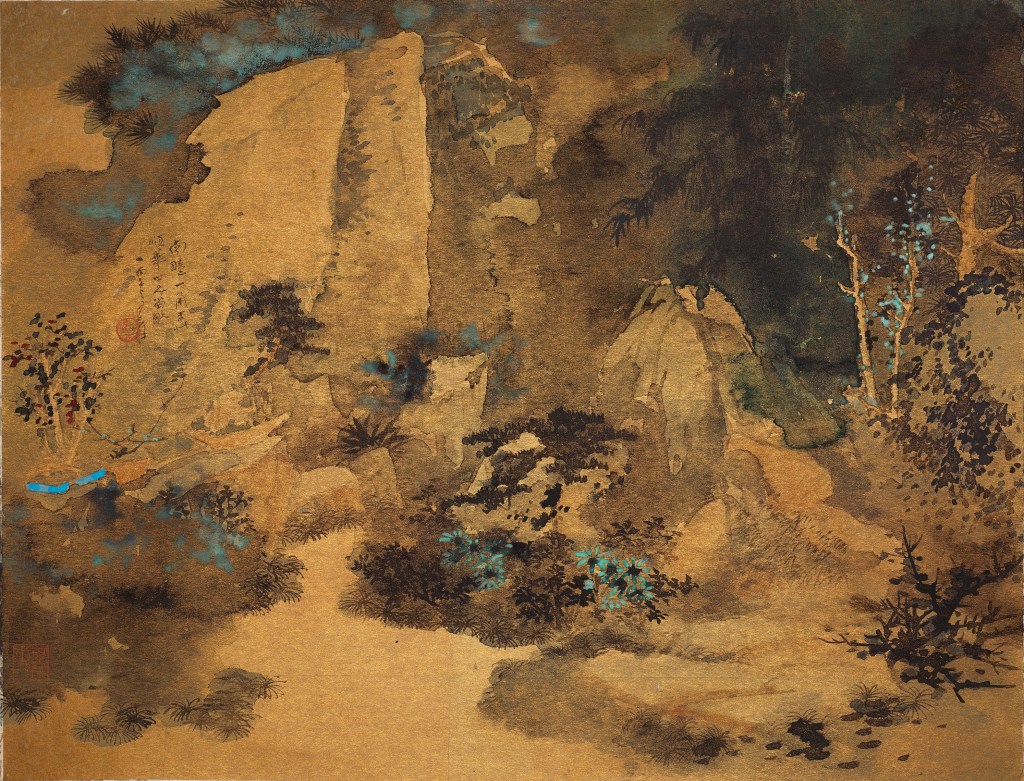
Entrance of Bade Garden
1966credit Collection of Hong Kong Museum of Art

One of the exhibition’s central figures is the Qianlong Emperor, celebrated not only as a ruler but also as a sophisticated collector, patron and connoisseur of the arts. Paintings, calligraphy, jade, lacquerware, musical instruments and tea wares associated with his court evoke the ideal of cultivated living embodied in the Eight Refined Pursuits of the Chinese literati: music, chess, calligraphy, painting, poetry, wine, flowers and tea. The garden provided the ideal setting where these artistic and intellectual practices converged into a harmonious way of life.

Spring Ablution at the Orchid Pavilion
1542 credit The Palace Museum
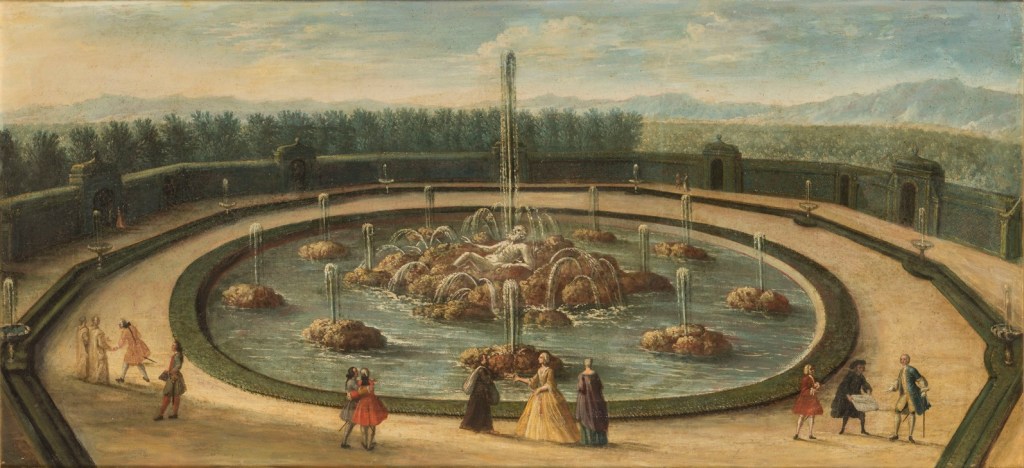
The Enceladus Fountain, 1701 – 1725
credit Palace of Versailles/ Christophe Fouin
Opposite this refined scholarly world stands another powerful vision of the garden: that of Louis XIV, whose gardens at Versailles became a monumental expression of royal authority and the human ordering of nature. Rather than contrasting these traditions, the exhibition places them in conversation, revealing shared aspirations beneath their very different aesthetic languages.
Among the highlights are Wen Zhengming’s Spring Ablution at the Orchid Pavilion, inspired by one of the defining moments of Chinese literary culture; Claude Monet‘s celebrated Water Lilies and Water Lily Pond; and works by Wen Boren and Zhang Daqian, whose paintings demonstrate how gardens have served as enduring sources of artistic inspiration. Particularly compelling is the dialogue established between Monet and Zhang Daqian, both presented not simply as painters but as creators of gardens that became extensions of their artistic vision.


Imperial Summer Resort
Qing dynasty (1644 – 1911)
credit The Palace Museum
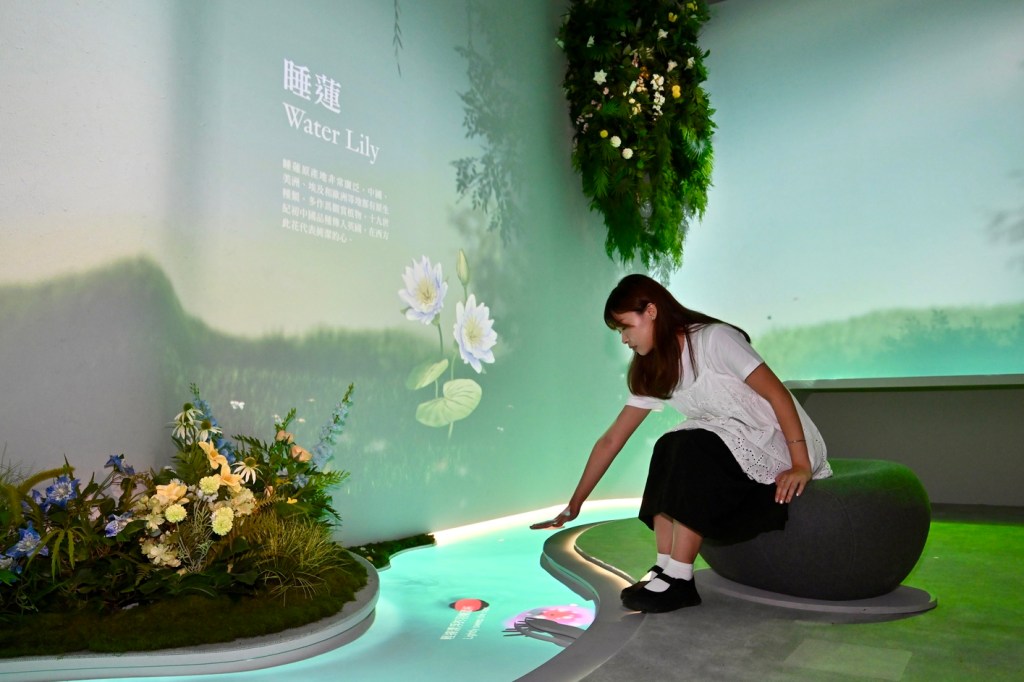
The exhibition further enriches this narrative through immersive installations and multimedia experiences. Audio guides allow visitors to hear the voices of historical figures including Qianlong, Louis XIV, Monet and Zhang Daqian, while a scenographic recreation of the famous Orchid Pavilion Gathering introduces visitors to one of China’s most celebrated literary traditions. Even the exhibition’s creative DIY activity, encouraging visitors to design their own ideal garden, reinforces the idea that gardens remain spaces of imagination and personal expression rather than relics of the past.
More than an exhibition about gardens, Blooming is an invitation to recognise landscape as a shared cultural language. Bringing together botany, art, architecture and philosophy, it reminds us that. from Beijing to Versailles, and from the gardens painted by Monet to those envisioned by Chinese scholar-artists, the desire to create places of harmony between humanity and nature is a universal aspiration that continues to resonate across cultures.
 The Flora Journal