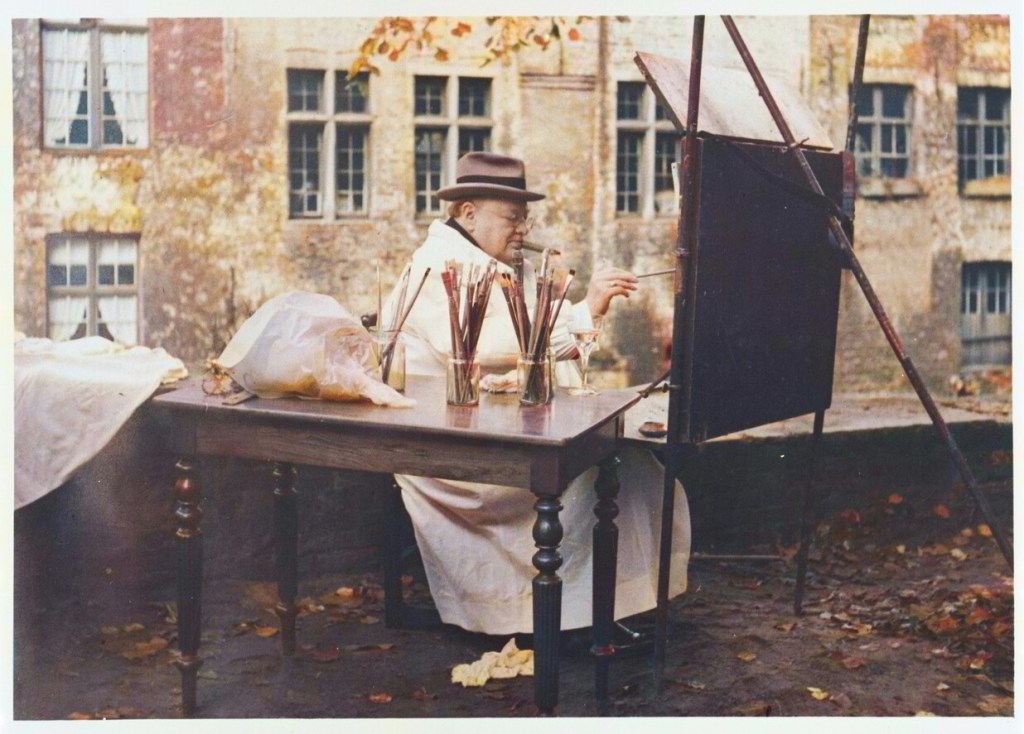
While Winston Churchill is remembered as one of the defining political figures of the twentieth century, a major exhibition at the Wallace Collection, in London, UK reveals another, more intimate side of his personality: that of a passionate landscape painter. Winston Churchill: The Painter, on view until 29 November 2026, brings together more than fifty paintings that demonstrate how art became both a personal refuge and a lifelong creative pursuit.
Churchill first took up painting in 1915, during one of the darkest moments of his career following the Dardanelles campaign. What began as a therapeutic escape soon developed into an enduring artistic practice. Over the following decades, he produced more than five hundred paintings while travelling across Britain, France, Italy and Morocco, finding inspiration in gardens, historic houses, Mediterranean harbours and dramatic landscapes.
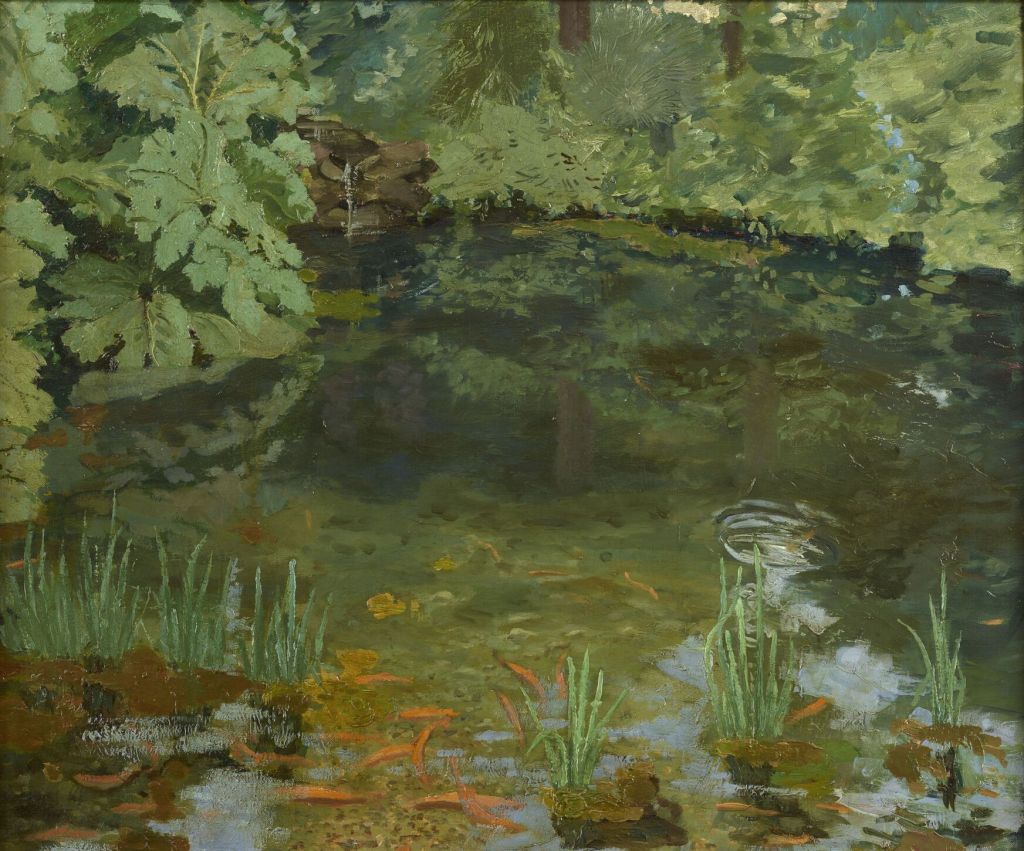
Sir Winston Churchill,
The Goldfish Pool at Chartwell, 1932. Private Collection credit Churchill Heritage Ltd. Matthew Hollow Photography
Churchill’s paintings offer an engaging perspective on the relationship between gardens, cultivated landscapes and artistic expression. Many of his most personal works depict the grounds of Chartwell, his beloved country home in Kent, where the gardens became both a sanctuary and a constant source of inspiration. The exhibition also explores his fascination with still lifes, alongside luminous views of the French Riviera, Italy and Morocco, where colour, light and vegetation became central elements of his mature artistic language.
The landscapes of Marrakech occupy a particularly important place within the exhibition. Churchill returned to Morocco six times, captivated by the changing light, the Atlas Mountains and the vibrant contrast between the desert plains and lush gardens surrounding the city. These compositions, painted with increasing confidence and expressive freedom, represent the culmination of his artistic development.
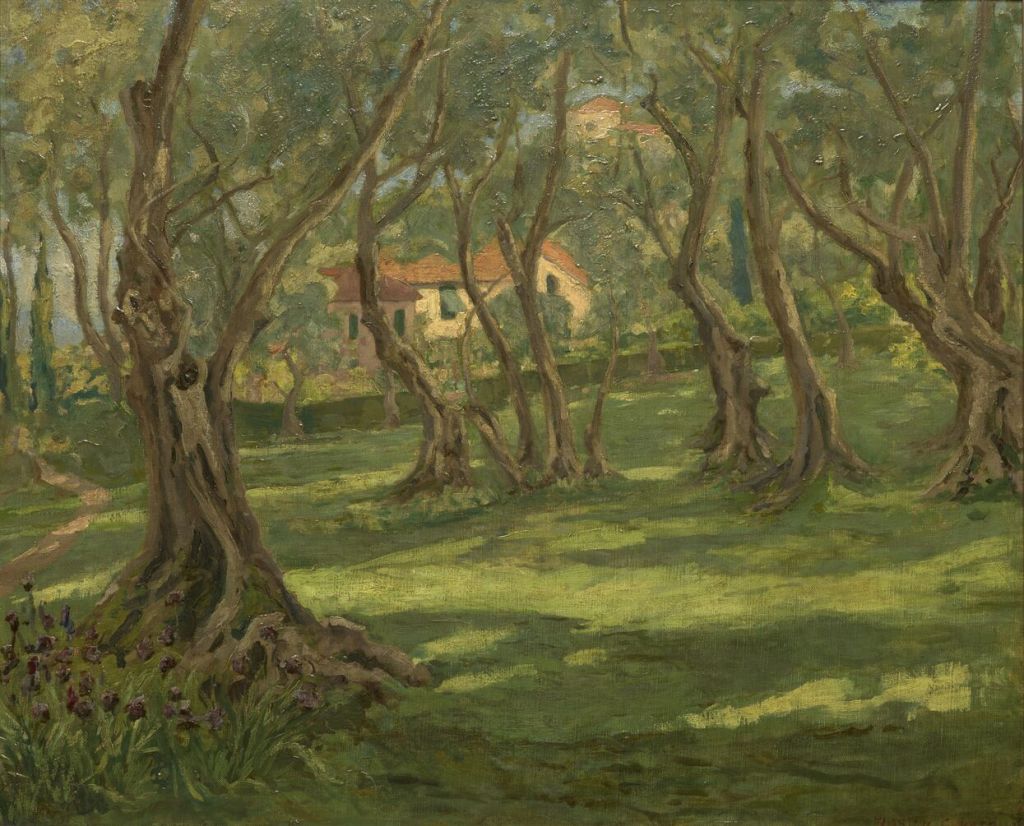
Sir Winston Churchill,
La Dragonnière, Cap Martin, 1930s. Private Collection credit Churchill Heritage Ltd. Photograph by Howard Agriesti
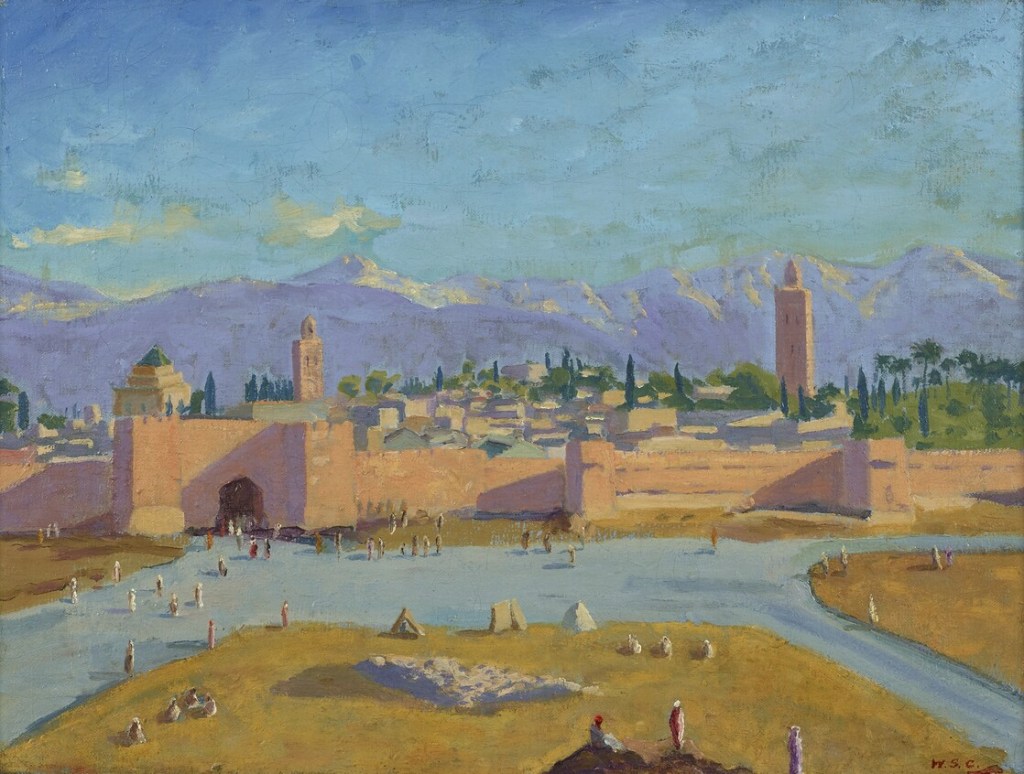
Sir Winston Churchill,
The Tower of the Koutoubia Mosque, 1943
Private Collection credit Churchill Heritage Ltd. Image courtesy Churchill Heritage Ltd
Rather than presenting Churchill merely as a celebrated statesman who happened to paint, the exhibition positions him as an artist whose creative journey evolved over five decades. Paintings by Sir John Lavery and Sir William Nicholson, both mentors and friends, provide valuable context for understanding the influences that shaped his work and his growing confidence with colour, composition and technique.
Dr Lucy Davis, Curator of Paintings and co-curator of the exhibition, explains that “Churchill approached painting with an intensity that mirrored his political life, though he turned to the canvas for very different reasons.” She adds that visitors discover “a painter who begins cautiously… and ends up forging a surprisingly bold visual language of his own,” revealing the private creative forces behind one of history’s most recognisable public figures.
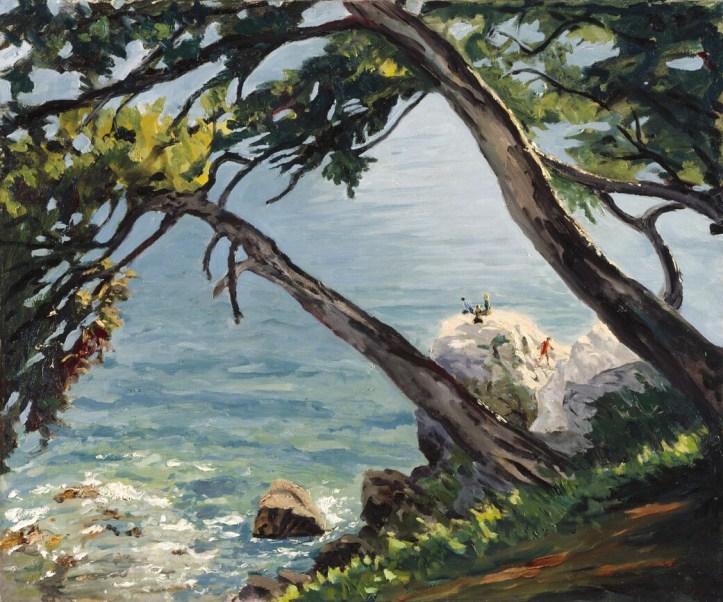
Sir Winston Churchill, Cap d’Ail, Alpes-Maritimes,
1952 Royal Academy of Arts, London. credit Churchill Heritage Ltd. Photo: ©Royal Academy of Arts, London; photographer: John Hammond
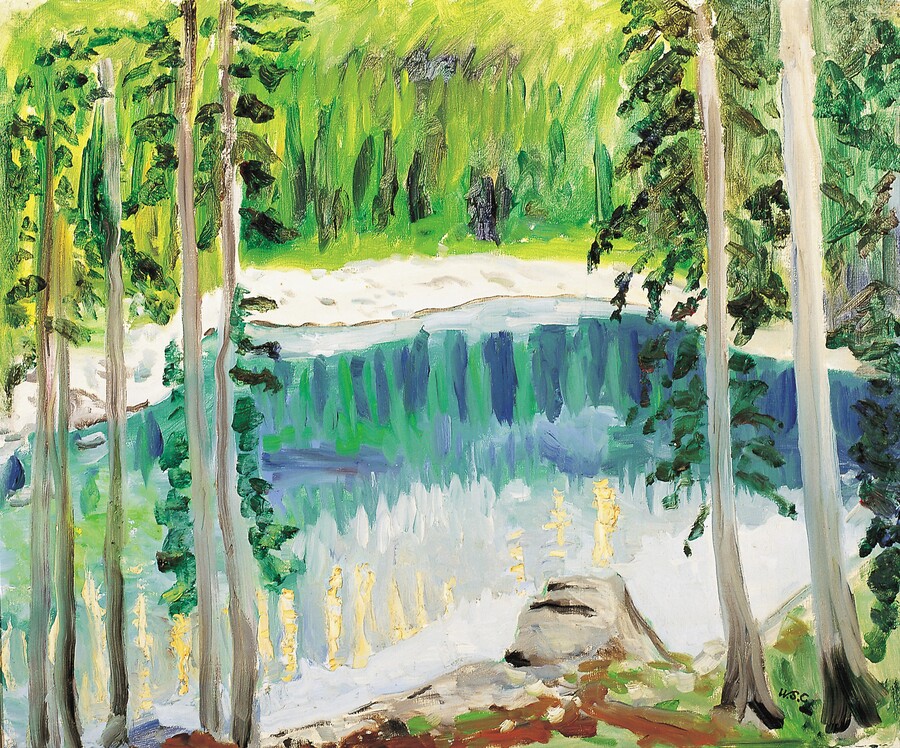
Sir Winston Churchill,
Sketch of Lake Carezza or he Twenty-Minute Sketch,
1949 Reproduced by kind permission of the National Trust. credit Churchill Heritage Ltd. Image courtesy Churchill Heritage Ltd
For Dr Xavier Bray, Director of the Wallace Collection and co-curator, Churchill’s paintings reveal “a personality that is more joyful and more intimate than the statesman we think we know.” He concludes that the exhibition reminds us that “creativity can be both a personal solace and cultural force,” demonstrating how even one of the twentieth century’s greatest political leaders found renewal through painting.
For horticultural enthusiasts, landscape architects and garden historians alike, the exhibition offers more than an artistic retrospective. It is an invitation to observe how gardens, cultivated environments and the changing qualities of natural light became essential companions throughout Churchill’s life, shaping a body of work that remains remarkably personal and surprisingly contemporary.

