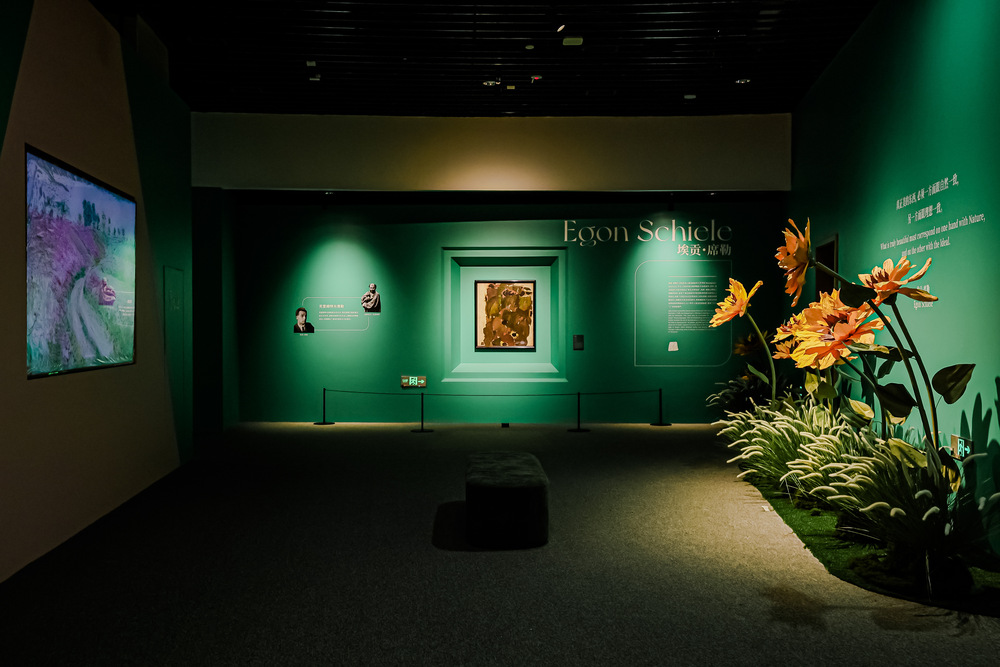
Flowers have long occupied a unique place in the history of art: at once botanical subjects, symbols of beauty and fleeting life, and a universal language capable of crossing cultural and geographical boundaries. This enduring theme is at the centre of Blooming Hearts Through Centuries. From Waldmüller to Klimt. Floral Masterpieces from the Belvedere, Vienna, currently on view at the Beijing World Art Museum, China until September 19, 2026.
credit Beijing World Art Museum

credit Beijing World Art Museum
Presented by the Belvedere in Vienna, the exhibition brings together 60 works by 35 artists from its renowned collection, offering visitors in Beijing an overview of the evolution of Austrian flower painting from the Biedermeier period through to Viennese Modernism. Rather than presenting flowers simply as decorative motifs, the exhibition traces the changing ways in which artists observed, interpreted and transformed the natural world.
The exhibition opens a dialogue between different moments in Austrian art history. Its journey extends from eighteenth-century botanical illustrations and the carefully observed floral subjects of the Biedermeier era to the increasingly experimental language of Viennese Modernism. Across these periods, flowers become a fascinating measure of artistic change: their representation moves from botanical precision and still-life traditions towards more personal, expressive and innovative interpretations.

credit Johannes Stoll/Belvedere, Vienna

credit Belvedere, Vienna
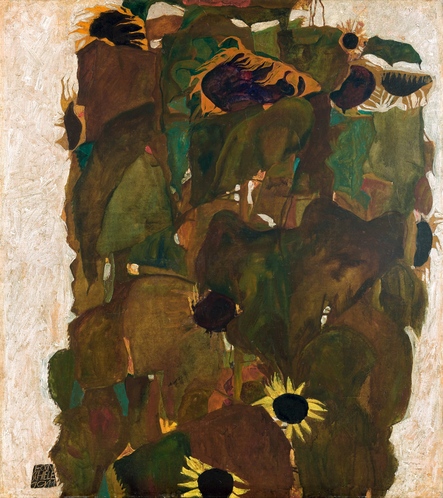
Among the highlights are Ferdinand Georg Waldmüller’s Still Life with Fruit, Flowers, and a Silver Cup, Gustav Klimt’s After the Rain, and Egon Schiele’s Sunflowers I. Seen together, these works reveal the remarkable diversity of approaches to floral imagery within Austrian art. Waldmüller’s still life belongs to a tradition attentive to the material qualities and natural appearance of its subjects, while Klimt and Schiele demonstrate how flowers could become part of the radically evolving visual vocabulary of early twentieth-century Vienna.
The exhibition is also significant for its international setting. Its presentation in Beijing makes important works from the Belvedere accessible to a Chinese audience and international visitors, creating an encounter between Austrian artistic heritage and a broader cultural context.


credit Johannes Stoll/Belvedere, Vienna

credit Belvedere, Vienna
The timing adds another layer of significance: the exhibition coincides with the 55th anniversary of diplomatic relations between Austria and China. In this context, the flower becomes more than a subject of painting. It acts as a shared visual language, connecting artistic traditions and audiences across cultures.
Blooming Hearts Through Centuries ultimately offers a journey through more than two centuries of Austrian floral art, demonstrating how a seemingly familiar subject can continuously reinvent itself. From botanical observation to the expressive experimentation of Modernism, the flowers represented in these works invite viewers to look again at nature and at the changing ways artists have translated its beauty into art.

